Get Full Government Meeting Transcripts, Videos, & Alerts Forever!
Get email alerts on the Special Contracts Load Retention topic
No spam. Unsubscribe anytime.
Large energy users seek flexible rules for special contracts to retain at‑risk load
Summary
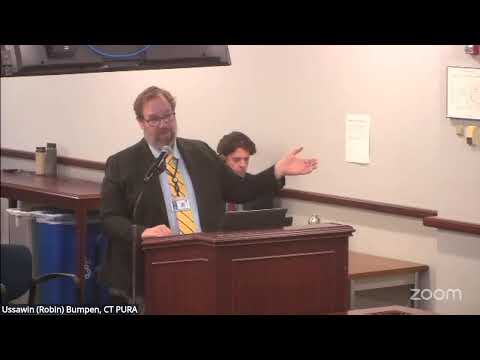
CIEC and other stakeholders told PURA that special-contract (load-retention) applications should not always require company-level profit-and-loss statements; they asked PURA to allow case-by-case evidentiary packages and protective orders to protect commercially sensitive records.
The Connecticut Industrial Energy Consumers (CIEC) and other intervenors urged PURA to adopt an application process for special contracts that balances regulatory scrutiny with protections for commercially sensitive financial data.
CIEC said its concern is narrow: a mandatory requirement that every applicant submit a profit-and-loss (P&L) statement for a facility will discourage potential applicants and could expose confidential commercial material to inadvertent disclosure. Instead, CIEC proposed that applications include financial and nonfinancial information sufficient to validate the claimed competitive alternative; where a P&L or other highly sensitive materials are necessary, PURA could review them under a protective order before deciding whether to approve an incentive.
How it would work: CIEC described a case-by-case process in which the utility and applicant prepare a package of evidence, the authority reviews it, and PURA approves, denies or requests supplemental information. CIEC argued that many large, energy‑intensive enterprises operate corporate-wide accounting and that a single-facility P&L would not necessarily show whether shifting an operation out of state is economic.
Why it matters: special contracts can preserve large in-state loads, jobs and tax base by offering time-limited incentives tied to verifiable need. Intervenors argued that a rigid, always-public P&L requirement would chill applications and reduce the tool’s effectiveness.
Next steps: the panel heard the objections and discussion and did not adopt a change on the record; the authority will consider written exceptions and may craft application instructions or protective-order procedures in the final order.