
Experts: Radon common in Utah; homeowners urged to test lowest livable level
Get AI-powered insights, summaries, and transcripts
Sign Up Free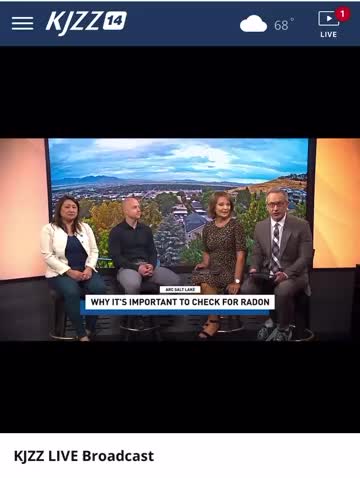
Summary
During a short Q&A, epidemiologists and radon specialists said radon is common in the Intermountain West, increases lung-cancer risk, and can be detected with at-home tests; the EPA recommends testing the lowest livable level, often the basement.
Public-health experts said radon is a common, naturally occurring radioactive gas in Utah and the Intermountain West and urged residents to test their homes, particularly basements and other lowest livable levels.
The experts — epidemiologist Judy Oh and radon specialist TJ Mellers — told listeners that radon forms from the decay of uranium and related elements in soil, is odorless and colorless, and can damage lung tissue when inhaled. They cited a World Health Organization estimate that between 10 and 20 percent of lung cancers globally can be attributed to radon exposure.
Radon enters homes because houses typically have lower air pressure than the soil beneath them and can draw soil gases upward, the speakers said. Because radon is heavier than normal air, concentrations are often highest on the lowest livable floor, which is why the U.S. Environmental Protection Agency recommends testing at that level.
Experts said all floors can have radon, but basements and other below-grade or lowest-livable spaces commonly register higher readings. They noted that homes without basements — for example, slab-on-grade or crawl-space houses — should be tested on the main living floor because the same pressure differences can draw soil gases into living spaces.
Testing is the only way to know whether a home has elevated radon, the experts said. One practical option mentioned during the session was utahradon.org, which the experts said offers free test kits: residents request a kit online, set it up in about five minutes for the specified test period, then mail the device to a lab and receive results by email. If a test shows elevated levels, the experts said mitigation options exist (discussion of mitigation methods was not part of this session).
The short discussion followed an introductory Q&A format; there were no formal votes or policy actions recorded during the session.