Get Full Government Meeting Transcripts, Videos, & Alerts Forever!
Get email alerts on the Immigration Policy topic
No spam. Unsubscribe anytime.
City attorney outlines immigration executive orders, legal limits and local protections for immigrants
Summary
Assistant City Attorney Edmundo Lee Ho briefed the City Council organizational committee on recent federal immigration executive orders, the city’s separation ordinance (chapter 44), legal defenses including anti‑commandeering and pending litigation, and practical steps residents can take to prepare emergency plans.
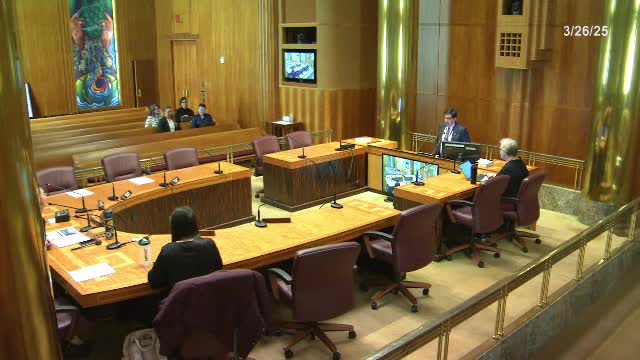
Edmundo Lee Ho, an assistant city attorney who manages St. Paul’s immigrant and refugee program, told the City Council’s organizational committee that a series of recent federal executive orders and agency changes have produced “more than we can kind of keep up with” and outlined the legal and practical implications for the city and immigrant communities.
Lee Ho reviewed several federal developments: executive actions addressing birthright citizenship, pauses to refugee resettlement programs, reinstatement of expedited removal, designation of organized crime groups as national security threats, rescission of the prior “sensitive locations” policy that limited immigration arrests at schools and places of worship, and an executive order he cited as Executive Order 14,159 that directs review and potential withholding of federal funds from jurisdictions deemed insufficiently cooperative with federal immigration enforcement.
Lee Ho said a constitutional provision, the Fourteenth Amendment’s citizenship clause, cannot be changed by executive order and that multiple lawsuits have been filed challenging executive‑branch actions. He told the committee that Minnesota is a party to at least one of those lawsuits and that St. Paul and Minneapolis joined a lawsuit filed by the City of San Francisco and others; according to Lee Ho the city joined that suit on Feb. 27, 2025.
Lee Ho explained St. Paul’s separation ordinance (chapter 44 of the city’s administrative code, adopted in April 2004), which limits city employees from asking about or enforcing federal immigration status except in narrow circumstances. He said the separation ordinance is aimed at preserving public safety and community trust: “Effective law enforcement requires the trust of all community members,” and he warned that cooperation with federal immigration enforcement can reduce reporting of crimes and cooperation with police.
Lee Ho summarized the city’s legal position: the Tenth Amendment and the anti‑commandeering doctrine bar the federal government from forcing local governments to enforce federal law, and executive orders that would condition funding on local enforcement raise legal and procedural questions under the Administrative Procedure Act. He said many jurisdictions have filed lawsuits challenging similar orders and that courts may issue preliminary injunctions to preserve the status quo while a case proceeds; such litigation can take years to resolve.
On practical protections, Lee Ho listed constitutional and procedural rights immigrants retain, including the right to remain silent, the right to consult an attorney (though counsel is not appointed by the government in immigration removal proceedings), the right to refuse warrantless entry to a home, and the right to decline to sign documents without first consulting counsel. He encouraged residents to create family emergency plans and to prepare documents such as declarations of parental or delegation of parental authority and limited powers of attorney to cover child care and school decisions if a parent is detained.
Lee Ho described city resources: an immigrant and refugee program web page, a QR code to share resources, and a legal defense fund that supports nonprofit legal assistance. He said the city is coordinating with legal service providers to hold community sessions where residents can receive consultation and help preparing emergency plans.
Councilmembers thanked Lee Ho for the briefing. Councilmember Yang asked how residents should respond to fear of authority and whether exercising rights could lead to worse outcomes; Lee Ho emphasized the importance of individualized legal advice and urged residents to consult immigration attorneys or nonprofit legal services.
Lee Ho said the city will continue to follow the separation ordinance and to challenge federal orders that attempt to condition or withhold funds on local enforcement of federal immigration law. He encouraged residents to use the city’s resources and to participate in forthcoming community legal sessions.