Get Full Government Meeting Transcripts, Videos, & Alerts Forever!
Get email alerts on the Energy Nuclear topic
No spam. Unsubscribe anytime.
Committee advances bill offering tax credits and new rate-recovery rules for small modular reactors
Summary
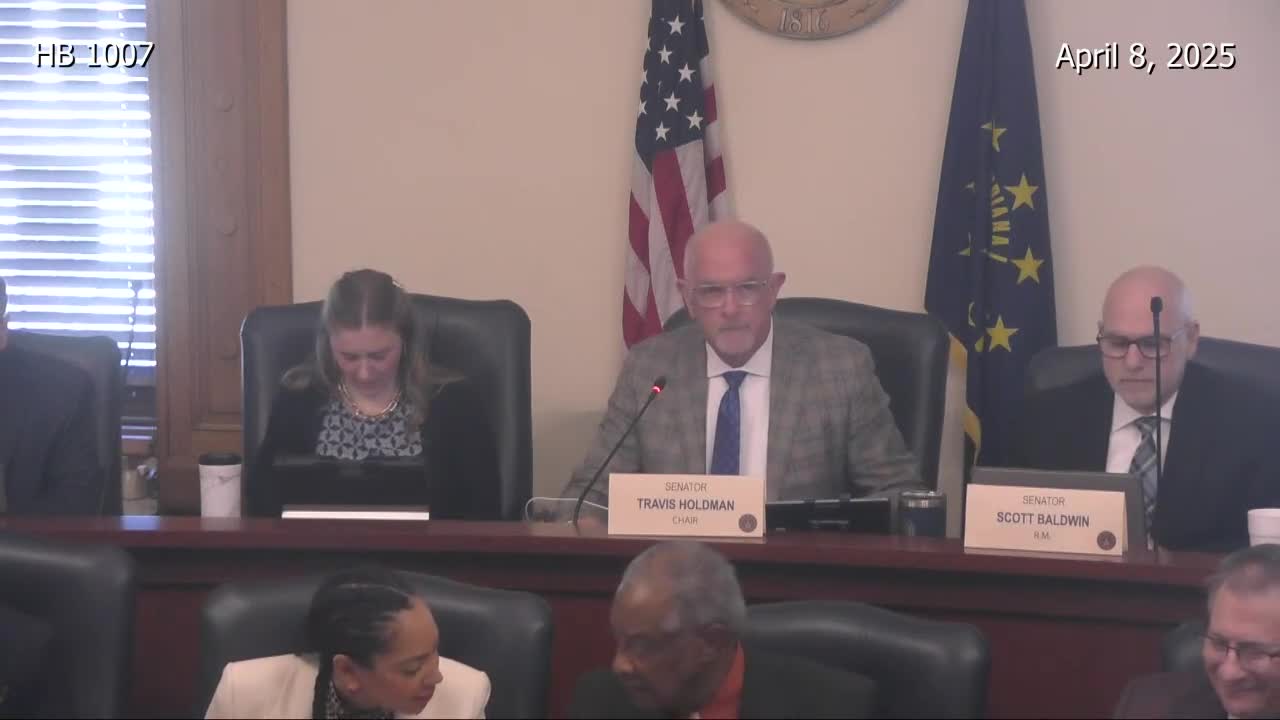
The Tax and Fiscal Policy Committee advanced House Bill 1007, a multi-part energy and utility bill, after a lengthy hearing that included lawmakers, environmental advocates and consumer groups.
The Tax and Fiscal Policy Committee advanced House Bill 1007, a multi-part energy and utility bill, after a lengthy hearing that included lawmakers, environmental advocates and consumer groups. The bill was approved in committee by a recorded vote of 10–3.
Representative Laid-back Saluday, the bill’s lead house sponsor, told the committee the measure addresses several pieces of state energy policy: “This is an important bill. It's a lot of pages, but there are about 5 things that need to be addressed.” He described five principal components: a manufacturer-focused tax credit for small modular reactors (SMRs), a Qualified Infrastructure Plant (QIP) mechanism to recover planning and preconstruction costs, new requirements for notifying affected utilities about large development projects, rules about retiring coal-fired plants, and requirements that very large customers assume most of the financial risk for new generation capacity.
At its core, HB 1007 would create a 20% state tax credit for expenditures incurred to build a manufacturing plant that produces SMRs (the committee record and sponsor repeatedly distinguished the manufacturing-plant credit from utility construction costs). The bill also would expand an existing QIP-style recovery pathway that allows utilities to request periodic recovery of engineering and preplanning costs through the Indiana Utility Regulatory Commission (IURC) rather than waiting for a full rate case. Sponsors said QIP is restricted to costs that can be justified and monitored by the IURC and that utilities would still have the option of seeking recovery later in a full rate case.
Representative Saluday summarized the bill’s consumer protections and process changes: manufacturers would be eligible for the 20% credit on a manufacturing plant; utilities seeking QIP recovery must present a plan to the IURC and submit to monitoring; and utilities proposing to close a coal-fired plant would have to demonstrate to the IURC that closure is economically beneficial to customers and that equivalent or greater capacity is planned to replace it. For very large customers seeking more than 150 megawatts, HB 1007 would require the customer to take on at least 80% of the contract risk in order to qualify for an expedited certificate-of-public-need process.
Opponents cautioned the committee about fiscal and consumer risks. William Paraskevis, an Indianapolis resident, said he opposed HB 1007 and warned that both the manufacturing tax credit and the utility recovery provisions could create significant fiscal exposure: “Section 1…allowing a credit against taxpayer state liability for expenditures incurred in the manufacture of SMRs in the amount of 20% of that expenditure” was the provision he singled out in testimony. David Van Gilder of the Hoosier Environmental Council opposed the bill on cost and environmental grounds, saying SMR deployment remains experimental and that alternatives could deliver energy sooner. Kevin Olsen of Citizens Action Coalition urged the committee to consider the broader fiscal impact on households and public entities and argued that the fiscal statement did not fully capture state and local spending consequences.
Committee members pressed sponsors on details repeatedly during the hearing. Senators asked for clarification that the 20% credit applies to the manufacturing plant, not the reactor installation; that QIP applies to planning and engineering costs; and whether utilities can seek recovery if projects stop before completion. Representative Saluday and others reiterated that utilities may seek IURC approval of a recovery plan; the IURC retains discretion and must find expenditures were “prudent and reasonable” before allowing recovery. Senator Randolph and others said they remained concerned about open-ended predevelopment cost recovery and the potential for ratepayers to bear costs for projects that never produce electricity.
The committee also heard several safeguards described by sponsors: the bill requires disclosure to affected utilities when an economic-development project requests 20 megawatts or more; provides an IURC review of plant closures; and includes a faster CPCN (certificate-of-public-need) timeline for projects where the large customer takes the prescribed contractual risk. Sponsors said timelines and monitoring were vetted with regulators and industry representatives.
After testimony and member questions, the committee debated and voted to send the bill to the floor. Senator Fedora explained her no vote, saying in part the measure would “use Hoosiers as the banking institution to finance a project” and that the fiscal exposure was unclear. The committee recorded a 10–3 vote to advance HB 1007.
What’s next: HB 1007 will proceed to the full chamber for further debate, where opponents and supporters said they expect more floor discussion about fiscal exposure, IURC oversight and guardrails for ratepayer risk.