Get Full Government Meeting Transcripts, Videos, & Alerts Forever!
Get email alerts on the Confined Feeding Operations Inspections topic
No spam. Unsubscribe anytime.
Panel codifies inspections and biosecurity protocols for confined feeding operations
Summary
The House Environmental Affairs Committee passed Senate Bill 193 as amended, codifying inspection timelines and biosecurity protocols for confined feeding operations, allowing complaint-driven unannounced inspections and expanding scheduling windows to accommodate limited inspection resources.
The House Environmental Affairs Committee voted unanimously to pass Senate Bill 193 as amended, a bill that codifies inspection requirements and biosecurity protocols for confined feeding operations and sets timelines for initial and renewal compliance inspections.
Proponents said the amendment clarifies inspection timing, elevates biosecurity protocols to statutory status, and adjusts scheduling windows to account for a limited number of environmental consultants and IDEM inspectors. Supporters and agency staff said the goal is to ensure inspections happen without imposing unattainable timelines on inspectors or farms.
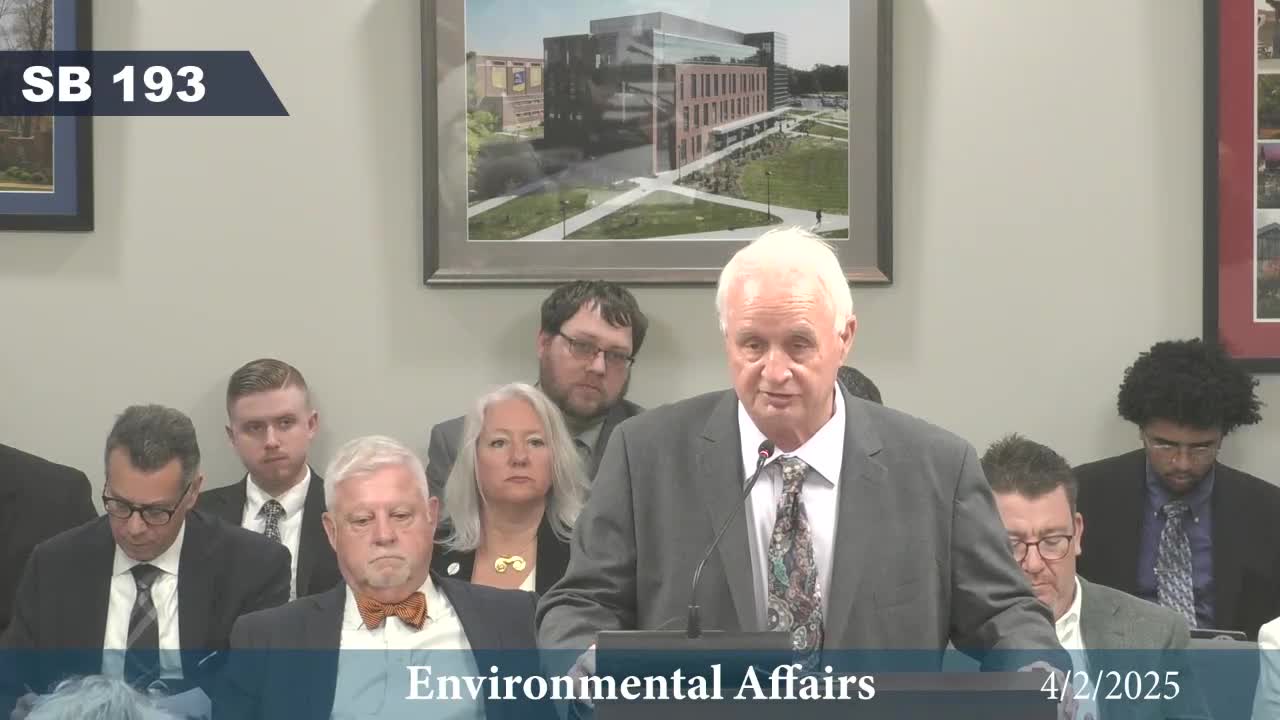
Josh Trenary, executive director of the Indiana Pork Producers Association, said Amendment 9 elevates biosecurity requirements to the same statutory footing as inspections and extends scheduling windows to 90 days to allow available inspectors to meet demand. “If we're going to put timing parameters around when inspections need to happen and those are going to be subject to biosecurity downtime by the state's inspectors, we gotta make sure they've got adequate window to schedule those inspections,” Trenary said. He also said the amendment changes the initial compliance-inspection trigger to the submission of the construction completion affidavit so inspectors will find a completed facility on site.
Toby Days, sustainable agriculture director at the Hoosier Environmental Council, urged the committee to support the bill and argued for the public-health and environmental case for inspections. He cited IDEM inspection data from February 2024, saying the agency conducted 525 inspections that resulted in 95 violations and 11 spills, and described examples of fish kills from smaller spills included in IDEM reports.
Becky Yonishkan, president of the Indiana State Poultry Association, said her members supported codifying inspection expectations and welcomed the biosecurity-language changes. She noted that some renewals cluster in calendar years ending in 0 or 5 and said the amendment provides flexibility to avoid staffing bottlenecks.
IDEM’s legislative director, Jake Tory, told the committee the agency supports the amended bill and said existing staff levels are sufficient to carry out the inspections on the schedule established in the amendment. Committee members asked specific questions about administrative-code references and rule authority; witnesses said the agency’s existing rulemaking authority and the administrative code provisions referenced in testimony (IAC 19-4-1 and related confined feeding rules) cover the approval conditions and implementation details.
The amendment also clarifies that complaint-driven inspections — whether for new permits or existing facilities — may be conducted without advance notice, and that IDEM may prioritize inspections using discretion informed by compliance history and risk factors.
The committee approved the bill as amended by roll call, recorded as 13 yeas and 0 nays, and advanced it to the full House.