
Student advisory council students tell board SuperSAC gives them voice on bullying, mental health and school programs
Get AI-powered insights, summaries, and transcripts
Subscribe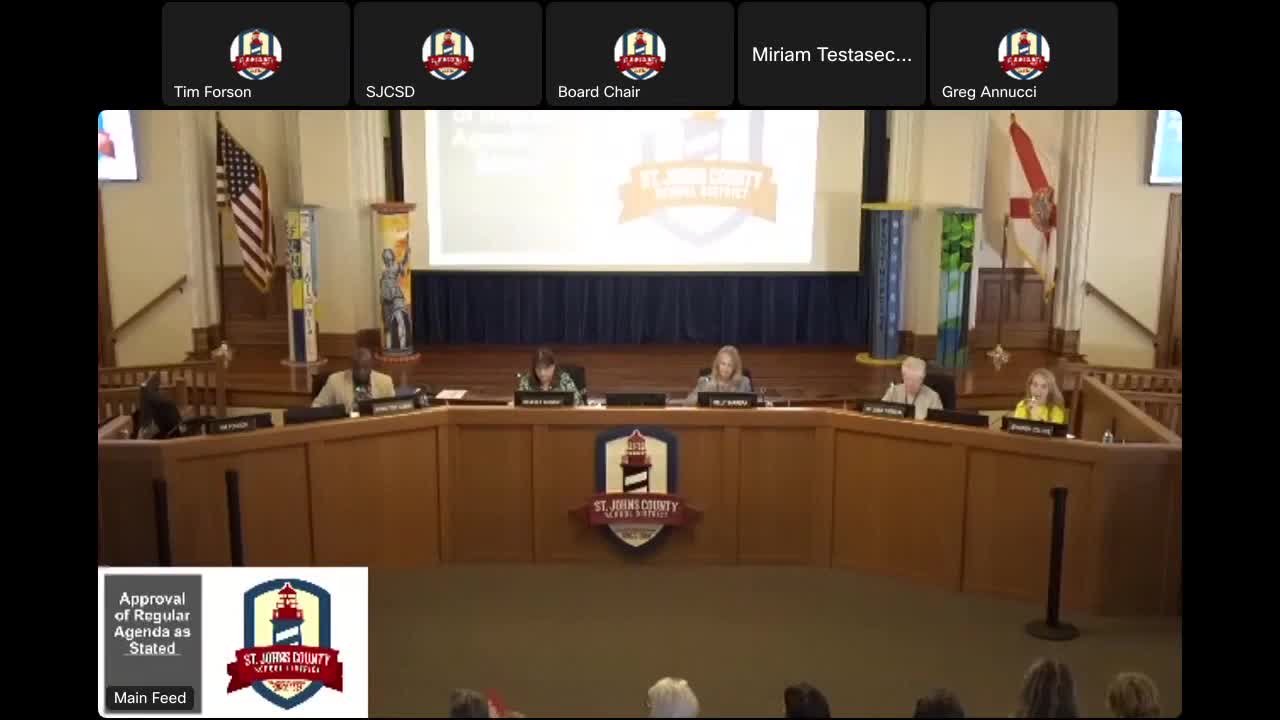
Summary
Five high school students described their work with the district’s Superintendent’s Student Advisory Council (SuperSAC), saying the group brings student perspectives to policy discussions on issues such as vaping, anonymous bullying pages and mental-health supports and that members would welcome regular meetings with the board.
Five St. Johns County high school students told the school board that the Superintendent’s Student Advisory Council (SuperSAC) gives students a practical voice in district decisions and helps the district identify problems such as anonymous social‑media bullying, vaping and mental‑health concerns.
Kashish Mansour, a junior at Brush Hunter High School, said SuperSAC “shows the district actually cares about what the students think” and allows students to “announce the issues that I feel go on at my school.” Eli Fowler of Beachside High School said SuperSAC provided “behind‑the‑scenes knowledge” of district operations that made school-level issues more tangible.
William Duchell, a senior at Beachside High, said SuperSAC promotes inclusion and equity by bringing representatives from multiple schools and virtual programs together. Catherine Clark, a senior representative at Creekside High School, said the council allowed students to propose solutions and observe “tangible efforts” on issues such as anonymous social-media pages. Shreya Singh, a senior at Takoy Creek High School, said the council builds leadership skills and encourages students to raise similar conversations at their schools.
Board members asked whether students would be willing to meet with the board on a recurring basis. Several students said yes; one said meeting with the board quarterly would be “very beneficial.” Superintendent Forsen noted there are 27 students on SuperSAC (three from each school plus virtual and technical‑school representation) and that five were presenting at the meeting.
The presentation was part of the board’s recognitions and received praise from trustees, who suggested SuperSAC members could meet periodically with the board to provide direct student perspective.