Get Full Government Meeting Transcripts, Videos, & Alerts Forever!
Get email alerts on the Sergeant At Arms topic
No spam. Unsubscribe anytime.
Commission debate over reinstating sergeant at arms program grows heated; questions remain about cost and oversight
Summary
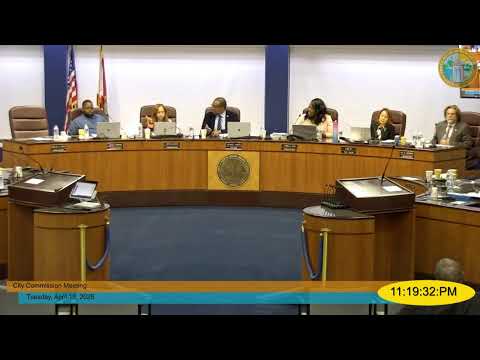
The City Commission extensively debated a proposal to reinstate a sergeant‑at‑arms program on April 15; staff presented a draft policy and preliminary costs but the meeting record does not show a final, clearly recorded adoption.
The commission spent significant time debating whether to reinstate a sergeant‑at‑arms program at the April 15 meeting after staff brought forward a draft policy and a preliminary budget estimate. The proposed policy sets use limits, a 72‑hour request window for scheduled events, prohibited activities and a staffing/rotation method; staff also provided a preliminary cost estimate and an option to fund officer overtime through commissioners’ contingency funds.
Why the issue was contentious: Several residents and former elected officials recounted past abuses of the program and urged that the city avoid returning to a policy that had been misused. Commissioners alternated between acknowledging personal safety concerns and worrying that the program could draw officers off core duties or be perceived as an entitlement for elected officials.
Policy summary and cost estimate: Police staff described restrictions (no personal errands, no transport of family members except in official capacity) and said assignments would rotate among qualified officers and rely primarily on off‑duty personnel. Staff provided an estimated minimum per‑detail cost using an average overtime rate of roughly $84/hour for a four‑hour minimum and a preliminary annualized number of approximately $203,432 (this figure included assumptions about the number of events and two officers per event); staff also listed a potential extra cost to lease vehicles if required.
Funding and oversight concerns: Commissioners debated who should pay for details: some suggested the mayor’s office could carry baseline coverage and individual commissioners could use their contingency funds for additional details. Others argued the city should not create a program that diverts police labor and funds from public safety priorities. Several commissioners asked staff for clearer accounting of pension, insurance and vehicle costs before finalizing policy.
Meeting outcome: The transcript records motions, a lengthy debate and preparatory votes about tabling, but does not show a clear, unambiguous final action that implements the program at this meeting. Commissioners voiced competing preferences (table, approve with contingency funding, require more detail). Staff was asked to return with detailed cost breakdowns, vehicle availability and administrative options.
Ending: The item produced intense public comment and sustained commission debate. The commission asked police staff and finance to return with a full, line‑item cost estimate and options for funding and oversight before any final reinstatement decision.