Get Full Government Meeting Transcripts, Videos, & Alerts Forever!
Get email alerts on the Enforcement Procedure topic
No spam. Unsubscribe anytime.
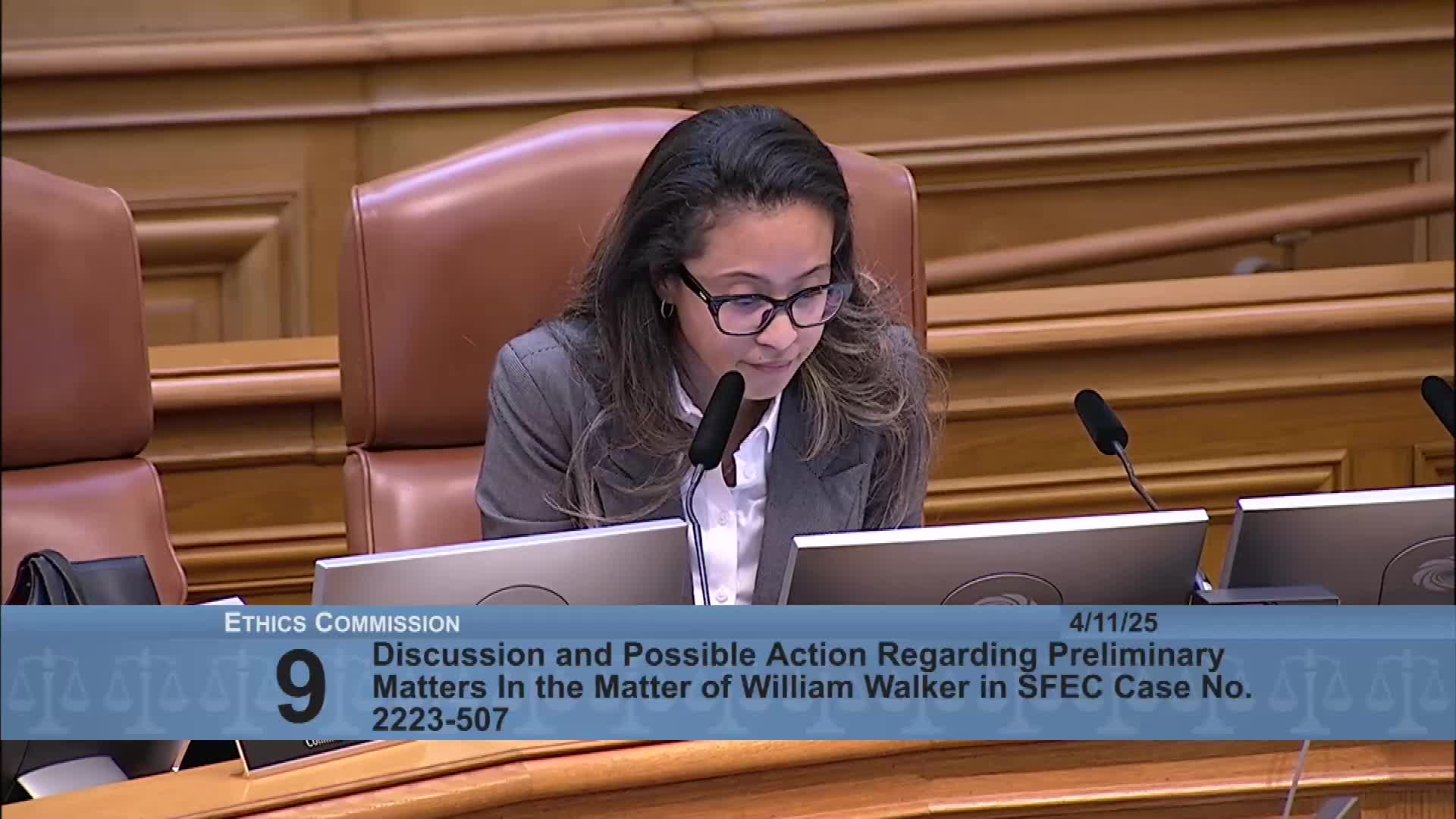
Ethics Commission sets procedural framework for William Walker enforcement hearing, tables assignment of a preliminary hearing officer
Summary
The commission approved most procedural rules for a potential administrative hearing in the enforcement case against William Walker but tabled who will preside over preliminary matters and specifics about submission deadlines and methods pending further consideration, including an accommodation request for mailed notices.
The San Francisco Ethics Commission on April 11 set several procedural rules for preliminary matters in the enforcement case involving William Walker (SFEC case no. 223‑507) but tabled the appointment of a single assigned commissioner to preside over those preliminary matters and some related deadlines and submission methods.
Enforcement staff presented six preliminary items the commission must decide before a hearing: who will preside over preliminary matters; deadlines for motions and responses; the manner of submitting motions; a process for commission review of disputed procedural rulings; who will preside over the merits hearing; and the process for issuing final findings and orders. Staff recommended appointing a single commissioner to preside over preliminary matters and adopting a 30/15/10 calendar-day schedule for motions, responses and replies. The enforcement division also recommended email submission of motions with service to all parties.
Commissioners agreed with staff on many points but declined, for now, to appoint an assigned commissioner to preside over preliminary matters. Instead, the commission voted to table items 1–3 (the assignment; the specific motion deadlines; and email as the sole submission channel) and to accept staff recommendations on items 4–6: using the enforcement-division-recommended review process for disputed procedural determinations, having the full commission preside over the merits hearing unless otherwise delegated, and aligning the process for final findings and orders with the approach used in a prior case.
The enforcement division noted it remains open to settlement discussions with Walker and that the preliminary-items vote does not foreclose further negotiation. The roll call adopting the mixed approach was unanimous: Chair Flores Fang, Commissioner Tsai, Commissioner Francois and Commissioner Yeh voted aye.
During public comment Walker asked that the commission also send critical communications by U.S. mail in addition to email because he said he has not consistently received commission emails; he said he would provide a mailing address. Commissioners and staff discussed accommodations for individuals who need alternative delivery and Director Pat Ford cautioned against a blanket requirement that staff mail all notices, noting logistical burdens and that accommodations should be considered when warranted. The commission directed staff to work with the respondent to address any accommodation requests and to bring remaining procedural items back for decision at the next meeting if needed.
The vote establishes the review process and hearing configuration should the matter proceed to hearing; it leaves unresolved who will be the single presiding commissioner for preliminary motions and whether the motion timetable or submission method will be adjusted for any accommodated respondents.