
Chandler Unified reports network upgrades, cybersecurity work and classroom tech rollout; offers AI guidance for staff
Get AI-powered insights, summaries, and transcripts
Sign Up Free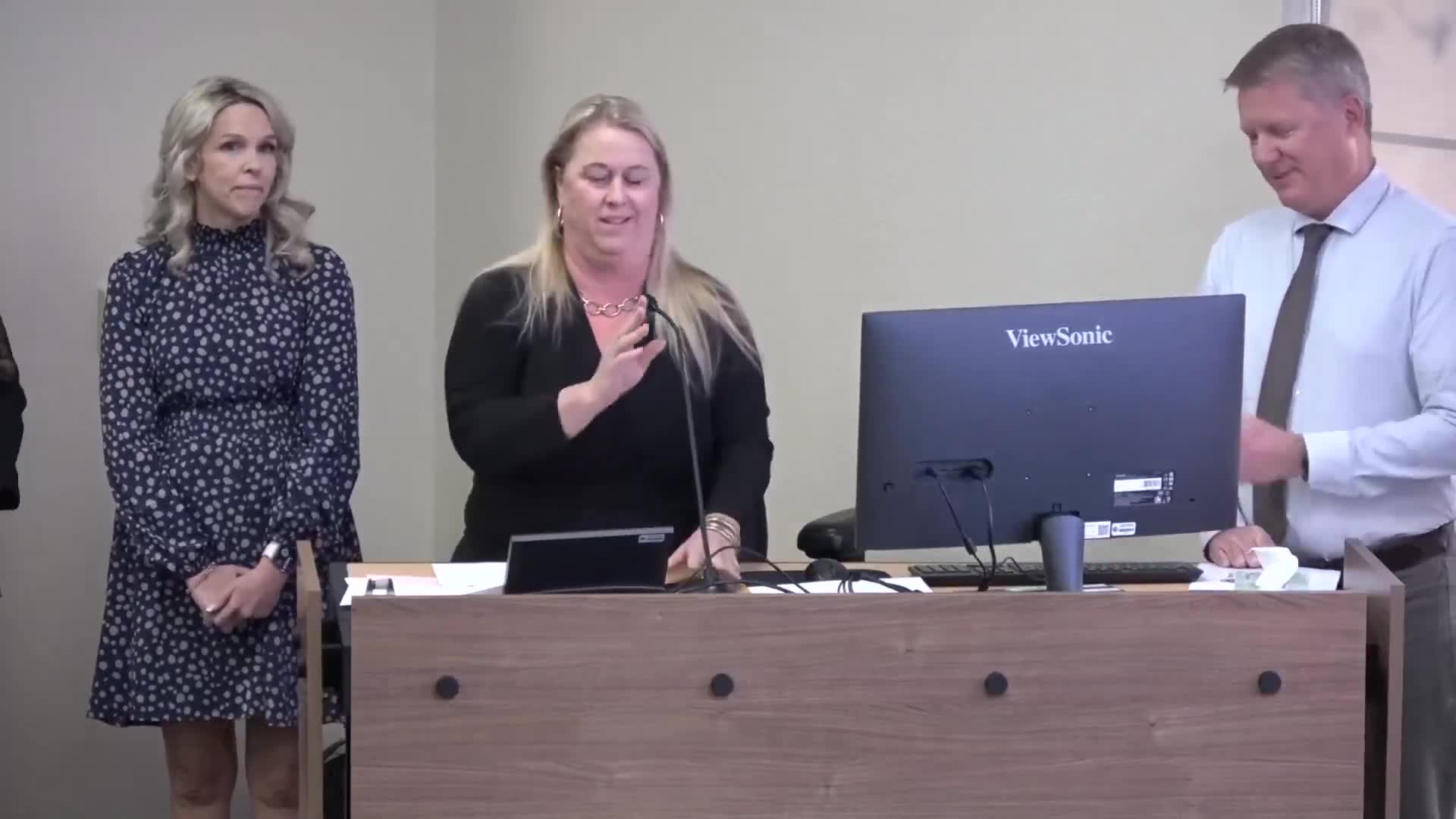
Summary
District technology leaders described major infrastructure upgrades, a near‑complete rollout of interactive flat panels, cybersecurity measures and initial guidance and training on educational AI during a study session presentation.
Colleen Flannery, a Chandler Unified technology lead, told the governing board the district has moved from a supporting role for technology into an essential, districtwide instructional resource, citing a post‑pandemic jump to one‑to‑one devices and expanded network needs. “Devices were our students' connection to learning, devices were teachers' connections to their students,” Flannery said during her presentation.
Flannery and technology staff described recent investments and operational changes meant to support instruction, testing and a growing set of online tools: roughly 43,000 student devices are in circulation, the district runs a one‑to‑one program and staff said an enterprise network now brings about 10 gigabits per second into the district office with about 3,000 wireless access points and roughly 850 network switches installed across 50 buildings.
Infrastructure, connectivity and equity
Presenters said the district used the federal E‑Rate program and other grant and local funds to replace end‑of‑life network switches and access points and to “future proof” bandwidth. Staff said pandemic ESSER and local grants previously funded hotspot loans to support at‑home connectivity and that a new E‑Rate category will help cover home connectivity for some students going forward.
Security and operations
Technology leaders outlined several cybersecurity initiatives: a disaster‑recovery plan, a cyber incident response playbook developed with outside experts, and participation in a state cyber‑readiness grant that provided tools such as phishing‑simulation software (Infosec) and Tanium for endpoint visibility. Flannery described the state grant’s collaboration benefits, noting shared incident intelligence with nearby governments and the Department of Homeland Security.
Instructional technology and classroom changes
Staff said an almost districtwide replacement of older LCD projectors with interactive flat panels (IFPs) is nearly complete and includes teacher docking stations to “untether” teachers from desks. The technology team also described device choices by grade band: iPads with detachable keyboards in K–2, Chromebooks in grades 3–8, and Windows laptops in high school; staff said the diversity of device types is intentional to match instructional needs.
The presentation described additional operational improvements: an inventory and service management system (Incident IQ) for 50 buildings, a managed print contract to centralize toner and firmware management, and a technology advisory committee that includes staff and parents.
AI, training and next steps
Staff discussed district AI guidance and training. Technology leaders said the district encourages use of vetted vendor offerings tied to existing district contracts (for example, Google Gemini and Microsoft Copilot) because those contracts contain data protections. The district rolled out online AI training to staff during a workday and established an AI advisory to develop student AI literacy progressions. Presenters urged caution on student tools whose terms of service restrict underage use.
Other programs and challenges
The technology presentation also noted newer district programs such as sanctioned AIA esports at high schools and an IT internship with district CTE to build local talent. Presenters repeatedly cited workforce recruitment and long‑term capital funding as ongoing challenges.
Board members asked about assessment and grading‑period slowdowns; staff said they monitor bandwidth and can prioritize traffic (for example, by throttling nonessential services during heavy assessment windows) and that past outages during grading were more often tied to application servers than to local bandwidth. No formal actions were taken during the session; staff fielded questions and agreed to follow up on specific site‑level details.