Get Full Government Meeting Transcripts, Videos, & Alerts Forever!
Get email alerts on the Water Infrastructure topic
No spam. Unsubscribe anytime.
Cherokee Nation highlights water investments, education support and $3.14 billion economic impact in state-of-the-nation address
Summary
Principal Chief Chuck Hoskin Jr. told the Tribal Council that the Mankiller-Soap Water Act and supplementary funds have driven millions in water infrastructure investments, the nation provided $7.6 million to public schools and an economic impact report tallied $3.14 billion in annual economic activity.
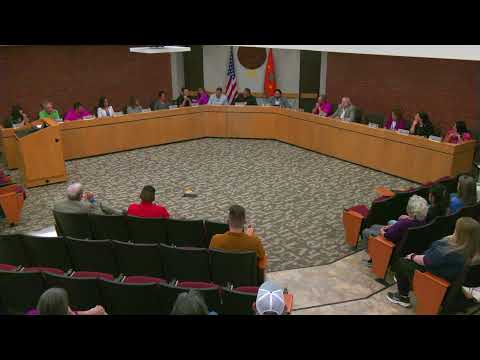
Principal Chief Chuck Hoskin Jr. delivered the Cherokee Nation’s state-of-the-nation remarks at the Tribal Council’s April 14 regular meeting, reporting on water-infrastructure spending under the Mankiller-Soap Water Act, the nation’s continuing support for public education and a new economic impact estimate.
Hoskin said the Mankiller-Soap Water Act — enacted by the council in February 2021 — adds $2,000,000 in tribal funds each year for water infrastructure and that the nation has increased that annual amount by $500,000 using the Public Health and Wellness Fund Act. He said a biennial report on the law’s implementation is available on the Cherokee Nation website and in media releases.
"At its base, it adds $2,000,000 every year, in tribal funds on top of the federal funds that we harness for water infrastructure," Hoskin said. He told the council that, with the addition of American Rescue Plan Act (ARPA) funding and other sources, the nation has invested $23,800,000 since February 2021 to improve water access and water systems across the reservation.
Why it matters: Hoskin framed the investments as addressing both system-level needs and household repairs, including work that has helped elders and small water districts. He said the Department of Transportation and Infrastructure, through its Water and Sanitation department, has leveraged more than $6,000,000 in grants to add to tribal and federal funding.
Hoskin noted an example in the Cherry Tree rural water district, telling the council Cherokee Nation has contributed "over $8,300,000" to help repair that system and citing the district’s link to the Bell water line project initiated by former Chief Wilma Mankiller and community leaders.
On education and economy: Hoskin told the council Cherokee Nation contributed $7,600,000 to 107 school districts using CARE (CAR TAC) funds. He also announced an economic impact report showing a $3,140,000,000 annual economic impact tied to Cherokee Nation activities, noting the nation employs more than 14,500 people worldwide and supports about 23,000 additional jobs through its businesses and programs.
Other remarks and context: Hoskin described recent outreach, including visits to state lawmakers and at-large Cherokee gatherings in Washington, D.C., Pennsylvania and planned meetings in California. He thanked Department of Transportation and Infrastructure leadership and the council for support of the water program.
The chief closed by recognizing community groups and guests in the chamber, and the council moved on to presentations and other agenda items.
Ending note: Hoskin said the nation will continue funding water projects even as federal funding streams fluctuate and credited the council, administration and department leadership for sustaining the program going forward.