Get Full Government Meeting Transcripts, Videos, & Alerts Forever!
Get email alerts on the Bike Share topic
No spam. Unsubscribe anytime.
CapMetro proposes first bike-share fare increase since 2013, cites sustainability and expansion goals
Summary
CapMetro staff proposed updated bike-share fares, a shorter free-ride window and expanded student eligibility; staff said revenue will support system reliability and planned expansion, while a public commenter urged clearer cost–benefit information and raised equity concerns for Northeast Austin.
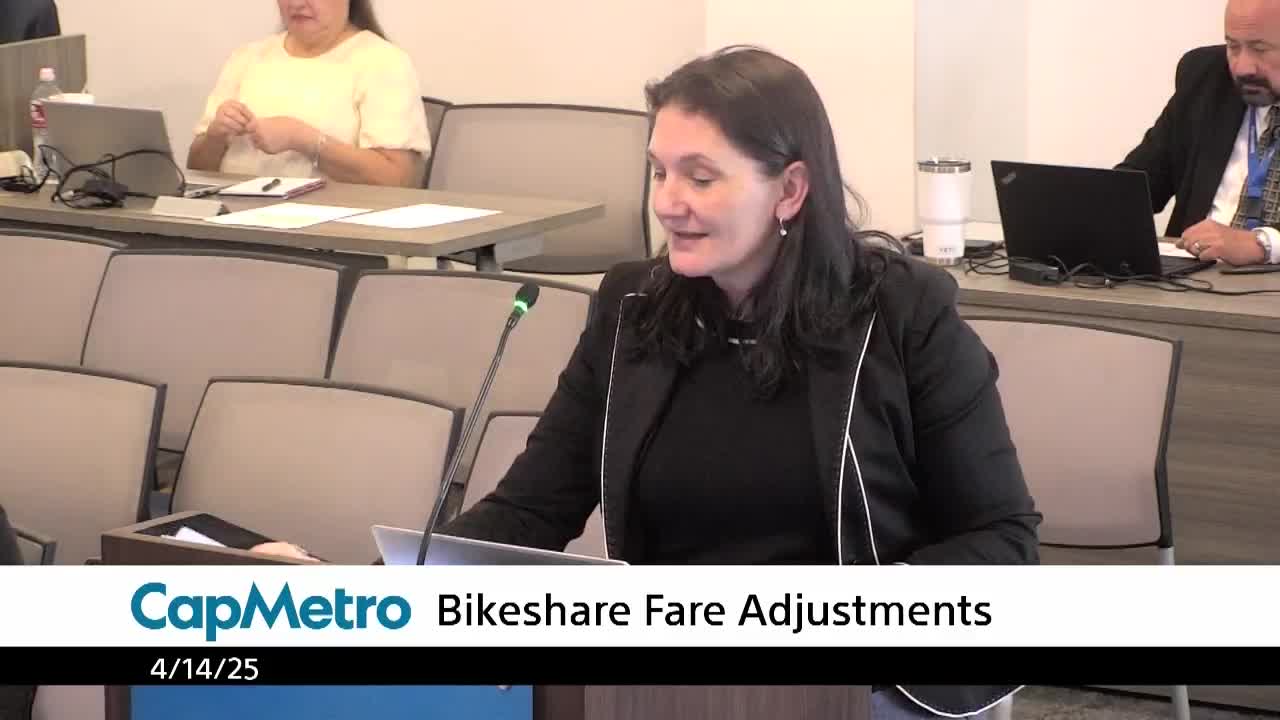
Brandy Moller, CapMetro director of revenue and fares, told a public hearing April 14 that the agency plans to raise bike-share fares for the first time since 2013, citing inflation and the need to sustain current service and enable planned expansion.
Moller said the proposal would raise the pay-as-you-go unlock fee from $1.09 to $2.50 and increase the per-minute charge from $0.23 to $0.25. She described a move from a 60-minute included ride window to a 30-minute included ride window for pass holders and daily users, and said the change is intended to encourage shorter, more frequent check-ins to preserve battery life and distribution. “The majority of the average ride time that our individuals use is 13 minutes,” Moller said, and “76% of our rides” are within 30 minutes; she added that “96% of those rides are within those 60 minutes.”
Under the proposal, pass prices would also change: the one-day pass would fall from $12.99 to $10; the 31-day (monthly) pass would rise from $11 to $14; the annual pass would increase from $86.60 to $150; and the annual student pass would increase from $12 to $75 while being made available to all riders age 18 and older who attend trade schools, technical schools, vocational programs, high schools or non‑UT colleges (staff said the program currently covers UT students and staff only). Moller said the agency would implement the new fares in August and planned to bring the item to the board for consideration at an April board meeting in April, with community engagement continuing through the public‑comment period.
Moller compared CapMetro’s proposed prices with private operators, saying CapMetro’s proposed structure would remain among the lowest in the country and showing a line‑by‑line cost comparison with Lime’s rates. She noted that Lime’s lower unlock fee but much higher per‑minute charge makes longer rides costlier on Lime than on CapMetro under the proposed structure. Moller also explained an overage charge example: under the current structure an overage could cost $4.33 per 30 minutes; under the proposed scheme users would pay $0.25 per minute beyond included time.
Board members asked about review frequency and rider notification. Moller said she expects to review fares at least every five years and monitor operations more frequently, and that marketing and communications would be used to post signage and notify users. Board member questions prompted Moller to say she would explore a semester or monthly student option on request.
During public comment on the bike‑share proposal, Zenobia Joseph urged CapMetro to present a cost–benefit analysis and said outreach materials had felt “like a sales pitch.” Joseph also argued that investments appeared concentrated downtown and in southwest/central areas while Northeast Austin has unmet safety and accessibility needs, referencing crashes on North Lamar and missing sidewalks and shelters in that area. “More could be done,” Joseph said, and she asked the agency to consider Title VI obligations when planning where service and infrastructure investments go.
CapMetro staff did not take a board vote at the hearing; staff said both the bike‑share fare changes and August service adjustments would be presented for board action at an upcoming April board meeting and (if approved) the bike‑share changes would take effect in August.