Get Full Government Meeting Transcripts, Videos, & Alerts Forever!
Senate finance committee advances $59.8 billion appropriations package, sends budget implementation and bond bills to calendar
Summary
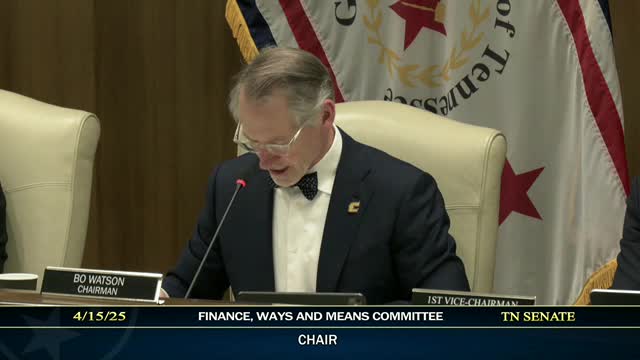
The Senate Finance, Ways and Means Committee on April 15 recommended passage of the Appropriations Act, a budget-implementation bill and a $1.034 billion general-obligation bond authorization after adopting a series of amendments that shifted and earmarked state funds for disaster relief, health care and local public safety grants.
The Senate Finance, Ways and Means Committee on April 15 approved the fiscal year appropriations bill (Senate Bill 14-31) as amended and recommended it for passage to the committee on the calendar, after adopting three finance amendments and several late changes.
The Appropriations Act the committee considered sets a topline of roughly $59.8 billion, of which about $29.8 billion is identified as state funds in the committee’s presentation. Committee members adopted an administration amendment and a legislative amendment that redirected one‑time and recurring amounts to fund legislative priorities without increasing the topline.
Why it matters: The package funds recurring and one‑time items across state government, makes targeted investments in disaster relief and health care, and sets aside grant pools for local first responders and cultural institutions — all while the committee elected not to recognize potential revenue from two pending tax bills (vape and hemp) in the current budget.
Key provisions and spending changes included in the legislative amendment
- Disaster relief and preparedness: earmarks for communities affected by Hurricane Helene and other West and Northeast Tennessee incidents; $1.2 million non‑recurring for flood preparedness and $25 million non‑recurring for disaster relief in Northeast Tennessee. - Hospital support and health care: $78 million redirected from shared‑savings mechanisms to buy back services paid by the hospital assessment (bringing total investment in that area to “a little over $100 million,” per the presentation); $4 million recurring to increase pediatric dental rates; $3 million non‑recurring for the adult health care safety net; $500,000 non‑recurring for epilepsy…
Already have an account? Log in
Subscribe to keep reading
Unlock the rest of this article — and every article on Citizen Portal.
- Unlimited articles
- AI-powered breakdowns of topics, speakers, decisions, and budgets
- Instant alerts when your location has a new meeting
- Follow topics and more locations
- 1,000 AI Insights / month, plus AI Chat