Get Full Government Meeting Transcripts, Videos, & Alerts Forever!
Get email alerts on the State Budget topic
No spam. Unsubscribe anytime.
Senate finance committee advances $59.8 billion appropriations package, sends budget implementation and bond bills to calendar
Summary
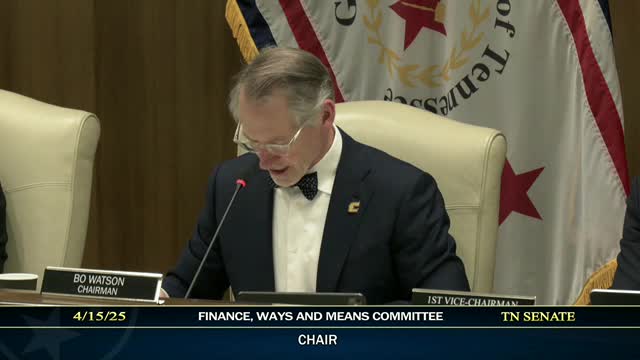
The Senate Finance, Ways and Means Committee on April 15 recommended passage of the Appropriations Act, a budget-implementation bill and a $1.034 billion general-obligation bond authorization after adopting a series of amendments that shifted and earmarked state funds for disaster relief, health care and local public safety grants.
The Senate Finance, Ways and Means Committee on April 15 approved the fiscal year appropriations bill (Senate Bill 14-31) as amended and recommended it for passage to the committee on the calendar, after adopting three finance amendments and several late changes.
The Appropriations Act the committee considered sets a topline of roughly $59.8 billion, of which about $29.8 billion is identified as state funds in the committee’s presentation. Committee members adopted an administration amendment and a legislative amendment that redirected one‑time and recurring amounts to fund legislative priorities without increasing the topline.
Why it matters: The package funds recurring and one‑time items across state government, makes targeted investments in disaster relief and health care, and sets aside grant pools for local first responders and cultural institutions — all while the committee elected not to recognize potential revenue from two pending tax bills (vape and hemp) in the current budget.
Key provisions and spending changes included in the legislative amendment
- Disaster relief and preparedness: earmarks for communities affected by Hurricane Helene and other West and Northeast Tennessee incidents; $1.2 million non‑recurring for flood preparedness and $25 million non‑recurring for disaster relief in Northeast Tennessee. - Hospital support and health care: $78 million redirected from shared‑savings mechanisms to buy back services paid by the hospital assessment (bringing total investment in that area to “a little over $100 million,” per the presentation); $4 million recurring to increase pediatric dental rates; $3 million non‑recurring for the adult health care safety net; $500,000 non‑recurring for epilepsy supports; $1.4 million recurring for scholarships tied to the joint public/private medical school early‑acceptance program (ETSU, MTSU and Meharry); and several smaller allocations to ALS research and Volunteers in Medicine. - Campus safety and justice: $5.4 million for campus safety improvements at the University of Memphis; $500,000 non‑recurring to establish a UT Law Enforcement Innovation Center; $400,000 non‑recurring for the East Tennessee Regional Forensic Facility and Training Program. - Local grants and volunteer services: a $42.5 million grant pool across categories: $20 million for volunteer fire department capital/equipment grants; $5 million for rescue squads; $5 million for emergency medical services; $5 million for senior centers; $5 million for local museums capital improvements; $2 million for courthouse restorations; and $500,000 for Second Harvest Food Bank. - Education and workforce: changes to teacher residency funding were made by redirecting funds to alternative programs (for example, some residency funds were reallocated to Teach for America), and the amendment left $244 million additional funding in the TISA K‑12 formula in place.
Revenue and reserve treatment
Committee leaders said the amendment did not assume revenue from two pending bills (vape taxes and hemp receipts) and therefore did not recognize those potential receipts in the budget. The amendment preserves contributions to the state’s rainy day fund; committee members noted a continuing deposit plan that would keep the rainy day fund unchanged from the proposed level.
Procedural and amendment action
- The committee adopted Finance Amendment 1 (the so‑called “stripper” amendment) and then adopted Finance Amendment 2 (the administration amendment). The committee also adopted Finance Amendment 3 (the legislative amendment) and later adopted two amendments to that amendment (described on the record as Amendment 1 to Amendment 3 and Amendment 2 to Amendment 3) that added $8 million non‑recurring to reimburse county election commissions for primary elections and adjusted rural education trust funding to a split of recurring/non‑recurring dollars.
- Members emphasized the package was developed to preserve the topline while shifting existing one‑time and recurring funds to reflect legislative priorities.
Bond authorization and debt service discussion
The committee also recommended passage of the bond authorization bill (Senate Bill 14‑30) authorizing up to $1.034 billion in general obligation bonds for capital projects. The sponsor said the package included $820.5 million for capital outlay, with large allocations for higher education and state facilities, and a line to support highway construction. The fiscal assumptions used for budgeting debt service include a 20‑year amortization and conservative 6% interest assumptions; staff noted actual interest rates at sale are likely to be lower. Committee discussion focused on the budgeted debt‑service assumptions and the budget office clarified that the fiscal note reports accumulated principal and interest over the life of the bonds and that the state is budgeting conservatively until actual sale timing and rates are known.
Budget implementation bill
The committee also approved the budget‑implementation bill (Senate Bill 14‑29) as amended. A notable provision discussed and later removed from that bill during committee action was a proposed redirection of $80 million in tire‑sales highway fund revenue; members said a separate bill (Senate Bill 144) would address that policy. The implementation bill, as amended, also included a one‑time transfer of $30 million from the Access Tennessee Reserve Fund to the general fund; witnesses explained Access Tennessee serves a small, closed enrollment and that the transfer would leave a remaining reserve to serve current enrollees.
Votes
- Senate Bill 14‑31 (Appropriations Act), as amended — moved by Leader Johnson and seconded; recorded roll call in committee produced seven ayes, two noes and one present but not voting (clerk’s tally read on the record). - Senate Bill 14‑29 (Budget Implementation), as amended — adopted on a unanimous committee vote of 10 ayes. - Senate Bill 14‑30 (Bond authorization), as amended — recommended for passage to calendar after roll call; the committee adopted a sponsor amendment increasing the capital allocation by $25 million and the bill moved forward.
What leaders said
Leader Johnson, presenting the package, said the legislative amendment redirected both recurring and non‑recurring amounts to fund priorities without increasing the bottom line and noted the committee did not recognize revenue from the vape or hemp bills in this budget. Chairman Watson and other members emphasized conservative growth assumptions and noted agency reductions and position adjustments captured in the package.
Next steps
Each bill was recommended to the committee on the calendar for floor consideration. Committee members said the schedule was set so the behind‑the‑budget calendar would be considered next week only after the budget bills pass the Senate.
Sources: Committee discussion and recorded roll calls during the April 15, 2025 Senate Finance, Ways and Means Committee meeting.