Get Full Government Meeting Transcripts, Videos, & Alerts Forever!
Get email alerts on the Tenncare Reimbursement topic
No spam. Unsubscribe anytime.
Tennessee lawmakers hear urgent appeals on TennCare reimbursement as rural hospitals and physician supply strain
Summary
Representatives and clinicians told the House Insurance Committee that low TennCare reimbursement is pushing doctors and hospitals out of rural areas. The committee advanced related legislation and discussed multiple policy options including fee schedules, loan repayment incentives and residency expansion.
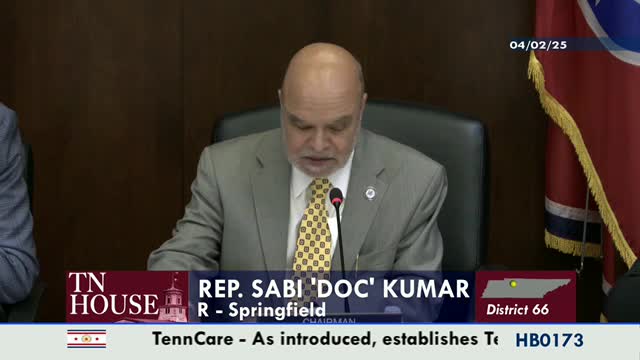
Chairman Gerald Martin brought House Bill 173 to the Insurance Committee on Wednesday, describing legislation to raise rural hospital reimbursement to a break‑even level set by the U.S. Department of Health and Human Services for hospitals with 49 beds or fewer. The committee voted 14‑0 to send HB173 to Finance, Ways and Means.
Members and a panel of clinicians then discussed House Bill 372, a separate measure sponsored by Chairman Halsey intended to improve access for TennCare enrollees by encouraging higher physician participation through financial changes. After more than an hour of testimony and committee questioning, HB372 also passed the committee 14‑0 and was referred to Government Operations.
Why it matters: Committee members and testifying physicians said low TennCare reimbursement is a principal driver of provider exits, contributing to rural hospital closures, maternity care “deserts” and limited specialty access. Committee members framed the bills as initial steps toward stabilizing rural access and recruiting or retaining clinicians in high‑need areas.
What supporters told the committee
Dr. Jot Hallman, an OBGYN from Johnson City, said TennCare reimbursement is “significantly lower than Medicare or commercial insurance plans” and described impacts in rural practice: “We once delivered babies at three hospitals, but have had to contract to a single facility due to provider shortages and rising costs.” He cited March of Dimes data that about one‑third of Tennessee counties qualify as maternity care deserts and said low payment discourages physician participation.
Dr. Rakesh Patel, a board‑certified psychiatrist, described bottlenecks in behavioral health access and said practices and clinics cannot sustain high patient volumes when reimbursement does not cover overhead. Pediatrician Betty Coyada of Heritage Medical Associates told the committee that TennCare covers about 52% of Tennessee children and that low payments threaten pediatric practices and long‑term health equity.
Committee discussion and options
Members discussed several policy responses heard in testimony: creating a state Medicaid fee schedule, direct increases to TennCare rates for targeted services, loan repayment or debt forgiveness programs tied to TennCare participation, and expanding residency seats so more physicians complete training and remain in state. Committee members and outside speakers warned that solutions will require budget tradeoffs and further work in Finance and other committees.
What the bills do and committee actions
- House Bill 173 (sponsor: Chairman Martin) — "Save Rural Hospital Act." As described in committee, it applies to hospitals with no more than 49 licensed beds and would allow rural hospital reimbursement rates to be adjusted toward a break‑even benchmark referenced to U.S. Department of Health and Human Services guidance. Committee recorded a motion, a second and a voice vote; the clerk reported 14 ayes, 0 nays. Outcome: advanced to Finance, Ways and Means.
- House Bill 372 (sponsor: Chairman Halsey) — aims to encourage higher physician participation in TennCare by addressing payment inadequacies and creating avenues to raise provider compensation. After public testimony and questioning, the committee called the question and the clerk reported 14 ayes, 0 nays. Outcome: advanced to Government Operations.
What TennCare officials and other witnesses said about constraints
Witnesses and members repeatedly noted limits on state action: TennCare currently operates through managed care organizations (MCOs) under contracts and, unlike many other states, Tennessee does not maintain a statewide Medicaid fee schedule. Committee members heard that MCO contracting is typically a “take it or leave it” negotiation, and that changing reimbursement structurally would require budget action and further committee work. Members also raised physician workforce factors beyond pay — including burnout, demographic shifts in providers, and limited residency slots — and asked about incentives and federal constraints.
Next steps
Committee sponsors said they intend to pursue the measures through Finance and Government Operations for budgetary and implementation review. Several members urged additional work on student loan repayment and residency expansion programs as complementary steps to strengthen the physician pipeline.
Ending note
Committee attendance at roll call was 14 members present; votes on HB173 and HB372 were unanimous as recorded on the floor during the session.