Get Full Government Meeting Transcripts, Videos, & Alerts Forever!
Get email alerts on the Criminal Justice topic
No spam. Unsubscribe anytime.
House creates limited new route for defendants who pleaded guilty to seek innocence reviews
Summary
By bipartisan margin, the House approved legislation establishing a pathway for defendants who entered guilty pleas to petition for review on the basis of new non-scientific evidence of innocence when both the prosecutor and defendant join the petition.
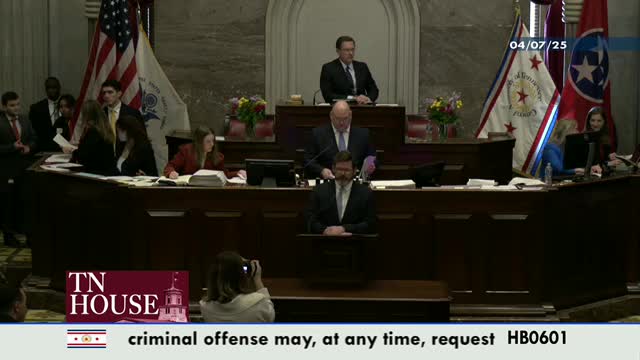
The Tennessee House approved House Bill 601 on third and final consideration, establishing a statutory procedure for judges to reopen cases in which a defendant who entered a guilty plea presents new non-scientific evidence of actual innocence.
Representative Freeman, the bill sponsor, said the law was a compromise developed with the Tennessee District Attorneys Conference and the Innocence Project. Under the bill as amended, a judge may reopen a closed case when a petition is filed and supported by both the district attorney general and the convicted person or their counsel — creating a pathway intended to be limited to rare, compelling claims of innocence.
Supporters urged that the change fills a gap in existing law where guilty-plea defendants previously had limited formal avenues to seek reconsideration. Representative Hulsey noted prior related legislation and praised the bill. Representative Hardaway said the bill helps ensure true justice by enabling investigation of the guilty party when an innocent person may be imprisoned.
The House recorded a final vote of 85 ayes and 7 nays.
Why it matters: Supporters framed the bill as a narrowly tailored remedy to avoid continued incarceration of innocent people while preserving prosecutors’ gatekeeping role; the measure places a high evidentiary and procedural bar and is expected to be invoked rarely.