Get Full Government Meeting Transcripts, Videos, & Alerts Forever!
Get email alerts on the Transit Funding Sb63 topic
No spam. Unsubscribe anytime.
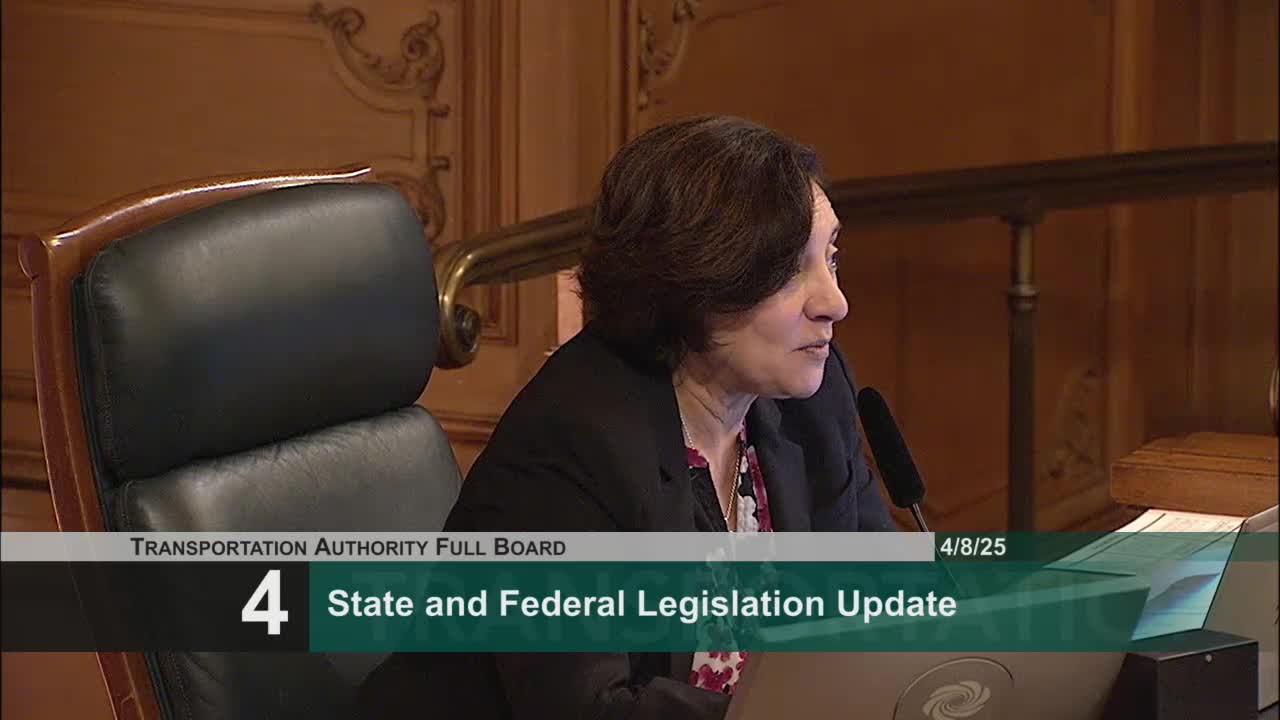
SFCTA votes to support Senate Bill 63, a regional transit revenue measure
Summary
The San Francisco County Transportation Authority voted to support Senate Bill 63, which would authorize a regional sales tax measure for transit on the November 2026 ballot and create a process for allocating revenues to operators including Muni, BART and Caltrain.
The San Francisco County Transportation Authority on April 8 voted to adopt a position of support for Senate Bill 63, a proposed regional transportation revenue measure that supporters say would place a sales tax measure on the November 2026 ballot.
Martin Reyes, principal transportation planner, briefed the board that SB 63 (introduced, per his presentation, by “senators Wiener and Aragene”) would authorize a transportation revenue measure district that by default includes Alameda, Contra Costa and San Francisco counties; San Mateo and Santa Clara counties may opt in by July 31, 2025. Reyes told the board the default tax rate would be a half-cent, with San Francisco having the option to approve up to a full cent by that July 31 deadline. “At its core, this bill authorizes a sales tax to be introduced on the November 2026 ballot across, what they’re calling the transportation revenue measure district,” Reyes said.
Why it matters: board members and staff said the measure is intended to provide multi-year operating support for transit agencies facing a fiscal cliff. Reyes said the bill would allow funding to go to the four major operators — AC Transit, BART, Caltrain and Muni — and to some smaller East Bay operators, and would permit MTC (Metropolitan Transportation Commission) to condition receipt of funds on agencies’ compliance with regional network management policies. The bill also calls for a Transit Financial Implementation Plan (TFIP) due July 31, 2025, to help allocate “fair share” contributions among counties and operators.
Reyes also reported related state activity: a separate push by state legislators for a $2 billion flexible transit funding request in the state budget to act as bridge funding until any regional measure begins delivering funds in 2027. He said the bill allows for either a measure placed on the ballot by MTC or by a citizen initiative.
During discussion Chair Myrna Melgar added that the MTC board had voted to support SB 63, with one abstention from a San Mateo County representative, and noted ongoing concerns among some counties about flexibility and interactions with expiring local sales tax measures.
The board motion to support SB 63 was moved and seconded; the roll call recorded 10 ayes and the motion was approved.
What the bill does not yet specify: Reyes said the bill is silent on exact allocations to each operator and that the TFIP process is intended to produce those details. He also said the measure could run for 10 to 15 years. Exact share-by-operator allocations, and whether San Mateo and Santa Clara will opt in, remained to be determined through the TFIP process and subsequent legislative amendments.
Next steps: staff said they will continue to work with legislators and regional partners on the TFIP deliverables due July 31 and on later amendments and an expenditure plan if the bill advances.