Get Full Government Meeting Transcripts, Videos, & Alerts Forever!
Get email alerts on the Oversight Investigations topic
No spam. Unsubscribe anytime.
DPA tells commission backlog of long investigations dropped; flags document delays in Q4 2024
Summary
Department of Police Accountability Executive Director Paul Henderson reported a reduction in cases exceeding 270 days and highlighted a spike in document‑production noncompliance in Q4 2024, and described case X as a policy‑failure investigation closed as not sustainable.
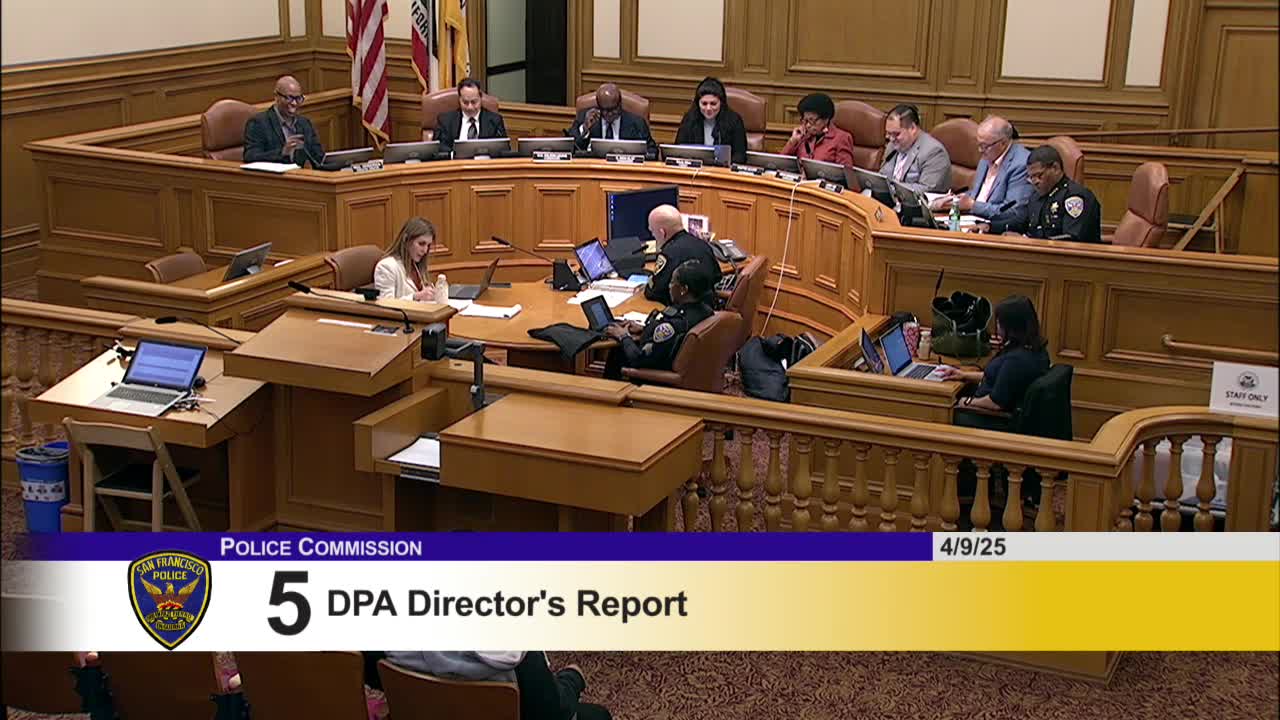
Executive Director Paul Henderson of the Department of Police Accountability (DPA) told the Police Commission that the DPA has reduced the number of investigations that exceed 270 days and that the office is tracking document‑production delays that complicated one high‑profile case.
"We've reduced the number of cases exceeding the 270‑day mark from an average of 6 in 2023 to an average of just 2 in 2025," Henderson said during his report to the commission. He also said the office had performed a "deep dive" into a case he identified as "case X," which he characterized as a policy‑failure case and therefore subject to different internal timelines.
Why it matters: DPA is the city's civilian oversight agency for policing. Timely investigations are a core element of oversight; delays in evidence or document production can stretch investigations and complicate DPA's ability to meet reporting deadlines and statutory time limits.
Henderson told the commission that for case X, DPA interviewed involved and witness officers and collected evidence, but later determined the case was "not sustainable" as a misconduct investigation and therefore was deprioritized for closure in favor of sustainable cases approaching statutory deadlines. He said the office had received and then followed up on extension requests and later sent non‑compliance letters to SFPD when additional documents were not produced.
Henderson pointed the commission to results in DPA's quarterly document protocol report that showed a marked rise in late document returns in the fourth quarter of 2024. "The Q4 2024 document protocol report we submitted to the commission showed a notable increase in noncompliance of document requests. The first 3 quarters of the year, SFPD the department was late returning approximately 6.5% of all DPA requests, but in that fourth quarter, that number jumped up to 17% and this case was in that report," Henderson said.
Henderson also told commissioners DPA has not lost jurisdiction on any case due to the 3304 deadline (as referenced in his presentation) and that when a case is sustainable DPA interviews, collects evidence and can seek extensions under "multiple officer exceptions" described in the Government Code reference given during the presentation.
Henderson asked the commission to direct follow‑up and said he had discussed the trends with Chief Scott; the two agreed to convene an offline review of case X to determine whether the delay was anomalous or part of a larger trend. President Cindy Elias and other commissioners suggested technology and data‑sharing benchmarks as possible longer‑term fixes to reduce document delays.
Henderson closed by giving a broader operations update: the DPA's investigative unit opened 15 new cases and closed nine since the last commission meeting; the office had 15 investigations open for more than 270 days (14 of them categorized as "told" cases), 93 cases pending with the chief's office and two cases pending with the Police Commission.
Ending: Commissioners asked staff to follow up with the chief on Q4 trends, and to have DPA report back on whether the document‑production jump reflected an anomaly or a broader pattern; Henderson said he would coordinate those follow‑ups and return with more detail.