Get Full Government Meeting Transcripts, Videos, & Alerts Forever!
Get email alerts on the Cell Phone Policy topic
No spam. Unsubscribe anytime.
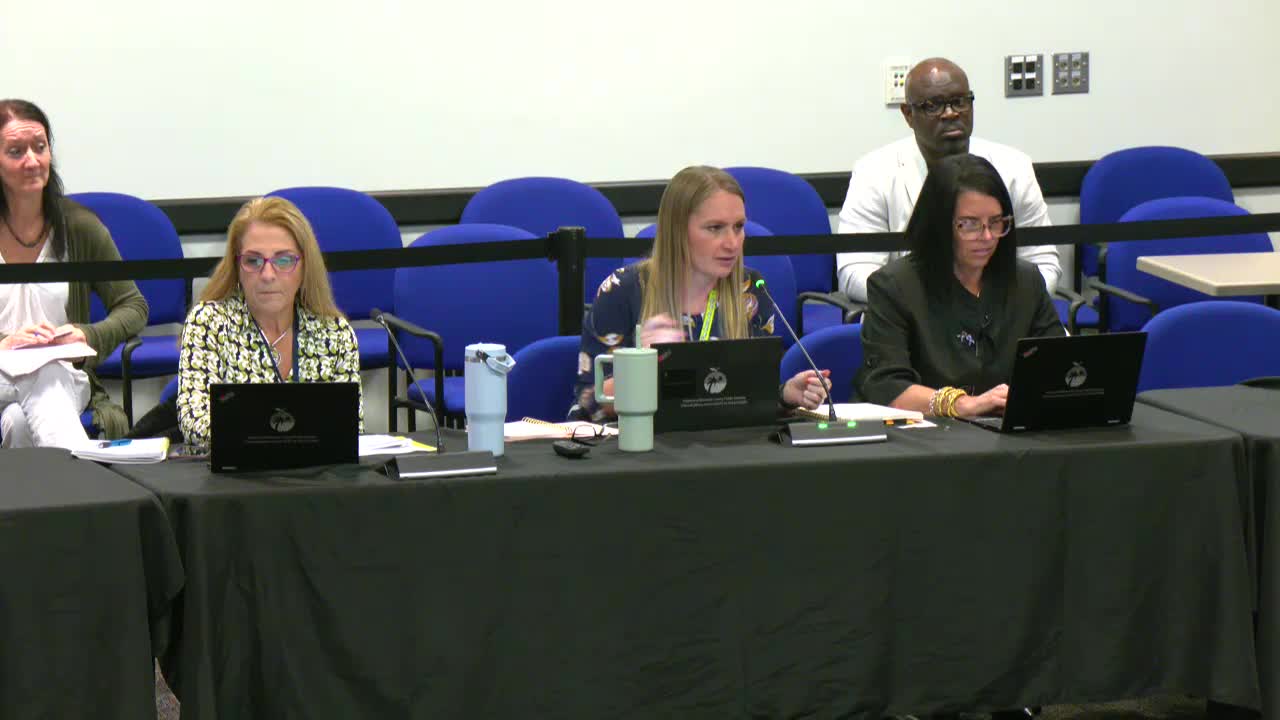
Board debates districtwide ban on phones during lunch and class; holds policy pending state law
Summary
Broward board members, principals and students debated a code-of-conduct change that restricts cell phone use during the school day. After extensive testimony the board left the policy intact for now and said it will revisit the issue after the Legislature acts and outside research is completed.
The Broward County School Board spent the meeting’s longest discussion on proposed code-of-conduct language restricting student cell phone use during the school day.
Board policy adopted earlier limited devices during instructional time (the first bell to last bell). At the workshop, Superintendent Dr. V. Hepburn and staff reviewed implementation experience, pending state legislation and district research the district is doing with Florida Atlantic University.
Arguments for strict limits came from a number of board members and school leaders who said removing phones from the school day increased in-class attention and improved social interaction. Dr. Zeman described research and practitioner testimony that linked reduced phone exposure with better attention and lower disciplinary incidents. Several principals described fewer fights and more student engagement since implementation.
Other board members and members of the public said lunchtime access can be important for students to coordinate after-school activities or to contact caregivers in emergencies. Board member Doctor Holness proposed a limited compromise—allowing student access for the first 15 minutes of lunch—but the idea drew practical objections from staff and some board members who said enforcement would create operational burdens and inconsistent application across schools.
Staff explained the district is already collecting data through a partnership with FAU; the researchers are conducting focus groups and surveys to examine impacts on student behavior, safety and academic engagement. The superintendent also noted state lawmakers are considering bills that would mirror or affect district practice; the final legislative outcome would reduce the need for districts to pivot.
After more than an hour of discussion, the board did not change the policy at the workshop. Instead members asked staff to return with the FAU research results and a clearer summary of legislative action. Several board members said they want more uniform enforcement guidance and examples of how principals handle lunchtime and passing periods.
Why it matters: The policy governs the daily experience of hundreds of thousands of students. It touches academic focus, mental health, supervision challenges and parent communications. The board emphasized the need to balance classroom learning and operational pragmatics, and to consult local research and state law before changing district rules.
Ending: Staff will present FAU’s research and the Legislature’s final actions when available; the code-of-conduct policy will remain under review.