Get Full Government Meeting Transcripts, Videos, & Alerts Forever!
Get email alerts on the Micro Mobility topic
No spam. Unsubscribe anytime.
Council agrees to fold East-of-IH‑35 SPIN scooter pilot into permanent service; expansion proposed as new pilot
Summary
After a six-month review, staff recommended integrating the East-of-IH‑35 SPIN e-scooter pilot into the permanent service area and proposing a new pilot zone. Councilmembers expressed broad support and directed staff to monitor safety and outreach measures.
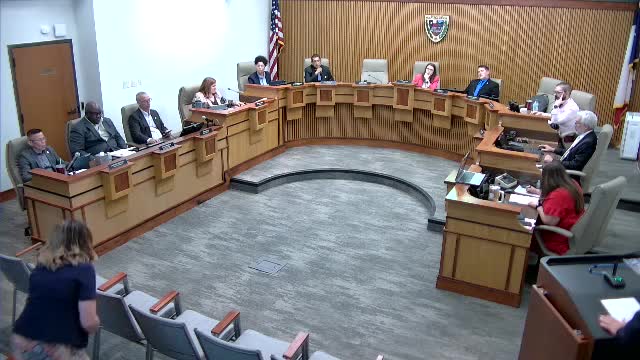
San Marcos City Council signaled support Tuesday to make the recently completed six‑month SPIN e-scooter pilot east of Interstate 35 a permanent part of the company’s service area and to run a second pilot expanding service to an adjoining east‑side neighborhood.
Charles Campbell, the city’s multimodal parking and initiatives manager, told council the pilot (approved by council in May 2024) ran from July 2024 through February 2025. He said there were 1,487 rides in the East‑of‑IH‑35 pilot zone and 4,528 rides during the newly extended late‑night hours (midnight–5 a.m.), with those two categories combined representing 12.7% of all SPIN trips in the reporting period. Campbell said both the San Marcos Police Department and Fire Department reported zero incidents during the pilot period; SPIN reported zero incidents as well.
Campbell described safety measures used during the pilot, including an in‑app “safe start” checkpoint intended to discourage riding while impaired, and said the police department recommended geofencing the route under IH‑35 to sidewalks only. He recommended the council approve two items: (1) incorporate the East‑of‑IH‑35 pilot zone into SPIN’s permanent service area, and (2) expand the program to a newly proposed zone that would serve Blanco Gardens, the Walmart area and additional bus stops.
Council discussion focused on safety, outreach and equity. Councilmembers asked whether SPIN does outreach about its access program; Campbell said SPIN can reach current and past users through its app but that city staff would work with Transit and Public Works to expand outreach to bus riders and others who are not current SPIN users. Councilmember Rodriguez asked about equipment pickup and redistribution; staff confirmed SPIN uses trucks to collect scooters overnight and said SPIN responds quickly to reports of improperly parked scooters.
On the recommendation to adopt the pilot as permanent and to pursue the proposed expansion, council members present indicated support by voice and gesture. The discussion included clarification that the existing pilot’s incorporation would be permanent in the sense of being added to SPIN’s permanent service area but could be rolled back by council if needed. Councilmember Gonzales asked that the proposed expansion be treated as a pilot to monitor safety across the east‑west crossing on Hopkins; staff agreed that monitoring and potential further review would be prudent.
Because the meeting used a show-of-support rather than a formal roll-call motion, staff will record and implement the direction as council guidance; staff will return to council if formal ordinance or contract changes are required. Campbell also noted the program is described as “zero cost” to the city (SPIN deployed and operates the devices) and that the city receives a small per‑ride fee (20 cents per ride) from SPIN.