Get Full Government Meeting Transcripts, Videos, & Alerts Forever!
Get email alerts on the Climate Action Resilience topic
No spam. Unsubscribe anytime.
Oakland Park and Wilton Manors release five-year update to Joint Climate Action Plan
Summary
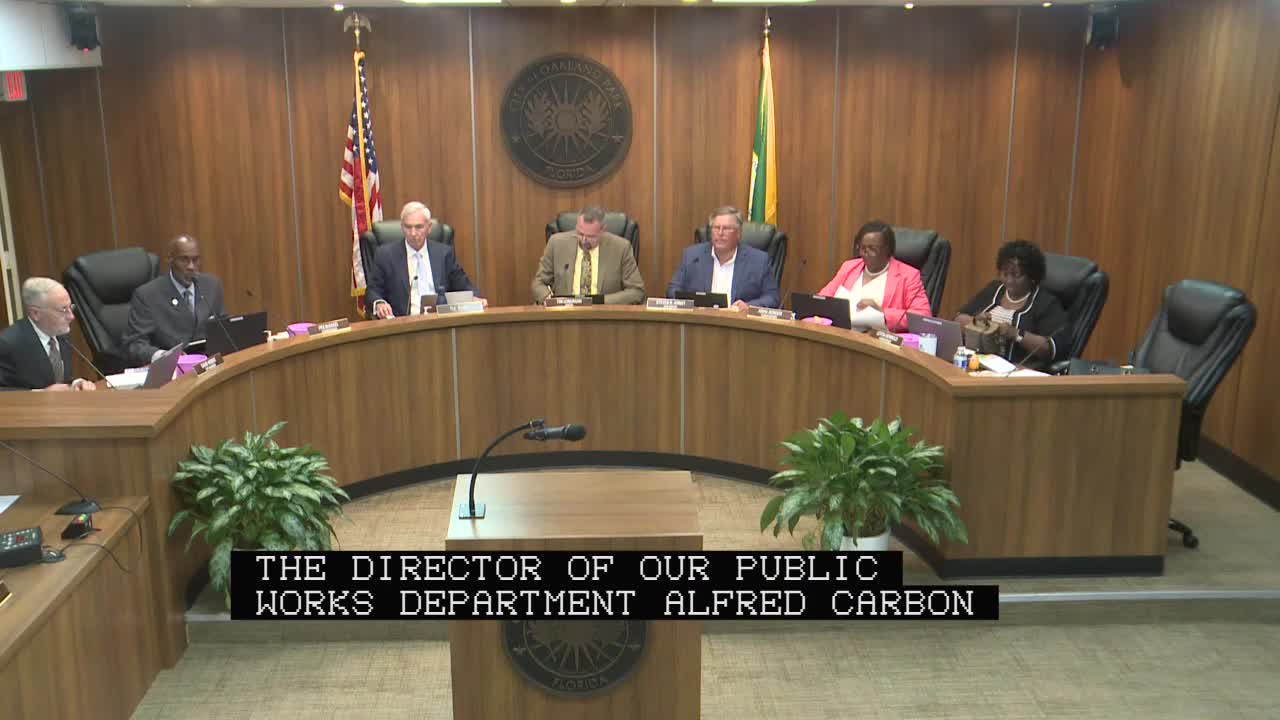
Molly Furch, a staff member for Oakland Park, presented a five-year update Wednesday to the Joint Climate Action Plan the city shares with neighboring Wilton Manors, joined in presentation by Albert Carbon, director of public works.
Molly Furch, a staff member for Oakland Park, presented a five-year update Wednesday to the Joint Climate Action Plan the city shares with neighboring Wilton Manors, joined in presentation by Albert Carbon, director of public works.
The update, Furch said, revisits the 2019 plan with “fresh eyes and renewed commitment,” and sets two central goals: reduce the cities’ collective carbon footprint and improve resilience across both communities.
Furch told the commission that the original Joint Climate Action Plan with Wilton Manors “was passed through Commission in 2019” and that the two jurisdictions remain tightly linked on climate issues. “With shared borders, connected waterways, and overlapping water and sewer systems, the boundaries between Oakland Park and Wilton Manors are artificial and basically irrelevant when it comes to climate action,” she said.
The presentation organizes the update around seven overarching strategies: sustainable communities and transportation; water, sewer and stormwater systems; natural systems; energy and fuel; risk reduction and emergency management; public policy advocacy; and public outreach and engagement. The five-year update emphasizes moving “from planning to action,” documenting completed work and listing proposed next steps.
Furch cited one completed item shown on a slide: both Oakland Park and Wilton Manors finished flood vulnerability assessments intended to clarify local flood and sea-level-rise risks. The water, sewer and stormwater strategy includes proposed actions to strengthen infrastructure, manage regional canals and pumps, and continue conservation initiatives.
On natural systems, the update highlights wetlands, tree canopy and coastal habitats such as mangroves for their roles in flood protection, heat reduction and water filtration. On energy, Furch said the goal is to “reduce electricity and fuel consumption while increasing renewable energy capacity,” noting the update calls for both efficiency measures and increased backup power for critical facilities. She pointed to the new public works facility’s backup power being located at an elevation higher than the base flood elevation of the building as an example of resilience planning.
Risk reduction and emergency management aims to coordinate emergency services, infrastructure teams, planners and community partners for hazards the presenter identified as the most salient locally: hurricanes, flooding and extreme heat. The public policy advocacy strategy is framed as elevating local priorities in broader funding and policy discussions. The public outreach strategy includes a new proposed action to “develop and implement a plan to continuously educate residents on what can and cannot be recycled,” which Furch called a simple but effective step toward reducing waste contamination.
No formal vote or adoption of new policy was recorded during the presentation; staff presented the update and proposed actions for future work. The presentation did not specify implementation timelines, budget figures or required approvals from other agencies.
Next steps were presented as continued collaboration between Oakland Park and Wilton Manors and further community engagement; specific dates for additional hearings, council action, or funding requests were not specified in the presentation.