Get Full Government Meeting Transcripts, Videos, & Alerts Forever!
Get email alerts on the Hangar Leases topic
No spam. Unsubscribe anytime.
Leesburg commission debates reworking hangar leases, permits and enforcement
Summary
Commissioners discussed rewriting hangar leases into permit/agreement language to address possible leasehold tax exposure, clarified what maintenance and commercial activity will be allowed in hangars, and discussed enforcement options including annual inspections and a strike/notice system.
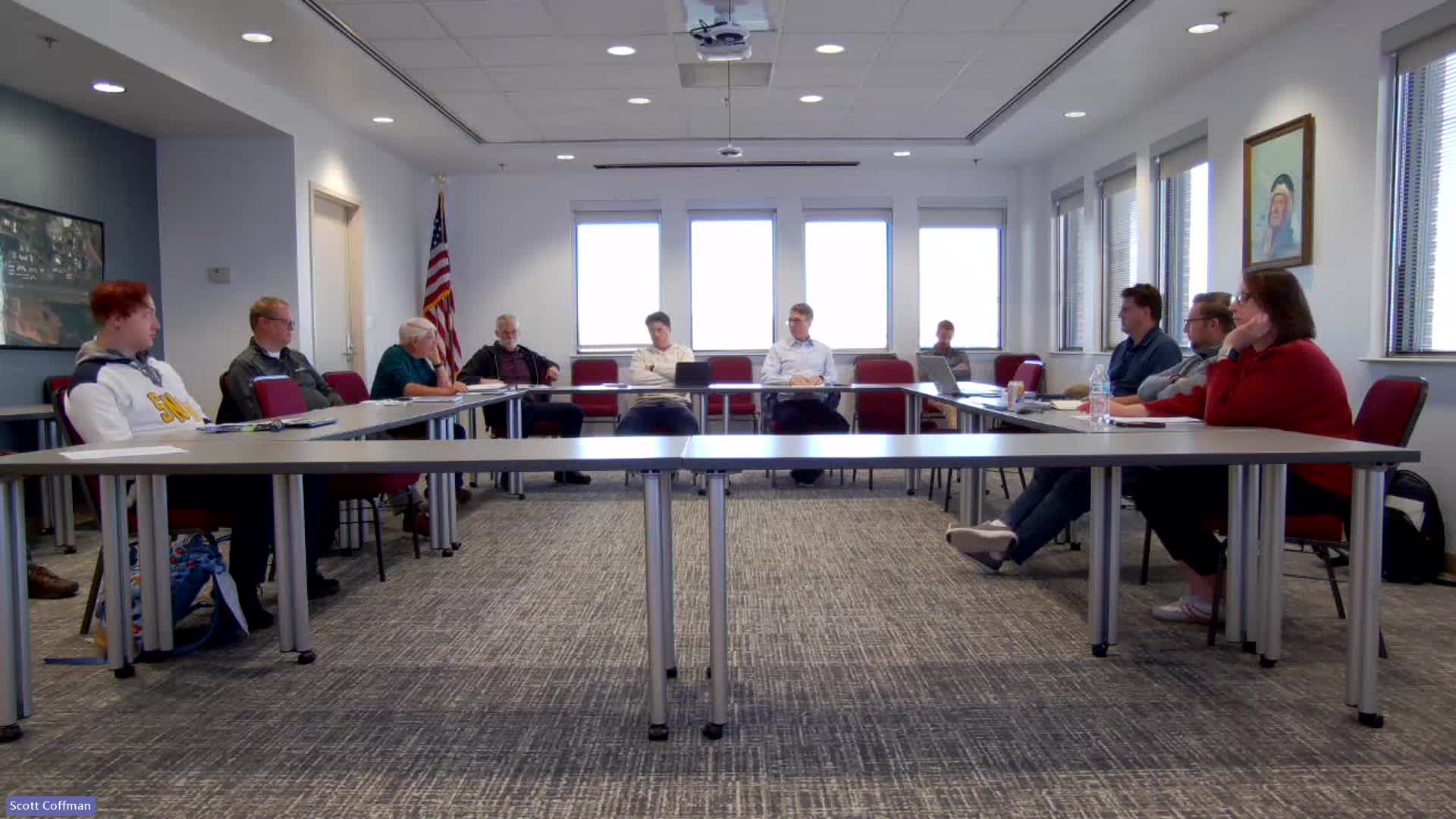
The Airport Commission on April 9 discussed a package of proposed changes to hangar lease rules and related airport rules and regulations, including whether to relabel some leases as agreements or permits to address concerns about leasehold taxation.
Commissioners and staff reviewed draft lease language and compared it to recent edits from the town attorney’s office. The discussion centered on three practical issues: whether re‑naming leases as “agreements” or “permits” would reduce exposure to leasehold property taxation, how to define and limit commercial activity within tee hangars, and how to create a realistic enforcement and inspection program.
On tenancy terms, commissioners favored moving away from long fixed‑term leases in some cases and discussed month‑to‑month arrangements with a short up‑front period removed. Several commissioners recommended a 60–90 day window as a practical standard for owners who sell or temporarily lack an aircraft, with exceptions for documented purchases overseas or aircraft undergoing long maintenance.
On commercial use and maintenance, the commission debated allowing aircraft that are used commercially (for example, on charter or as a leaseback to a business) while prohibiting conversion of tee hangars into occupied office or retail spaces. Commissioners generally supported a rule that an aircraft can be used for commercial operations even if it is based in a tee hangar, but that the hangar itself should not become an occupied commercial facility. The commission discussed preserving FAA guidance on maintenance and allowing licensed maintenance providers to perform work on an aircraft at the hangar while restricting full-fledged, permanently staffed maintenance shops where minimum standards would apply.
On enforcement, members proposed an annual inspection regime—inspecting a rotating set of hangars each month so all hangars are reviewed yearly—and a progressive remedy approach: an initial corrective notice, follow-up inspections, and escalating consequences up to lease termination if violations persist. The group discussed whether fines should be an intermediate step but several commissioners favored a one‑strike/second‑strike outcome tied to the waiting list pressure for available hangars.
Staff said revisions will be routed to the town attorney (an assistant town attorney identified as Jessica has already reviewed early changes) and that the rules document should be reconciled with any lease form changes. Commissioners set a tentative target to finalize rules and lease/agreement language by June so minimum standards and lease language can be reconciled afterward.
Ending: Staff will continue redrafting the lease/permit language and rules and return a revised package to the commission; commissioners asked staff to consider a practical enforcement program and to coordinate with the town attorney before bringing final drafts back for approval.