Get Full Government Meeting Transcripts, Videos, & Alerts Forever!
Get email alerts on the Health Department Budget topic
No spam. Unsubscribe anytime.
Wilson County Health Department Seeks $448,586 Increase; Details WASH clinics, mobile unit, WIC recovery
Summary
Health Director Cinnamon Aaron outlined a fiscal 2026 request that is roughly $448,586 higher than last year, summarized expanded clinic operations (a combined Women’s Health Services clinic and reinstated teen clinic), WIC and WASH enrollment trends, a newly acquired mobile unit and mobile dental activity.
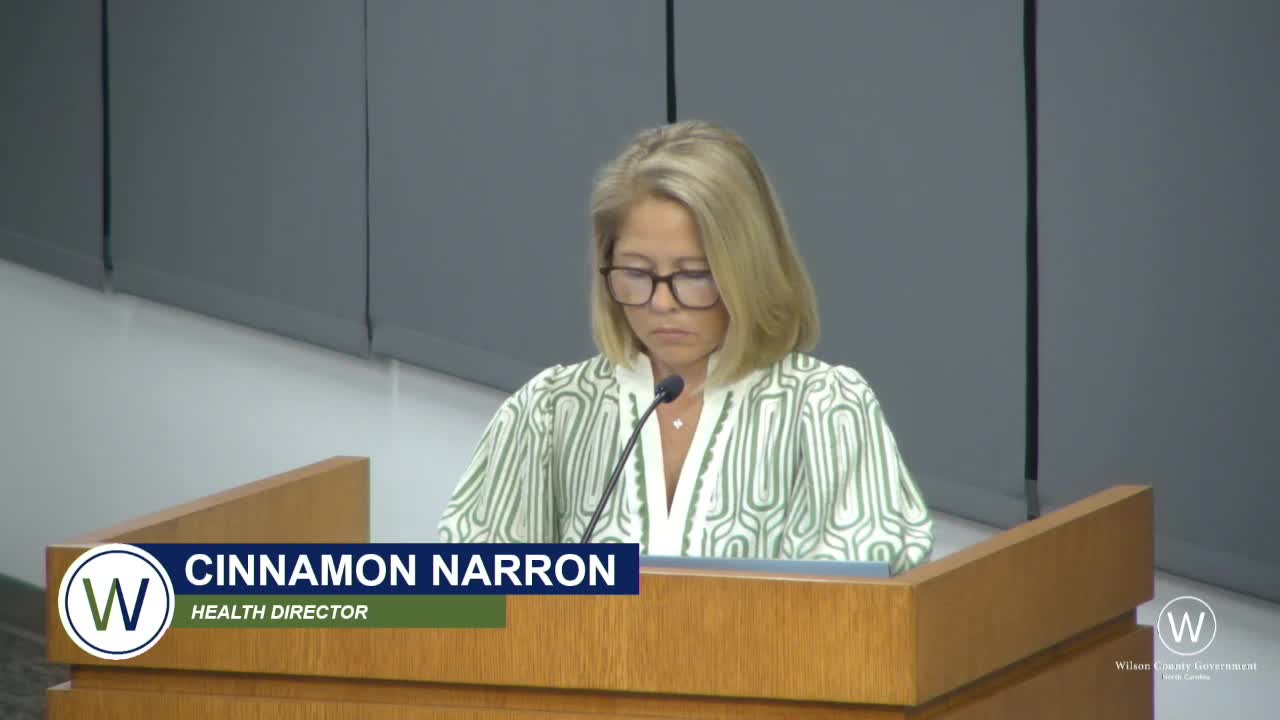
Cinnamon Aaron, director of the Wilson County Health Department, presented the department’s fiscal 2026 budget request and summarized program and operational changes since the prior year.
“Our budget request this year is about 448,586 more than last year,” Aaron said, attributing most of the increase to salaries and fringe benefits. She described staffing gains—including a public health epidemiologist hired in January—and said the department now has roughly 94 positions (including contract and part‑time roles) and is actively recruiting for several vacancies, including a mid‑level provider and environmental health program specialist.
Aaron described operational reorganizations intended to improve clinic efficiency and continuity of care. The department combined family planning and maternal health into a single Women’s Health Services Clinic, reinstated the teen clinic (with about an 85% participation rate since its September 2024 relaunch), increased nutrition counseling visits, and created dedicated clinic teams with program secretaries and billing staff. On WIC, Aaron reported participation declines after the end of COVID-era automatic enrollment but recovery after outreach: WIC caseloads moved from 2,686 (pre‑emergency), down to 2,126, and back up to 2,454 as of the current reporting period.
Aaron described new and expanded partnerships and services. The department is working with the county’s community paramedic program and began referring patients in February; of the referred patients so far, only one was subsequently admitted to the hospital, per the department’s report. The health department received a mobile unit from Trillium and expects it to be operational in early May; planned services include STD/HIV testing, counseling, syringe‑service (harm‑reduction) referrals, benefits application assistance, and WIC outreach. Aaron said the mobile unit will include a QR code linking to a calendar of stops and the on‑site services available.
On dental and school‑based services, Aaron reported that the mobile dental program has seen 246 children and completed 1,223 procedures so far this year. The WASH school‑based health clinics have expanded to five sites, with a sixth site (Elm City Middle) anticipated next year; Aaron said first‑time WASH patients numbered 443 during the reporting period and that many program enrollments are still increasing.
Environmental health and permitting updates included digital file conversion, adoption of GPS units for on‑site evaluations, a continuing average wait of about four weeks for on‑site permits, and internal changes to lot evaluation fee categories. Aaron said the department is using state and foundation grants to support primary care services, women’s health extended hours, community health worker staffing, and related clinic improvements.
Aaron closed by noting one‑time and multi‑year federal and ARPA funding that has supported technology upgrades, alarm repairs, and pandemic‑related expenditures; she said much of that funding is winding down and the department is planning future spending of CDC public health infrastructure funds that run through 2027.
Commissioners asked questions about fee structures, reinspection costs for environmental health, and strategies to increase WASH enrollment—particularly student enrollment—through school registration and open‑house outreach. Aaron said the department is coordinating outreach and considers enrollment improvements a priority.