Get Full Government Meeting Transcripts, Videos, & Alerts Forever!
Get email alerts on the Energy topic
No spam. Unsubscribe anytime.
Commission trims language on phasing out natural gas, directs staff to prioritize renewables 'where feasible' for county buildings
Summary
After discussion about costs and energy reliability, Skagit County commissioners approved changing draft language that would have 'phased out' natural gas to a more flexible policy prioritizing the transition to renewable energy in county buildings where feasible.
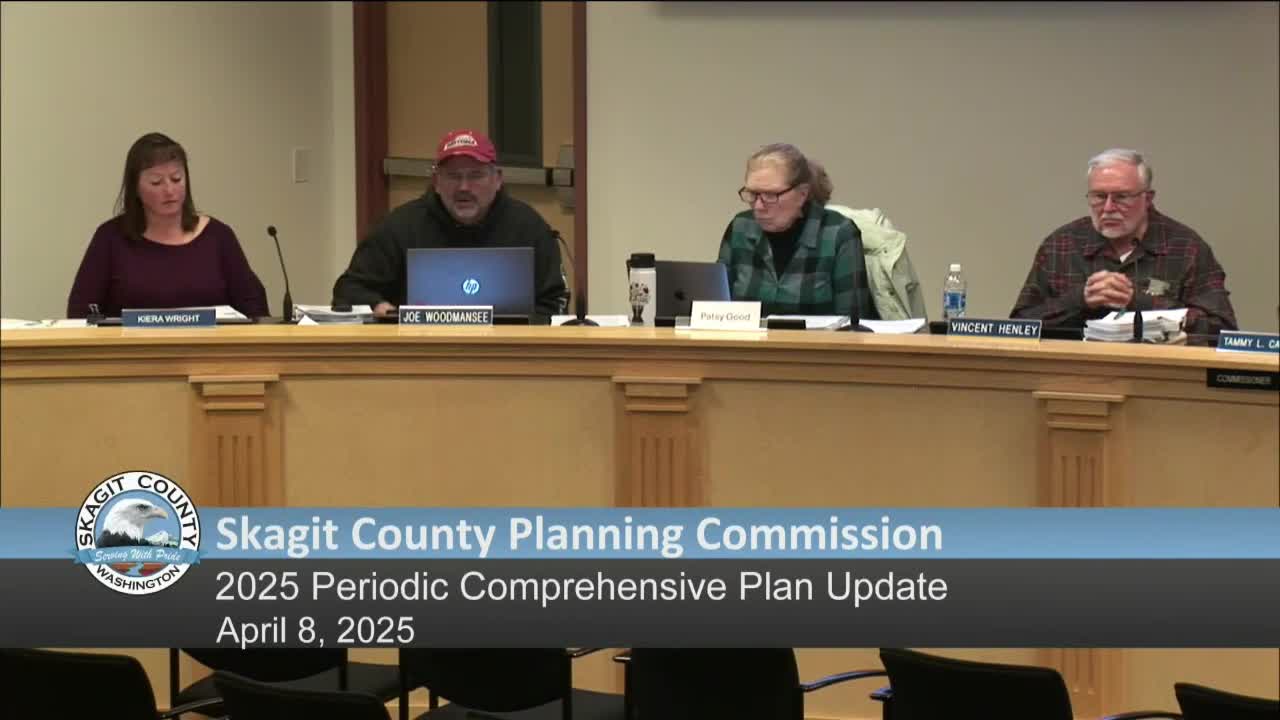
Skagit County Planning Commission members on April 8 debated draft utility and climate element language that initially suggested "phasing out" natural gas and concluded the draft should be softened and clarified.
Robbie Acroft, the county’s senior planner, told commissioners the proposed language came in part from new state climate‑element guidance and was intended to align the county with statewide emission‑reduction goals. Several commissioners expressed concern that the wording "generating energy from nonrenewable resources such as natural gas should be phased out where possible" could be read too broadly and could have unintended cost and reliability consequences for county facilities and residents.
A compromise agreed by the commission replaces the more prescriptive phrase with direction focused on county operations: "The county shall prioritize the transition to renewable energy sources in both new and existing county buildings where feasible." Commissioners also requested that several policies in the utilities and climate element use "should" instead of "shall" to avoid creating an overly prescriptive standard before the county has completed feasibility and cost studies.
Why it matters: The wording affects county facility planning and signals county priorities to residents, utilities and developers. Commissioners said they wanted to ensure the comprehensive plan encouraged energy conservation and renewable deployment without dictating technology choices that could create short‑term cost or reliability problems.
Next steps: Staff will incorporate the amended policy wording (county‑focused prioritization and the insertion of "where feasible") into Attachment C and will use "should" in several policies to reflect a less prescriptive approach. Commissioners asked staff to return with any research on costs and feasibility for county facility retrofits during continued deliberations.