Get Full Government Meeting Transcripts, Videos, & Alerts Forever!
Get email alerts on the Housing topic
No spam. Unsubscribe anytime.
Planning Commission weighs limited rural density increases and ADU rules to broaden housing options
Summary
Commissioners discussed allowing denser housing types in limited rural areas, unit‑lot subdivisions and accessory dwelling unit (ADU) rules, while stressing rural character and limited institutional capacity to enforce short‑term rental restrictions.
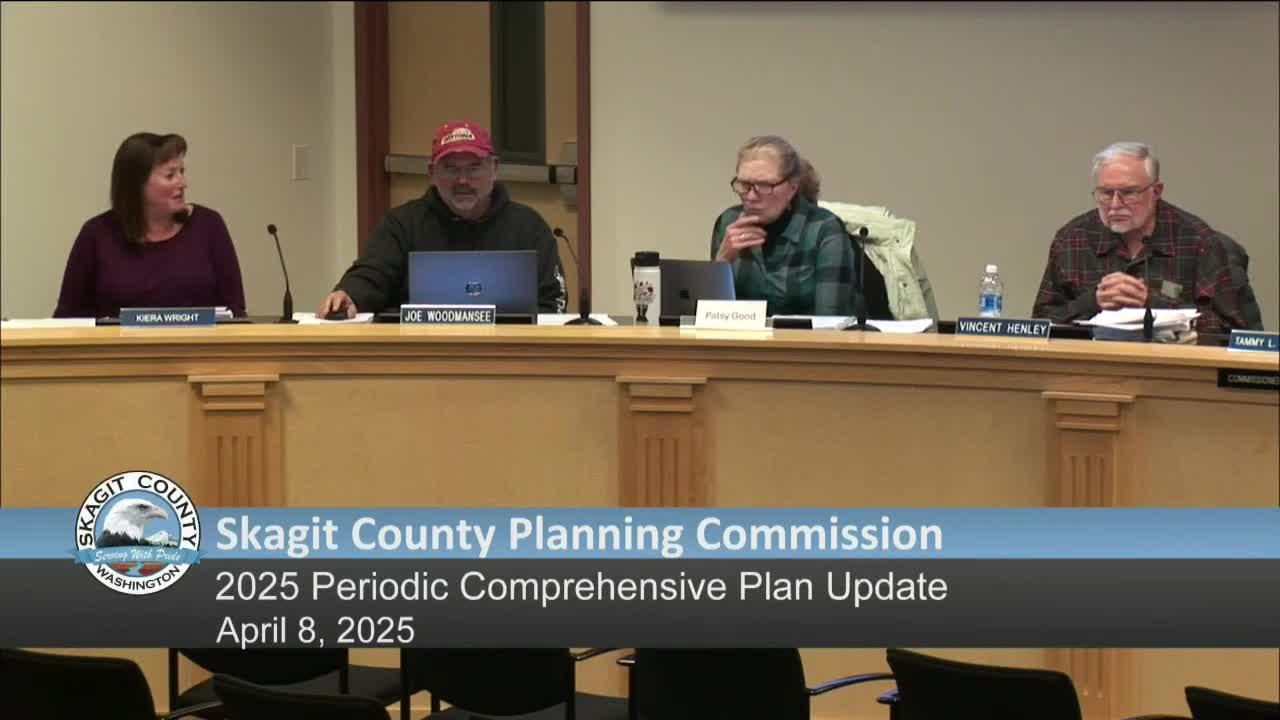
Skagit County Planning Commission members on April 8 debated draft housing policies that would expand some housing types in limited rural areas and clarify rules for accessory dwelling units (ADUs) and unit‑lot subdivisions.
During deliberations commissioners stressed two competing priorities: preserving rural character while creating more housing options for lower income and middle‑income households. Commissioners said state updates to the Growth Management Act and housing requirements mean county plans must accommodate a wider range of housing types, but several members said rural availability and development costs make some types difficult to achieve outside urban areas.
Key points from the discussion - Rural density: Commissioners discussed comments received about allowing up to four dwelling units per acre in some limited rural settings and noted community concerns. Staff said such increases would apply only in tightly constrained areas where public facilities can support denser housing. Several commissioners said the overall acreage where the rule could apply is small. - Accessory dwelling units: The draft supports ADUs as an affordable housing option; commissioners raised enforcement questions about short‑term rental uses such as Airbnb and noted the county currently lacks a licensing/enforcement structure that would prevent ADUs from becoming short‑term rentals. Staff said creating an enforcement program (like those in some cities) would require new administrative capacity and fee funding. - Unit lot subdivisions and homeownership options: Commissioners and staff noted the draft includes mechanisms such as unit‑lot subdivisions to allow alternative ownership forms; the county cannot control whether a unit is rented or sold but can make zoning and subdivision options available to enable ownership models that can improve affordability.
Why it matters: The county’s housing element must show how the county and cities together accommodate housing at different income levels. Commissioners said the county’s strongest ability to influence affordability in unincorporated areas is to selectively allow more housing types where infrastructure permits while protecting rural character.
Next steps: Commissioners recommended keeping provisions that allow more housing choices in limited rural areas but asked staff to clarify where the provisions apply, confirm whether septic or sewer constraints prevent certain housing types, and return with concrete draft language for the commission’s April 15 continued deliberations.