Get Full Government Meeting Transcripts, Videos, & Alerts Forever!
Get email alerts on the Transitional Housing And Outpatient North Garland topic
No spam. Unsubscribe anytime.
Planning commission recommends denial of two proposed addiction treatment/outpatient sites on Garland and North avenues after strong neighborhood opposition
Summary
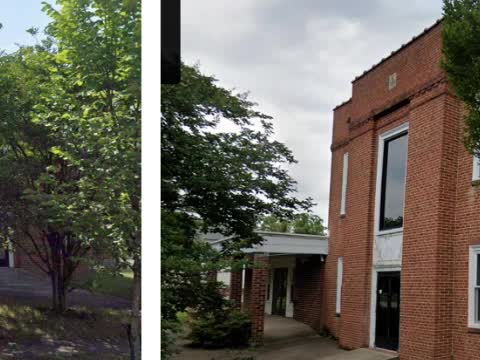
After extensive testimony from nearby residents, pastors and community associations, the Planning Commission voted to forward recommendations to deny a proposed adult transitional housing facility at 2701 Garland Ave and an associated outpatient professional office at 2700 North Ave.
The Richmond City Planning Commission voted to recommend denial of two companion special‑use requests: an application to authorize adult transitional housing at 2701 Garland Avenue (Ordinance 2025‑048) and an application to authorize an outpatient professional office building at 2700 North Avenue (Ordinance 2025‑055). The items were presented together and considered during the same public hearing; the commission recorded motions to deny both requests and forwarded the recommendations to City Council.
The applicant represented the residential treatment operator as Hyde Council Services (presentation led by Kenny Anderson, identified as COO). Anderson said the proposed residential program would be a licensed, ASAM 3.5 level of care facility (a medically‑oriented, 24‑hour, high‑intensity residential treatment model) with voluntary admission, medical and psychiatric oversight, integrated behavioral health services and an average stay in the presented model of roughly 30 days. Anderson said the provider holds state licensure for other programs, carries CARF accreditation and operates several facilities elsewhere; he described screening protocols, background checks and clinical assessments to determine appropriateness for admission.
Neighbors and multiple local leaders strongly opposed placement of a locked, 24‑hour residential treatment facility in a compact residential block. More than a dozen speakers — including pastors from two churches that face the subject property, parents and active neighborhood association leaders — said the proposed uses were incompatible with long‑established single‑family and low‑rise residential character, posed safety concerns for nearby children, and represented a poorly communicated change that had not been satisfactorily explained to those most affected.
Pastor Jeffrey Smith of Garland Avenue Baptist Church and Reverend Rodney Waller of First African Baptist Church both urged denial; they and other commenters cited concerns about safety protocols, enforcement of visitor controls, potential for increased foot and vehicle traffic, and the history of prior regulatory violations against the applicant’s other operations. Residents who live immediately adjacent to the buildings testified that the plan would place sleeping rooms or recreation areas in direct sightlines from private yards and condominium windows and asked the commission to reject the applications or to delay action until additional mitigation and neighbor agreements could be negotiated.
Staff presented the two companion ordinances and noted that both parcels are in an R‑6 residential zoning district and that the proposed uses require special‑use approvals because they are not permitted principal uses in that district. Staff recommended approval for each application, arguing adaptive reuse of existing commercial buildings and alignment with some master‑plan objectives, but noted the applications would be subject to ordinance conditions (for 2701 Garland, staff noted a proposed cap of “no more than 25 patients” at any given time and a two‑story height limit among the conditions summarized in the staff report).
Commissioners and the public debated licensing, security, intake screening, the site’s proximity to schools and parks, vehicle circulation, and how the Commonwealth’s licensure and the city’s building and zoning approvals intersect. Several commissioners said they recognized the public health need for treatment capacity but expressed concerns about siting this intensity of a facility within a compact residential neighborhood without stronger neighborhood agreements and clearer operational safeguards.
Following discussion, the Planning Commission voted to recommend denial of both special‑use applications and to forward those recommendations to City Council. The two denials will be transmitted to Council for final action; staff and neighbors will continue to correspond about possible alternative sites and conditions.
The ordinances before the commission for action were recorded as: Ordinance 2025‑048 (2701 Garland Avenue — adult transitional housing) and Ordinance 2025‑055 (2700 North Avenue — outpatient professional office).