Get Full Government Meeting Transcripts, Videos, & Alerts Forever!
Richmond officials review HNTB after-action report on Jan. 6 water treatment plant outage
Summary
The Organizational Development Standing Committee heard HNTB's final after-action report identifying a failed transfer switch in Switchgear 6 as the root cause of a nearly 36-hour water-plant outage on Jan. 6 and outlining staffing, training, power and communications fixes; council members pressed for timelines and cost details.
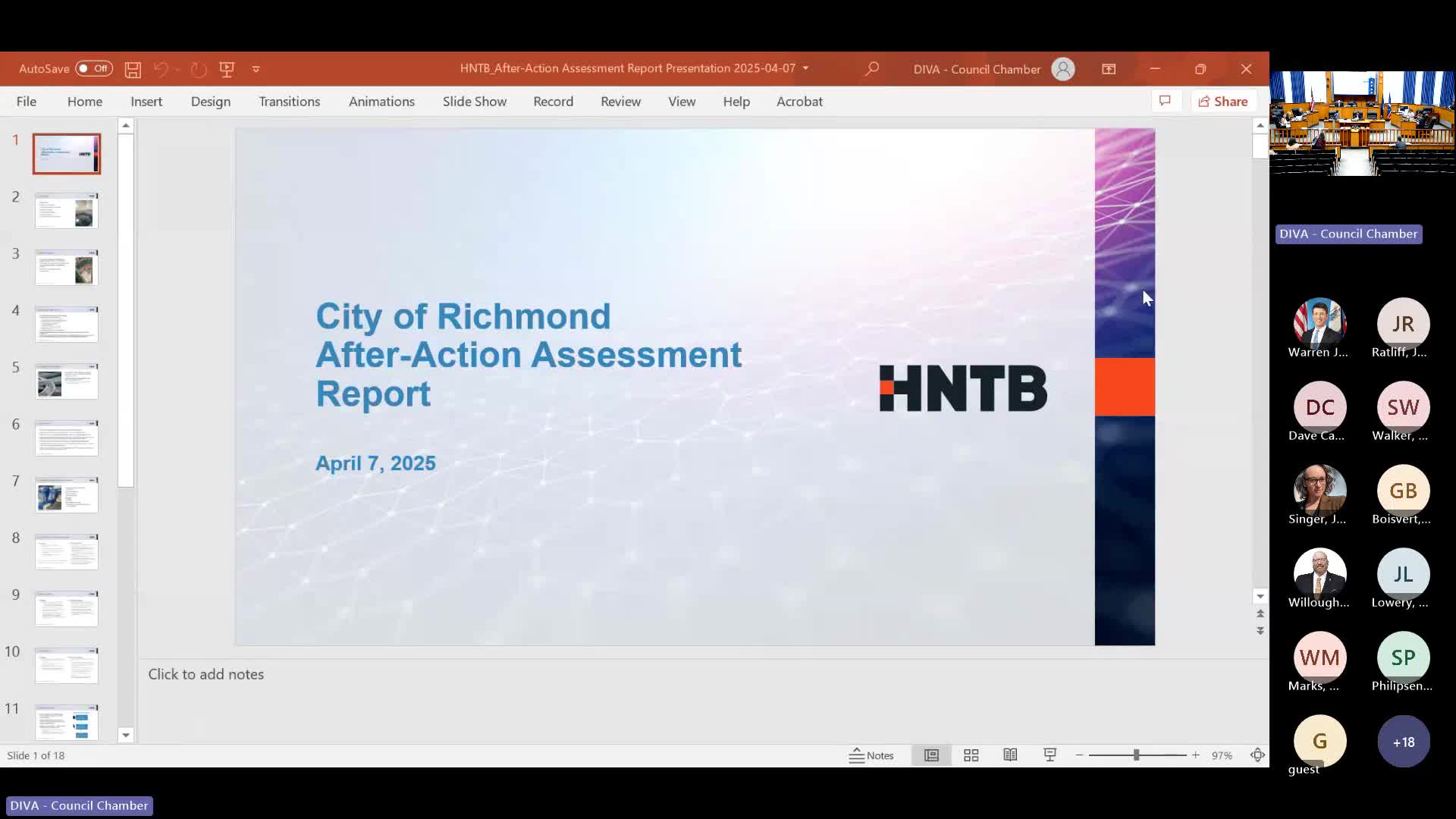
The Organizational Development Standing Committee of the Richmond City Council heard the final after-action assessment from HNTB on the Jan. 6 water treatment plant failure, which concluded the outage began with "the failure of the transfer switch in Switchgear 6," causing an electrical transfer failure and a cascade of problems that left the utility offline for nearly 36 hours and prompted a boil-water advisory.
HNTB representative Robert Page told the committee the sequence began when the transfer switch did not move power to the alternate feed, the uninterruptible power supply (UPS) units drained and were unable to close the filter effluent valves. "With the water continuing to flow through the filters, the basement began to flood," Page said, and standby pumps were unable to keep up with the inflow. Flooding damaged pumps and electrical equipment in the basement, which compounded the outage. The report also cited a lack of planning, standards and emergency procedures and weak communications as factors that worsened the event.
The report covered multiple systems and recommended changes across operations and maintenance, staffing, SCADA and power systems, asset management and crisis communications. Page said many recommendations repeat earlier interim findings; new items included a standard operating procedure for manually shutting down the SCADA system to avoid a hard shutdown and a recommendation to reassess UPS sizing. On staffing, HNTB recommended a roster change and an emergency staffing plan; the report specifically advised maintaining four full-time treatment-plant operators on shift rather than the staffing level in place at the time of…
Already have an account? Log in
Subscribe to keep reading
Unlock the rest of this article — and every article on Citizen Portal.
- Unlimited articles
- AI-powered breakdowns of topics, speakers, decisions, and budgets
- Instant alerts when your location has a new meeting
- Follow topics and more locations
- 1,000 AI Insights / month, plus AI Chat