Get Full Government Meeting Transcripts, Videos, & Alerts Forever!
Get email alerts on the Mcts Relief Van Vs Tnc topic
No spam. Unsubscribe anytime.
Committee approves ending TNC pilot; debate centers on reallocating $35,000 to operator relief vans
Summary
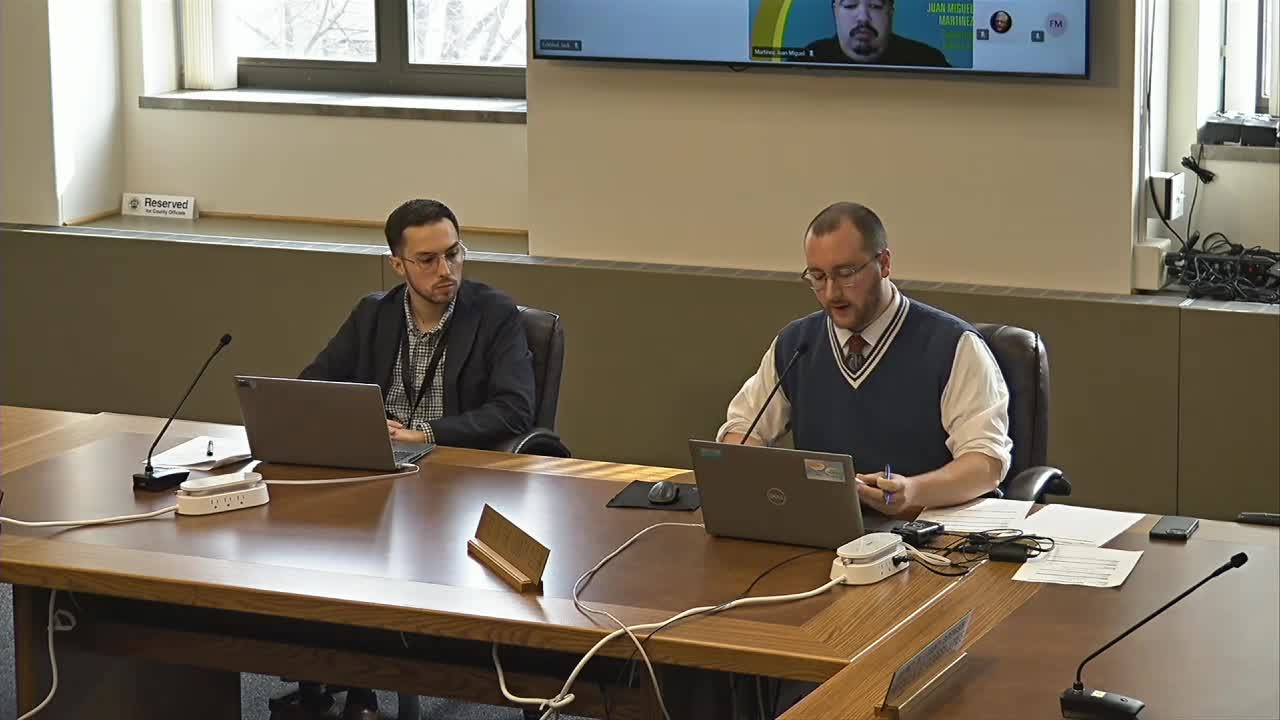
After extended public comment from ATU Local 998 members and questions from supervisors and transit staff, the transportation committee voted 4-0 to approve not implementing the budgeted transportation network company (TNC) pilot and signaled intent to pursue reallocating $35,000 toward operator relief van operations.
The Milwaukee County Committee on Transportation and Transit voted 4-0 to recommend adoption of a staff request not to implement a transportation network company (TNC) pilot that had been included in the 2025 adopted budget and to instead pursue options for operator relief via other means.
The item arose from 2025 budget amendment language that allocated $35,000 for a TNC pilot (rides with companies such as Uber or Lyft) intended as a short-term option to move operators from relief points to stations. Milwaukee County Transit System (MCTS) interim director Julie Esch and operations manager Kevin Pumphrey told the committee a system-wide TNC pilot would cost on the order of $200,000 a year; $35,000 would cover only a few weeks and would not produce a meaningful evaluation. Esch said that, as a result, MCTS asked not to move forward with the TNC option absent additional funding.
The item generated extensive public comment from members of Amalgamated Transit Union Local 998 and current and former MCTS operators, who urged continuation and expansion of a relief-van program introduced in prior budget actions. Michael Brown, vice president of ATU Local 998, said the union had not agreed to a TNC pilot: “We never agreed to that. The union, we never agreed to that. We agreed to a pilot program for van relief, but within our own system.” Bruce Freeman, president of ATU 998, urged the committee not to discontinue the van program and said it improved safety and on-time performance. Operator Nicola Pfeiffer described waiting in high-crime locations and said operators prefer vans to TNCs.
MCTS Chief Operational Officer Kevin Humphrey described operational constraints: the two vans in service cover only specific routes and come with labor and maintenance costs. Humphrey said staffing shortfalls and backfill costs mean operating a full van program across the 47-route system would be substantially more expensive than the TNC allocation alone. He also said security patrols (PSOs) and equipment changes (shields) were other measures MCTS is pursuing to improve operator safety.
Supervisors and speakers asked how the $35,000 could be moved to support relief vans. Deputy director John Rogers and other staff said a fund-transfer mechanism would require action in Committee on Finance and possibly a two‑thirds vote by the full county board to remove funds from allocated contingency. Committee members reiterated a desire that the board’s intent — the $35,000 be used for operator safety rather than TNC pilots — be respected while MCTS and the union work to design a feasible pilot that accounts for operational costs.
On the motion by Supervisor Tom Martinez that item number 3 be recommended for adoption (not implement the TNC pilot), the clerk recorded four ayes, zero nos; the motion prevailed. Committee members directed MCTS and ATU Local 998 to meet quickly to develop options and cost estimates for relief-van operations and other safety measures.