Get Full Government Meeting Transcripts, Videos, & Alerts Forever!
Get email alerts on the Ethics Procedure Recusal topic
No spam. Unsubscribe anytime.
DeKalb commissioners direct county attorney to clarify recusal, abstention procedures after confusion
Summary
DeKalb County commissioners on April 1 reviewed the procedures for recusal and abstention after a presiding commissioner left the dais during an ethics item, saying the county attorney and ethics officer had advised removal and that the county's voting software makes it difficult to record recusals.
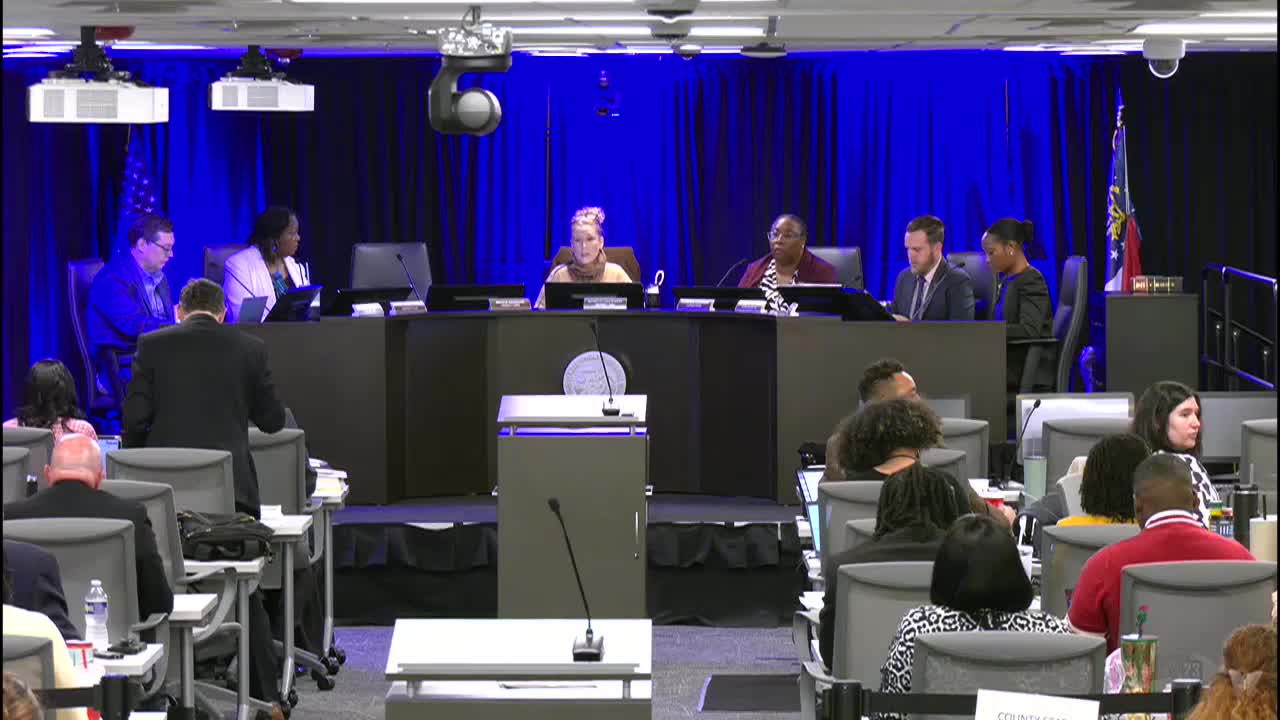
DeKalb County commissioners on April 1 reviewed the procedures for recusal and abstention after a presiding commissioner left the dais during discussion of an ethics item, prompting confusion about how that action should be recorded in minutes and on the county's voting system.
The presiding officer, Michelle Long Spears, told the Committee of the Whole she had been advised by the county attorney and the ethics officer to remove herself from the discussion, saying, "the county attorney advised me to recuse myself from conversation, from all conversation related to that item." She told colleagues the county's meeting software currently prevents a member from logging a recusal until after a motion, second and discussion are under way.
The interim county attorney, Matthew Welch, told commissioners the legal and procedural guidance is inconsistent and that his office will issue written advice and propose changes to the county's procedural manual, the Blue Book. "We have always seen a difference in abstention and recusal. Abstaining is simply not voting on a matter. Recusal is removing yourself from the discussion entirely," Welch said. He also acknowledged clerks and technology limitations and apologized for incomplete instruction during the earlier meeting.
Why it matters: Commissioners said the lack of clear, consistent instructions and the way the county's voting software (Granicus) records participation created a risk that a legally required recusal could be mischaracterized in minutes as an absence or an abstention. That raises potential legal and ethical issues for commissioners and can cause public confusion about how the board handled conflicts of interest.
What the board directed and what staff said they will do
- County attorney's office will prepare a written opinion clarifying the difference between abstention and recusal and provide step-by-step guidance for commissioners and clerks. Welch said his office is "working on an opinion that gives kind of basic outlines of abstention versus recusal so that you will all have the same advice from us." This was described as a near-term deliverable.
- The county will propose edits to the Blue Book (the standing procedural rules) to formalize the process and remove ambiguity about how recusals and abstentions are handled on the record.
- The chief information officer and clerks will assess the county's current Granicus setup to ensure the system supports recording recusals at the moment a member wants to register them; commissioners were told Granicus is being updated and that current technology "does not allow you to do that." The presiding officer said the CIO indicated Granicus will be updated.
Discussion highlights and concerns
- Commissioner Marita Davis Johnson and others said they prefer that a commissioner who is disqualified remain in the meeting but register a recusal rather than being labeled "absent" from the official record. Davis Johnson said she typically registers recusal on pension matters and prefers to be recorded as excused from the vote rather than absent.
- Commissioners and counsel agreed the matter involves three parts: the legal standard (when recusal is required), the ethical standard (whether a member should remove themself from discussion), and the technical/clerical standard (how the clerk records the choice).
- Commissioners asked that the county clerk be part of the solution so that the clerks can record the member's intent accurately in minutes even where the voting software only allows selection later in the process.
What was not decided
No formal policy change was adopted at the meeting. Commissioners instead directed staff's offices (county attorney, CIO, clerks) to produce written guidance, propose Blue Book amendments and return with a coordinated solution.
Ending
The county attorney told commissioners the office will provide a memo and proposed Blue Book revisions and that the clerks and technology teams will be consulted to ensure minutes and vote records reflect commissioners' stated intentions.
Speakers quoted in this article are included in the speakers list below.