Get Full Government Meeting Transcripts, Videos, & Alerts Forever!
Get email alerts on the Public Health Mosquito Control topic
No spam. Unsubscribe anytime.
Monte Vista council adopts revised mosquito-spraying plan, ends no-spray list
Summary
The Monte Vista City Council approved a five-point mosquito-spraying plan that returns to malathion, eliminates the no-spray list, restricts operations to city streets (no alleys) and schedules weekly Thursday morning treatments, after a lengthy staff presentation and public concern about worker safety and spray effectiveness.
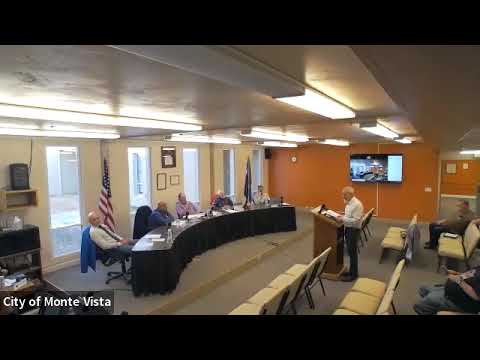
Monte Vista City Council on March 20 approved changes to the city's mosquito-spraying program, voting to revert to malathion, stop spraying alleys, remove the voluntary no-spray list and set weekly operations for Thursday mornings.
Public Works Director Rob Vance summarized results from the 2024 season and told the council residents reported weaker "knockdown potency" after the city switched chemicals and routes last year. "So for this year, I think I want to go back to Malathion and try to do it on a two-year rotating basis," Vance said. He also said alley work raises safety concerns for spray operators after several confrontations with residents during past seasons.
The council voted to adopt the five recommendations in Vance's memorandum dated March 20, which included: revert to malathion as the primary adulticide; continue street-based routing (no alleys); discontinue the no-spray list; run operations Thursday mornings beginning at 08:00; and use Henderson Lagoons as a guide for timing larval hatch activity. The motion passed on a voice vote with all five council members voting in the affirmative.
Nut graf: The changes respond to mixed feedback from residents and safety incidents involving spray crews in alleys. Staff said the no-spray list created service inequities because homes adjacent to a property on the list still reported being exposed, and some residents who initially opted out later complained they were not receiving protection. Vance said 40 residents were on the no-spray list in 2024.
In discussion, council members and staff weighed public objections to spraying against the practical challenges of providing effective coverage and protecting field crews. Vance described operational constraints: the city limits spraying to wind speeds of 5 mph or less to limit drift, runs two trucks splitting east and west routes, and relies on a small crew that performs spraying as overtime beyond regular duties. "Anybody that happens to be angry, they need to deal with me and not necessarily the actual operators," Vance said, citing safety threats that prompted the department to avoid alley work.
Vance also told the council the city will continue offering community education and a limited larvicide or briquette program citizens may obtain to treat standing water on private property. Council discussion included questions about whether spraying streets rather than alleys adequately targets vegetation where mosquitoes rest; Vance acknowledged vegetation is heavier in alleys but said the alley environment has posed safety risks and logistical problems.
The council made the decision ahead of the typical May'June spraying window; Vance said the department planned to time weekly treatments around Memorial Day and local hatch indicators such as the Henderson Lagoons. The formal motion did not specify a contract change or additional funding; Vance said staff would implement the plan during the 2025 season as described in the memorandum.
Ending: Council members did not amend the staff recommendations. The new operational rules and schedule will govern the city's mosquito control work for the upcoming season, and staff said they will report back to council if further adjustments are needed.