Get Full Government Meeting Transcripts, Videos, & Alerts Forever!
Get email alerts on the Consumer Protection Litigation topic
No spam. Unsubscribe anytime.
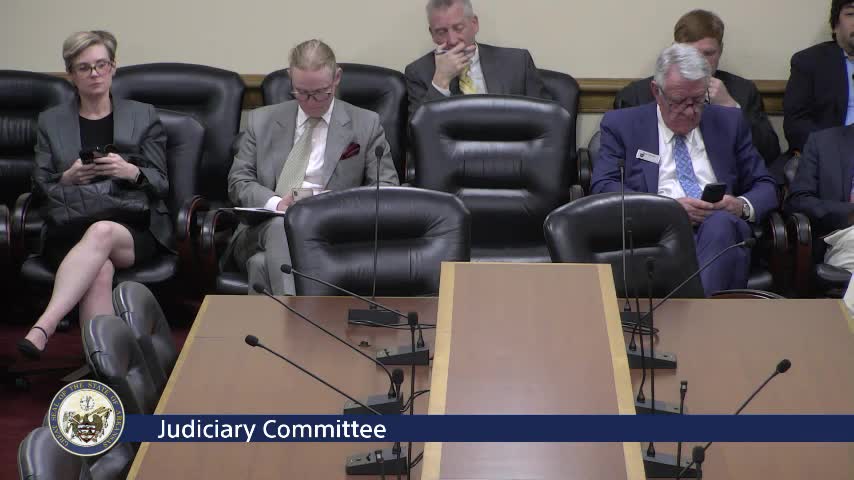
Senate Judiciary Committee rejects ‘junk lawsuit’ bill aimed at pharmacy discount-card suits
Summary
Senate Bill 441, sponsored by Sen. Barr Hester and amended to limit retroactivity, failed after extended debate over consumer protections, attorney fees and retroactive effect on ongoing litigation.
Senate Bill 441, the "Junk Lawsuit Prevention Act," failed in the Senate Judiciary Committee after senators voted against moving the amended bill forward.
The bill, presented by Sen. Barr Hester, would have removed certain consumer-protection remedies for alleged violations tied to pharmacy discount cards and added a 30-day notice-and-cure provision; an amendment narrowed the bill’s retroactivity to Jan. 1, 2021. Hester described the measure as a way to prevent out-of-state law firms from bringing large numbers of suits he characterized as “parasitic,” saying the suits raise costs for Arkansas businesses and consumers.
Supporters in the room portrayed the bill as protecting local businesses and reducing litigation they view as opportunistic. Opponents — including a witness who identified himself as Bart Calhoun, a partner at McDaniel Wolf Law Firm representing the Bert and Annette Mullins Foundation — said the measure would weaken Arkansas’ consumer protection law by removing civil penalties and attorney-fee awards, and by adding a 30-day cure period that would blunt enforcement. Calhoun warned that removing attorney-fee awards would leave harmed consumers unable to afford legal representation and would overly rely on the attorney general’s office for enforcement.
Attorneys representing defendants in pending litigation testified the current text of the consumer-protection statute allows plaintiffs to pursue statutory penalties without showing actual damages and that some suits presented in committee do not allege individual consumer injury. Martin Casten, of the firm Friday, Eldridge & Clark, said the plaintiffs in the Pope County complaint had not demonstrated that any consumer was actually deceived and that the lawsuits are relying on technical statutory requirements.
Committee members questioned the bill’s interaction with ongoing litigation and whether it would retroactively affect cases already filed. Senator Cedric Tucker and others said they were reluctant to pass legislation that would change the legal landscape for active suits. Senator Tucker said he would prefer language requiring actual injury before private plaintiffs could recover; Hester pointed to page 3, lines 6–8 of the amendment and read language providing that “if injured, someone may seek compensation.”
After debate and a roll call, the committee recorded what members described as a close tally and determined the bill failed. The committee chair announced there were four “no” votes and that the bill had not passed.
The committee did not produce new statutory language beyond the amendment before voting; senators who opposed cited consumer-protection concerns and the bill’s effect on ongoing litigation. Proponents said the bill would curb suits they described as opportunistic and protect Arkansas employers and insurers.
The committee record shows extended questioning and multiple witnesses called on both sides; no additional committee direction or referral was stated on the transcript before the vote.