Get Full Government Meeting Transcripts, Videos, & Alerts Forever!
Get email alerts on the Cdl Work Visa topic
No spam. Unsubscribe anytime.
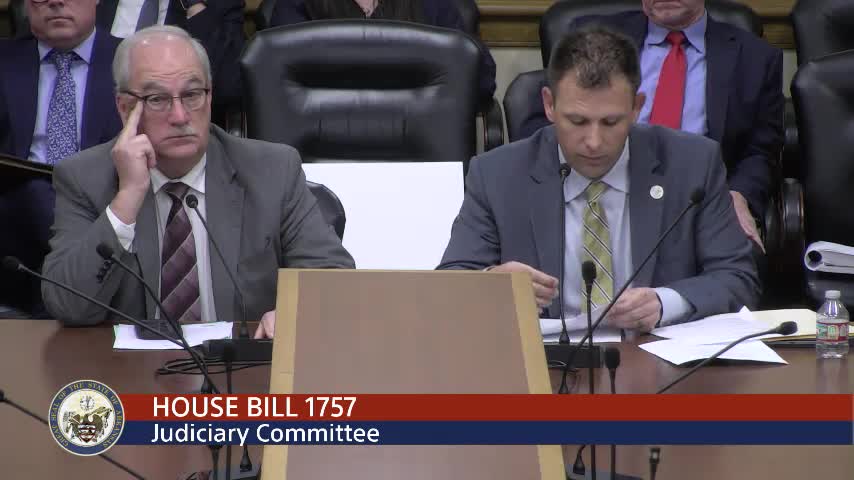
Committee approves bill requiring U.S. work authorization to accompany some foreign commercial driver licenses after heated debate
Summary
The Senate Judiciary Committee approved House Bill 17‑45, requiring drivers who present foreign commercial driver's licenses to also have U.S. work‑authorization documentation and adopting federal English‑proficiency language for commercial drivers.
The Senate Judiciary Committee advanced House Bill 17‑45 as amended after a two‑hour debate that divided industry groups, safety advocates and trucking‑sector speakers over whether the measure will improve roadway safety.
Representative R.J. Hawk, sponsor, said the bill targets fraudulent or improperly documented foreign commercial driver's licenses and requires drivers presenting foreign CDLs to accompany those credentials with U.S. work authorization documents (for example a valid work visa) in order to operate in Arkansas. The committee adopted an amendment that replaces earlier language referencing an "employment authorization document" with the more specific phrase "work visa," and also added federal English‑language proficiency wording already used for commercial drivers.
"This helps crack down on fraudulent CDLs," Hawk said, noting Texas enacted similar language the prior year.
Supporters at the hearing included Shannon Newton of the Arkansas Trucking Association, who described the amendment as a practical way to authenticate foreign credentials: "Those are U.S. documents, and that is a way to verify that the individual presenting that foreign CDL is who they say they are and is here working legally," she said.
Opponents argued the bill is insufficient. Harvey Beach, co‑founder of American Truckers United, testified that ongoing problems with drivers who cannot read or understand English are not solved by the amendment and that other pending proposals (including HB 15‑69 in the House) would be more effective. "We need to shut down loopholes, not paper them over," Beach said.
Safety practitioners also urged stronger enforcement. Chuck Rymer, who testified for safety and compliance interests, said the federal Commercial Vehicle Safety Administration (FMCSA) already sets minimum standards and that states need tools to remove high‑risk drivers from the road. Several members of the committee expressed concern about enforcement capability and whether state or local officers can readily verify foreign credentials during roadside encounters.
After debate the committee advanced House Bill 17‑45 as amended by voice vote. Committee members said they expect ongoing coordination with the Department of Transportation, state police and the attorney general’s office on enforcement and implementation details.
What’s next: House Bill 17‑45 moves forward to the Senate calendar. Advocates on both sides said additional legislation or federal action may be necessary to address broader safety concerns that witnesses raised.