Get Full Government Meeting Transcripts, Videos, & Alerts Forever!
Get email alerts on the Consumer Protection And Criminal Law topic
No spam. Unsubscribe anytime.
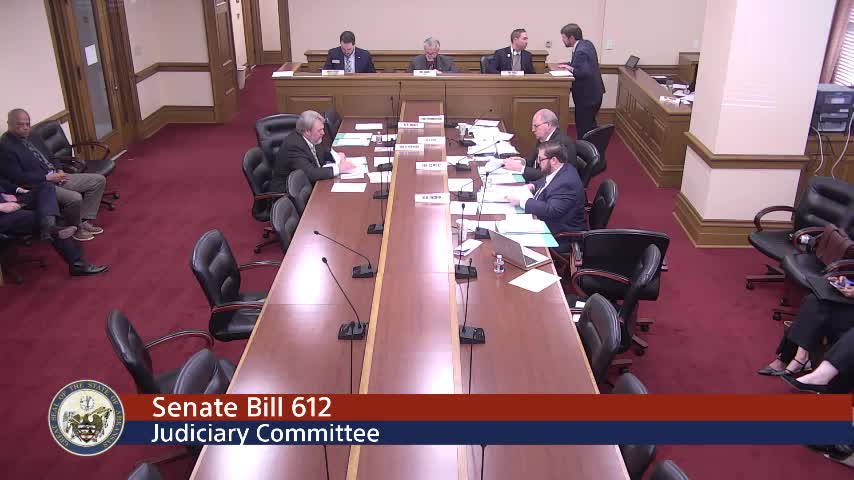
Committee debates criminalizing unpaid rental damage and nonpayment; SB509 fails in committee
Summary
SB509, which would create criminal penalties tied to equipment rental nonpayment and damage, drew extensive testimony from rental operators, prosecutors and judges and failed to pass in committee after members raised concerns about vagueness, duplicative criminal statutes and the line between civil and criminal remedies.
Senate Bill 5 09, proposed by Senator Gary Stubblefield (Senate District 26), would have made certain failures to return or pay for rented equipment, and damage to rented equipment, criminal offenses. The Judiciary Committee considered the bill after extensive testimony from an equipment rental business owner describing recurring unpaid bills and damaged machinery.
Andrew Antaloni, who identified himself as the owner of an equipment rental company in Greenwood, told the committee he had sued a customer for $30,000 in unpaid rental charges and damages and said civil remedies have proven ineffective: ‘‘It's just, it seems like rental companies, people steal from them and there's nothing we can do about it,’’ he said.
Prosecutors and committee members pushed back on the change. Tom Tatum, prosecuting attorney for the 15th Judicial District, told the committee that many such disputes are already covered by existing theft statutes and that criminal liability generally requires proof of criminal intent. ‘‘A lot of times ... the prosecutor is telling him, hey. This is more civil, not a criminal issue, and you should pursue your civil remedy,’’ Tatum said. Senator Tucker and others cited a specific existing statute, Ark. Code § 5-36-115 (theft of leased or rented property), during questioning.
Committee members said the bill was phrased too broadly and lacked cure periods and other safeguards to avoid criminalizing ordinary civil disputes and consumer nonpayment. Judge McKee and others recommended adding procedural protections, cure periods or clearer intent language before converting widespread civil disputes into felonies.
After discussion the committee took a recorded voice vote. The chair announced, ‘‘I'm sorry, senator Stubblefield. Your SB509 did not pass.’’ The transcript shows the motion to pass failed. Several senators noted sympathy for rental businesses but expressed reluctance to convert these disputes into criminal offenses without clearer statutory boundaries.
Because of concerns about vagueness, conflicts with existing theft statutes, and the importance of distinguishing civil debt collection from criminal intent, the committee rejected SB509.