Get Full Government Meeting Transcripts, Videos, & Alerts Forever!
Get email alerts on the Animal Fighting Law topic
No spam. Unsubscribe anytime.
Committee rejects bill to narrow animal-fighting law, citing public-safety and enforcement concerns
Summary
The Senate Judiciary Committee considered House Bill 1611, which would narrow criminal exposure for people who own certain game fowl and limit seizure of roosters, but the committee voted against advancing the measure after extensive testimony from prosecutors, animal-welfare groups, and game-fowl proponents.
The Senate Judiciary Committee met Tuesday to consider House Bill 1611, a measure sponsored in the chamber by Sen. Jonathan Kroll that would narrow the state's animal-fighting law for game fowl and limit law-enforcement seizure of roosters unless there is clear and convincing evidence they were used in fighting.
Supporters said the bill protects legitimate breeders and farmers from criminal liability and from having birds euthanized after raids; opponents said it would make it much harder for prosecutors and local animal-control officers to interrupt illegal fighting rings.
Proponents, including Blake Pierce of the Arkansas Game Fowl Commission, told the committee the measure is 'a farmer-protection bill' intended to keep breeders from losing valuable birds to enforcement actions and to narrow prosecutions to organized fighting and proven uses in fights. Pierce said the bill would let owners keep birds unless prosecutors can show the specific bird was used in a fight.
Opponents included Cole Wakefield, executive director of Good Shepherd Humane Society (Carroll County), who testified on behalf of the Arkansas State Animal Control Association and the National Animal Care and Control Association. Wakefield said current statutes and enforcement practices balance due process and animal welfare, and he warned the proposed language'particularly the undefined term "organized"'would create ambiguity that bad actors could exploit. "This bill uses imprecise and undefined language such as the term organized," Wakefield told the committee, adding the change could become "a de facto legalization of cockfighting."
Several elected prosecutors testified that prosecutors need discretion and that existing law requires a culpable mental state (knowingly) to charge unlawful animal fighting. David Etheridge, elected prosecutor for the 14th Judicial District, and others told the committee their review of the current statute (cited in testimony as 5-62-120) found no explicit requirement that seized birds must be euthanized; but multiple speakers said that in practice roosters seized during raids have often been euthanized, and witnesses cited cases in other states where owners faced dozens of felony counts after seizures.
Prosecutor Connie Mitchell told the committee the bill would remove language that currently prohibits selling, buying, possessing, or training an animal for fighting, and she described the proposed changes as an unnecessary watering-down of an existing unlawful-animal-fighting statute. "In an effort to basically legitimize, decriminalize, or water down the statutes for animal fighting, they have drafted this'" Mitchell said, adding that organized fighting is not defined in the draft and that seizing animals used in fighting is a routine investigatory step.
The committee heard a factual dispute over whether Arkansas has routinely euthanized seized roosters. Prosecutors said the statute does not explicitly require euthanasia and that seized birds have often been rehomed; other witnesses said euthanasia has been common following raids, citing local incidents and examples from neighboring states.
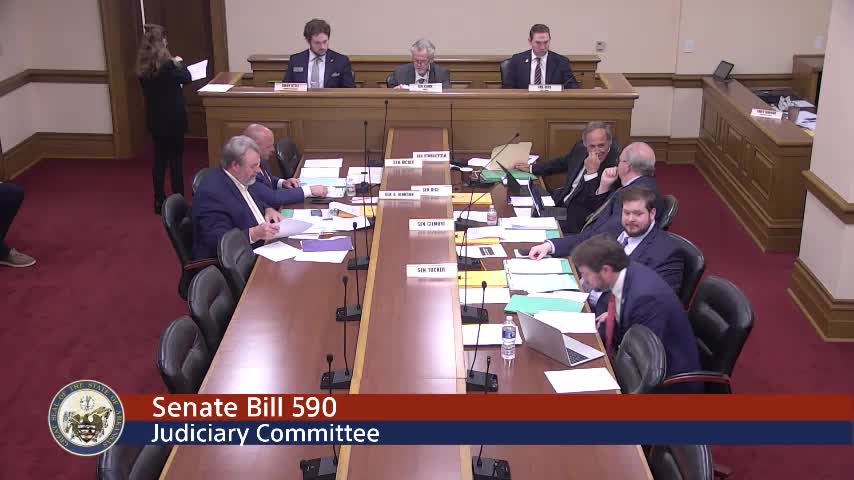
After nearly three hours of testimony and questions from committee members, including detailed exchanges about the bill's definitions, enforcement mechanics and cross-border comparisons with Oklahoma and Tennessee law'a motion to give the bill a do-pass recommendation was offered and seconded. The committee conducted a voice vote; the chair summarized the result by saying the motion did not pass.
Because the committee did not advance the bill, HB 1611 will not move from this committee at this stage. Supporters said they want to protect breeders' livelihoods; opponents warned the language would hinder law enforcement and could increase the risk of organized fighting.
A number of witnesses asked for clearer statutory definitions and for safeguards to ensure prosecutors and animal-control officers retain tools to interdict illegal fighting operations. The transcript shows repeated requests for a defined mental state, clarified seizure rules and specific language on the meaning of "organized" activity.
The committee record shows substantial local interest: several county prosecutors and animal-control professionals testified, and residents from Franklin County and other rural counties described potential local impacts if the law were changed.
The Judiciary Committee is scheduled to meet again after lunch to continue consideration of other measures.