Get Full Government Meeting Transcripts, Videos, & Alerts Forever!
Get email alerts on the Corrections Health And Safety topic
No spam. Unsubscribe anytime.
Senate Committee advances bill to limit restraints, require prenatal care for pregnant inmates
Summary
A Senate Judiciary Committee voted to pass SB623, which restricts restraints on pregnant inmates, requires prenatal and postpartum care consistent with medical standards, mandates trauma-informed training for corrections staff and establishes reporting standards for restraint use.
A Senate Judiciary Committee on May 20 advanced Senate Bill 6 23, legislation that would restrict use of restraints on pregnant inmates and require improved prenatal and postpartum care in Arkansas correctional facilities.
The bill, presented by Senator Jamie Scott (District 12), would limit the use of restraints on incarcerated women during labor, delivery and postpartum recovery except in ‘‘extraordinary circumstances’’ where safety is at risk; require access to prenatal and postpartum care consistent with medical standards; mandate trauma-informed training for corrections staff; and establish reporting standards when restraints are used during pregnancy. ‘‘This bill seeks to amend the law to ensure that every woman under the care and custody of our correctional and detention facilities is treated with dignity, compassion, and receives the medical attention her conditions require,’’ Scott said.
Scott said the amendment the committee considered was provided by the governor’s office and the Department of Corrections to ensure the department’s operations were aligned with the bill’s language. Tony Raul, chief legal counsel for the Department of Corrections, told the committee that the agency conducts pregnancy testing at intake and that, at the time he spoke, the department had six pregnant inmates across its divisions; he said one had delivered the previous week.
Several senators asked for additional data before final passage, including the total number of female inmates, how many pregnancies occur while incarcerated and whether the judicial process allows alternatives to incarceration for pregnant people. Senator Ross asked, ‘‘Can you tell me how many female inmates we currently have or average what we have incarcerated or pregnant?’’ Scott asked the committee for time to summon Department of Corrections staff; Raul later supplied the six-person figure and agreed to provide additional historical data.
Committee members praised the bill’s intent but pressed for implementation details and cost information. Senator Gilmore called SB623 ‘‘great work that builds on what we’ve previously passed’’ but emphasized the need to track operational impacts. Scott said the bill ‘‘does not compromise safety’’ and stressed it aligns correctional policies with medical practice.
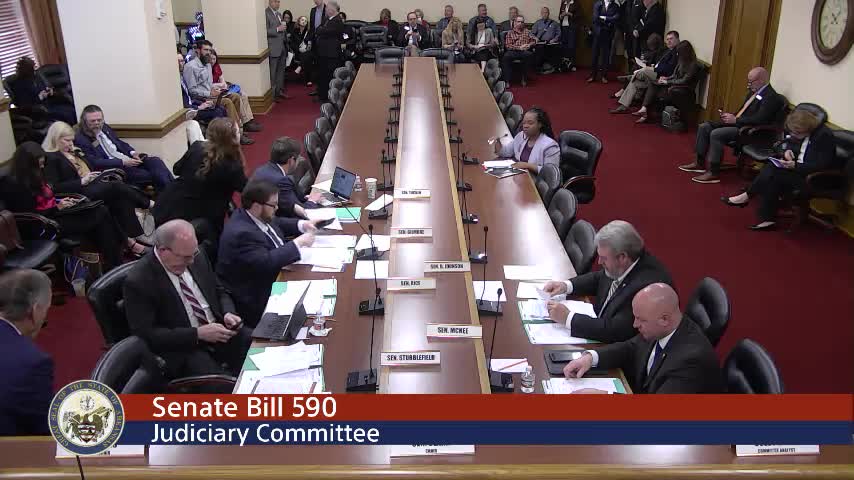
The committee adopted a DOC-supplied amendment and then approved the bill by voice vote. The clerk recorded the motion to adopt the amendment, a second (Senator Tucker), a motion to do pass and a subsequent committee vote. The committee chair announced the motion carried and ordered the bill advanced.
The bill’s requirements would apply to state correctional and detention facilities; the committee asked the Department of Corrections to provide data requested by members before the measure advances to the Senate floor.