Get Full Government Meeting Transcripts, Videos, & Alerts Forever!
Get email alerts on the Local Government Policy topic
No spam. Unsubscribe anytime.
Senate committee adopts amendment, advances bill to prohibit DEI offices and policies in cities and counties
Summary
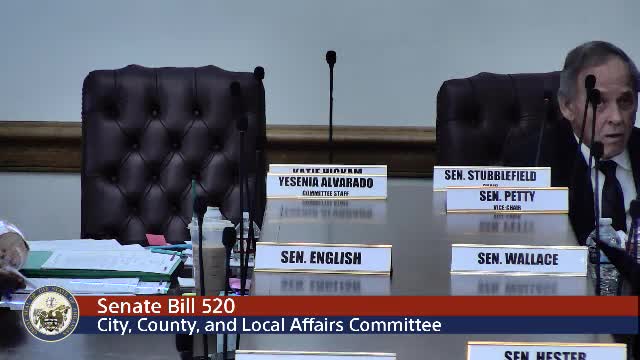
Sen. Dan Sullivan, R–District 20, told the Senate City, County & Local Affairs Committee on May 20 that he had filed an amendment to a bill that would prohibit diversity, equity and inclusion (DEI) offices, officers, policies and practices in county and city governments and said the amendment clarifies that funding streams would not be affected and provides a cure period for alleged violations.
Sen. Dan Sullivan, R–District 20, told the Senate City, County & Local Affairs Committee on May 20 that he had filed an amendment to a bill that would prohibit diversity, equity and inclusion (DEI) offices, officers, policies and practices in county and city governments and said the amendment clarifies that funding streams would not be affected and provides a cure period for alleged violations.
The committee adopted Sullivan’s amendment and then advanced the measure. Sullivan described the bill as “pretty much the same” as a higher-education bill the committee previously considered and said it “follows in line with Act 116.” He told colleagues he had worked with the governor’s office, municipalities and the Municipal League and said he knew of no organized opposition.
Arissa Bennett, who identified herself as representing the city of North Little Rock, testified in opposition during the public-comment portion. “We really do not agree with this. We’re totally against it as far as our DEI policy,” Bennett said. She told the committee she believed the bill would chill speech and programming, that it could expose local governments to attorney-fee liabilities and that partnerships with organizations that have DEI programs could be curtailed by the measure.
Sullivan told the committee the bill includes a 30-day cure period for reported violations, saying: “If people are doing things that are wrong, you report it, and the city and county governments have 30 days to cure it.” He asked for a favorable vote.
After brief committee discussion and no further public testimony, members moved the bill forward. The transcript records vocal aye/negative calls but does not provide a roll-call tally in the record supplied.
The bill as presented would: prohibit DEI offices/officers and DEI policies or practices in cities and counties; incorporate the adopted amendment clarifying that funding should not be affected by the prohibition; and provide a 30‑day cure period for reported violations. Testimony in the hearing raised First Amendment and enforcement concerns from a municipal official; the committee did not record additional legal analysis in the hearing record about how the prohibition would interact with existing federal or state nondiscrimination or constitutional law.
The committee advanced the bill to the next step of the legislative process.
Looking ahead, proponents and opponents indicated the debate will likely continue as the measure moves through subsequent chambers; the committee hearing record provided no further implementation details or enforcement case examples.