Get Full Government Meeting Transcripts, Videos, & Alerts Forever!
Get email alerts on the Unemployment Insurance topic
No spam. Unsubscribe anytime.
Committee passes UI reform bill that shortens job-search exemption and changes overpayment rules
Summary
Senate Bill 598, presented as a Division of Workforce Services cleanup bill, would shorten the job-search exemption window for claimants with known return-to-work dates, reduce weeks of UI eligibility, require rulemaking on overpayment waivers and align the employee-employer definition with recent federal guidance.
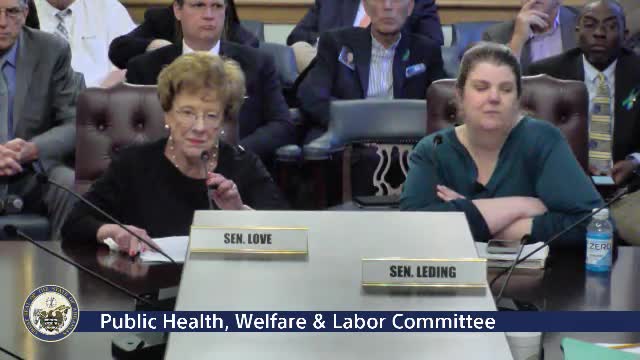
Senate Bill 598, presented by Senator Jane English and accompanied by staff from the Division of Workforce Services, passed the Senate Public Health, Welfare and Labor Committee after questions about technical details.
Senator English said the bill is a "cleanup" measure for the Division of Workforce Services. Key changes described in committee testimony include:
- Reducing the exemption period for unemployment claimants who have a return-to-work date: currently an exemption applies when a claimant has a return-to-work date within the next 10 weeks; SB 598 would shorten that period to three weeks. - Reducing the maximum number of weeks an individual may be eligible for unemployment benefits from 16 weeks to 12 weeks (as presented by sponsor). - Mandating the promulgation of rules for waiving overpayments of UI benefits; the sponsor said the process had previously been at the director’s discretion and the bill would produce a firmer structure. - Realigning the statutory definition of the employee-employer relationship to conform to changes in IRS guidance (20 C.F.R. referenced) while preserving some specific exemptions (for example, certain Medicaid-funded long-term care workers who provide in-home services).
Senator Payton asked whether the bill adopted the IRS definition without deviation; Senator English said the bill makes a few limited deviations and preserves existing exemptions. Staff member Chris Rhodes of the Division of Workforce Services attended as a panel representative.
After questions, no opposition testimony was recorded and the committee passed the bill by voice vote.