Get Full Government Meeting Transcripts, Videos, & Alerts Forever!
Get email alerts on the Telemammography topic
No spam. Unsubscribe anytime.
Senate committee advances bill to allow remote diagnostic mammograms with written consent
Summary
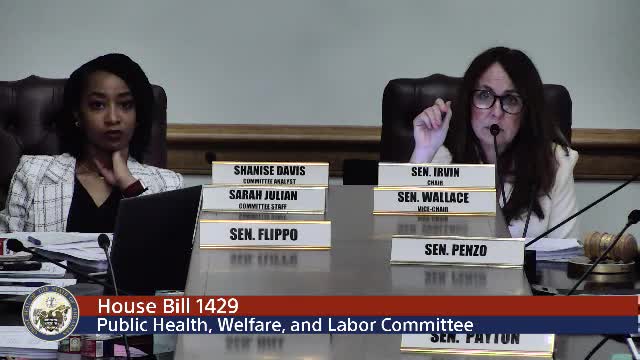
The Senate Public Health, Welfare and Labor Committee on Monday advanced House Bill 14‑29, a measure to allow diagnostic mammograms to be performed by remote radiologists for patients in rural Arkansas if a radiologist is immediately available by telemedicine and the patient signs a disclosure acknowledging that in‑person evaluation is preferred.
The Senate Public Health, Welfare and Labor Committee on Monday advanced House Bill 14‑29, a measure to allow diagnostic mammograms to be performed by remote radiologists for patients in rural Arkansas if a radiologist is immediately available by telemedicine and the patient signs a disclosure acknowledging that in‑person evaluation is preferred.
The bill’s sponsor, Representative Shepherd, told committee members the measure was prompted by staffing shortages at rural hospitals: "This is really, an accessibility issue," he said, adding the proposal came from his local hospital in El Dorado and was cosponsored in the House by Representative Johnson and Senator Urban.
Supporters, including radiologists who testified, said telemedicine reading would preserve access where on‑site radiologists are unavailable. John Metters, a radiologist with Radiology Associates, said radiology already relies on off‑site reading for most imaging and described Arkansas’ workforce challenges: "We can't recruit against Georgia and Texas, so we don't have enough radiologists," he said, calling the shortage "a crisis." Dr. David (Tom) Tamas, who also practices mammography, pointed to technological improvements, saying, "Now, the game changer is we can do cine ultrasound... It's actually excellent."
Opponents centered their testimony on ultrasound quality and the hands‑on component of breast ultrasound. Amanda Farrell, medical director of breast imaging at Baptist Health and representing Radiology Consultants, said she opposed the bill chiefly because of the ultrasound piece: "Allowing remote diagnostic ultrasound is, to me, the illusion of access," she said, describing situations in which experienced technologists miss findings that a radiologist could locate by scanning in person.
Radiologist Scott Harder urged rejection of the measure, arguing that Arkansas codified on‑site radiologist requirements decades ago to protect quality: "Vote no to House Bill 14‑29," he told the committee, saying the state should maintain its higher standards.
Committee action and amendment
Committee members debated tradeoffs between access and quality. Senators asked whether the change could be handled by administrative rule; Shepherd said the Department of Health had considered rule changes but the bill was introduced to ensure the change is enacted in the coming session. The committee adopted an amendment requiring two elements before remote diagnostic ultrasound could be used: (1) a radiologist must be immediately available through telemedicine during the diagnostic exam and (2) patients must sign a written disclosure acknowledging that in‑person evaluation is preferred and that remote imaging may have limitations. The amendment also required that evaluation results be made immediately available.
After debate and testimony from both sides, the committee voted to adopt the amendment and to advance the bill. The committee announced "ayes have it" and moved the bill forward to the next stage.
Why it matters
Supporters said the bill will increase access in counties where radiologists do not regularly staff hospitals and where patients face long drives to larger medical centers. Opponents warned that breast ultrasound requires hands‑on correlation with mammography and that remote interpretation risks missed findings and false reassurance for some patients. Several witnesses described follow‑up and tracking procedures — such as short‑interval imaging or MRI — that can be used when ultrasound is inconclusive, but disagreed on how frequently remote imaging would be adequate.
What’s next
House Bill 14‑29 now advances from the committee. If approved by the full Senate and signed by the governor, the change would direct state practice and potentially require coordination with existing federal and accreditation rules that govern mammography services.
Ending note
Committee members who supported the bill emphasized the disclosure amendment as a compromise to balance access and quality; members who opposed it warned the amendment did not address the hands‑on nature of breast ultrasound. The committee record shows the measure passed the committee on a voice vote after the amendment was adopted.