Get Full Government Meeting Transcripts, Videos, & Alerts Forever!
Get email alerts on the Ballot Readability topic
No spam. Unsubscribe anytime.
Senate panel advances bill requiring 8th-grade readability for citizen ballot titles
Summary
A Senate committee voted to advance House Bill 17‑13, which would require citizen-initiated ballot titles and summaries to meet an eighth-grade readability standard using the Flesch-Kincaid formula; proponents call it voter clarity, opponents and witnesses warn about legal and practical limits of the test.
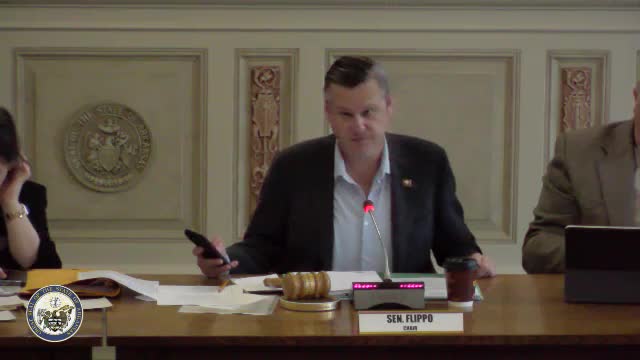
The Senate State Agencies and Governmental Affairs Committee on Monday voted to send House Bill 17‑13 to the full Senate after several hours of testimony and public comment. The bill would require citizen-initiated ballot titles and summaries to meet an eighth-grade reading level under the Flesch‑Kincaid grade‑level formula before the attorney general certifies them for the ballot.
Supporters, including Sen. Mark Johnson and Rep. Representative Rose, said the change aims to make complex ballot measures easier for average voters to understand. “We want people who don’t read this kind of stuff for a living … to have a chance to cast their vote on an issue based on understandable information,” Representative Rose said during his presentation.
Opponents and academic witnesses urged caution. Dr. Gail Choate, a civic-education specialist, told the committee the Flesch‑Kincaid test was developed for technical manuals and “may not be appropriate” for legal language, which she said can be penalized by the formula because of necessary terms and longer sentences. Kristen Stewart, a private citizen who testified against the bill, noted that even the bill’s own title did not meet the proposed standard and said the measure “could encourage oversimplification that leads to misunderstanding.”
Committee members pressed authors about legal risk and practical effects. Sen. Dan Sullivan asked whether the standard would invite litigation; Rep. Rose said the attorney general’s office had reviewed the idea and “believes that this is perfectly defensible at the eighth-grade reading level.” The chair and others repeatedly framed the bill as limited to citizen initiatives and not a change to legislatively referred amendments.
After debate, the committee approved the bill on a voice vote. Senator Clark moved that the committee give the bill a do‑pass recommendation; Senator Payton seconded. The committee recorded the motion as approved and the chairman announced that the bill would advance.
Proponents pointed to other states that use readability standards and said the rule is content neutral; critics emphasized that readability tools do not capture legal nuance and suggested alternatives such as better voter guides and abstracts.
If enacted as written, the law would direct that ballot titles and summaries prepared for citizen initiatives be written at or below an eighth‑grade Flesch‑Kincaid score before certification. The bill does not change existing law for legislatively referred measures; authors said they would support separate legislation to cover those if desired.
The committee vote sends the bill to the Senate for further consideration.