Get Full Government Meeting Transcripts, Videos, & Alerts Forever!
Get email alerts on the Medical Ethics topic
No spam. Unsubscribe anytime.
Committee approves amendment letting health-care power of attorney alter anatomical-gift decisions
Summary
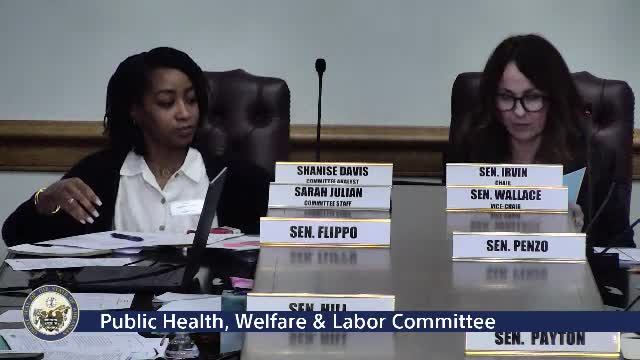
A committee amendment that narrowed and rewrote much of House Bill 16-79 was adopted and the bill, as amended, was passed by the Senate Public Health, Welfare and Labor Committee.
A committee amendment that narrowed and rewrote much of House Bill 16-79 was adopted and the bill, as amended, was passed by the Senate Public Health, Welfare and Labor Committee.
Representative Matt Brown, sponsor of the house bill, described the amendment as the operative text. Under the amendment, a person designated as a health-care power of attorney would have the authority to revoke or amend a prior anatomical-gift designation, the sponsor said. The amendment also clarifies family rights after death and requires reporting from organ procurement organizations (OPOs).
Brown explained his motivation came from a personal family experience in which he served as health-care power of attorney and encountered limits in making decisions about post-mortem procedures. "Under the law, your health care power attorney can do everything in the world for you ... except the one thing in the law was is they could not say... we don't want to do tissue donation," Brown said.
Senators pressed for procedural and substantive clarifications during committee review. Senator Payton asked whether, once adopted, the amendment would need to be engrossed for committee consideration; he also asked practical questions about when family rights would begin after death. The sponsor and committee members discussed timing and mechanics; Brown said the bill sets a two-hour cutoff after pronouncement of death to allow OPO outreach and, after that period, the family could decline further tissue donation once viable organs were assessed or harvested.
The amendment also requires annual reporting by organ procurement organizations to the Arkansas Legislative Council (ALC), Brown said, citing a lack of systematic reporting currently. Committee members noted the Organ Procurement Organization (OPO) had become neutral on the amended bill following negotiations.
The committee adopted the amendment by voice vote and then passed HB 16-79 as amended. No roll-call vote was recorded in the transcript.