Get Full Government Meeting Transcripts, Videos, & Alerts Forever!
Get email alerts on the Electricity Resource Planning topic
No spam. Unsubscribe anytime.
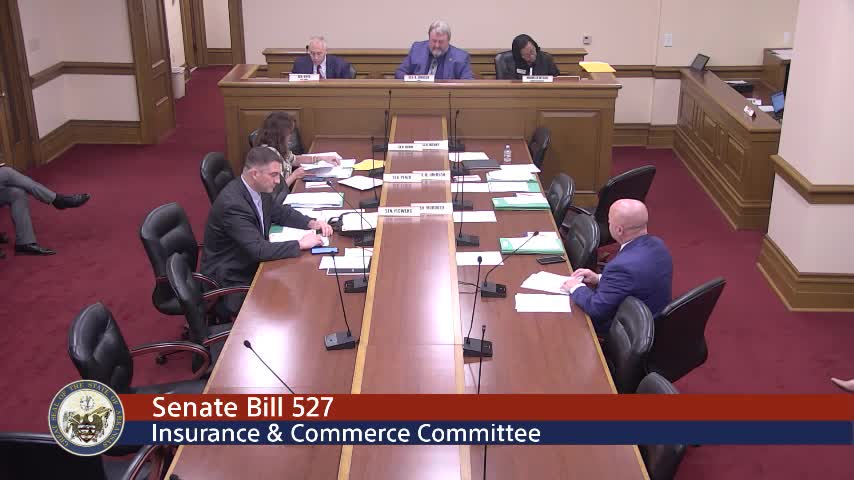
Committee approves bill giving PSC authority to review utility retirements after debate about legal risks and economic effects
Summary
Senators passed Senate Bill 596 after extensive testimony from Entergy Arkansas, which warned the bill could spur litigation and threaten economic development tied to generation retirements required by a federal consent decree.
The Senate Insurance & Commerce Committee advanced Senate Bill 596 after a lengthy hearing that featured detailed testimony from Entergy Arkansas executives. The bill would add state-level guardrails for utility resource planning and require utilities to seek Public Service Commission approval before retiring major generation facilities.
Why it matters: The bill is framed by sponsors as a tool to protect reliability and economic development in Arkansas by ensuring the state can review proposed retirements of dispatchable generation. Utilities warned it could be preempted by existing federal court consent decrees and lead to protracted litigation and large legal and capital costs.
Entergy officials told the committee the bill’s most consequential language starts on page 5, line 31 (as presented to the panel) and would require a utility to apply to the Arkansas Public Service Commission for permission to retire a generating facility such as the White Bluff and Independence coal-fired plants. John Bethel, Entergy Arkansas director of public affairs, said the closures are tied to a federal consent decree approved by the Department of Justice and a federal district court and that the decree’s terms and Title V permits create legal deadlines and penalty exposure if the timetable is altered. “If this bill becomes law,” Bethel warned, “there are three options for Entergy: ignore it, apply to the PSC and invite more litigation, or seek modification of the consent decree — none of which are good for reliability or ratepayers.”
Kirk Casselberry, Entergy resource planner, emphasized the industry need for certainty in planning: with firm closure dates set by the consent decree, Entergy and its co-owners can evaluate replacement options and preserve transmission interconnection value. Casselberry described the White Bluff and Independence sites as large employment and generation locations with interconnection capacity that is valuable for economic development.
Senators questioned witnesses about legal effects of recent Supreme Court decisions and administrative changes. Entergy acknowledged that legal developments such as the Loper Bright decision could alter the calculus in litigation, but stressed that pursuing court relief or litigation would create years of uncertainty and cost.
Committee action: The committee adopted amendments intended to narrow scope or address technical drafting issues and voted to pass SB 596 as amended. The committee’s recorded action was a voice vote in favor.
Speakers who testified included Entergy Arkansas officials John Bethel (director of public affairs), Kirk Casselberry (resource planning), Justin Allen (company representative), and sponsor Sen. Matt McKee.
Next steps: Committee approved the bill as amended and will forward it with a favorable recommendation.