Get Full Government Meeting Transcripts, Videos, & Alerts Forever!
Get email alerts on the Lithium Incentives topic
No spam. Unsubscribe anytime.
Senate committee rejects proposed tax-incentive package for lithium industry
Summary
Senate Revenue & Tax Committee voted down Senate Bill 568, a comprehensive incentive package aimed at encouraging lithium extraction and in-state processing, after extended debate over royalty treatment, lease-payment language and local revenue impacts.
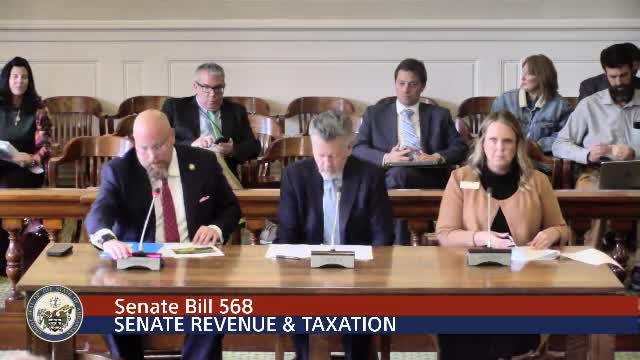
Senate Revenue & Tax Committee members voted against Senate Bill 568, a package of tax incentives aimed at encouraging lithium extraction and downstream processing in Arkansas, after extended questioning about how the bill treats extraction, lease payments and local severance revenue.
The bill’s sponsor, Senator Steve Crowell (District 3), described SB 568 as “a very comprehensive, very complicated bill about, lithium and upstream and downstream, possibilities,” saying the measure is intended to keep more of the lithium value chain — from extraction through refining — inside Arkansas. Secretary of Commerce Hugh McDonald and Jennifer Emerson, deputy director of the Arkansas Economic Development Commission (AEDC), testified in support of the bill’s goal of attracting processing and manufacturing jobs.
Supporters said the measure would offer sales‑tax exemptions for certain processing and manufacturing steps, a severance-tax break limited to new production, and other tax incentives intended to attract capital investment and jobs. McDonald told the committee that national supply-chain gaps make upstream processing a strategic target and that the state has worked with Benchmark Minerals on market analysis: “They’re a global expert in terms of the lithium space and critical minerals,” he said. Proponents argued the incentives could spur construction of high‑value refining and battery-component facilities that would create jobs beyond extraction.
Opponents and some committee members raised multiple concerns. Several senators pressed whether “lease payments” in the bill would be interpreted to include royalty payments to mineral owners, which would effectively treat extraction and payments to landowners as eligible facility costs for incentive thresholds. Paul Gehring of the Department of Finance and Administration (DFA) said DFA interprets the bill as intending to limit eligible costs to facility costs, not royalty payments, and that clarifying language or an amendment would increase DFA’s confidence in administering the program. Senator Dismang and others said they were uncomfortable with an incentive that appears to subsidize extraction in a way not used for other mining industries.
Committee members also questioned when local governments would see offsetting revenue from infrastructure impacts, given a multi‑year production and construction timeline. Supporters noted the industry is nascent and argued incentives are needed to recruit the chain of manufacturers that would create local jobs, while skeptics warned the state could be undercut by other states’ incentive packages.
After debate, Senator Crowell made a motion that the committee “do pass” SB 568, seconded by Senator Qualwell. The motion failed on a voice vote. The chair announced, “Motion fails. So that bill does not pass.”
The committee’s discussion highlighted two concrete technical issues proponents said they would try to fix before further consideration: (1) specifying that “lease payments” means facility lease costs rather than royalty payments to mineral owners, and (2) clarifying the treatment and timing of severance‑tax relief so counties and cities are not unintentionally deprived of revenue tied to new production. Supporters said they would seek an amendment and additional guidance from DFA and AEDC if the bill is reintroduced.
No roll-call vote was taken; the committee recorded the outcome by voice vote. The bill failed to advance out of the Revenue & Tax Committee.