Get Full Government Meeting Transcripts, Videos, & Alerts Forever!
Get email alerts on the Teacher Paid Maternity Leave topic
No spam. Unsubscribe anytime.
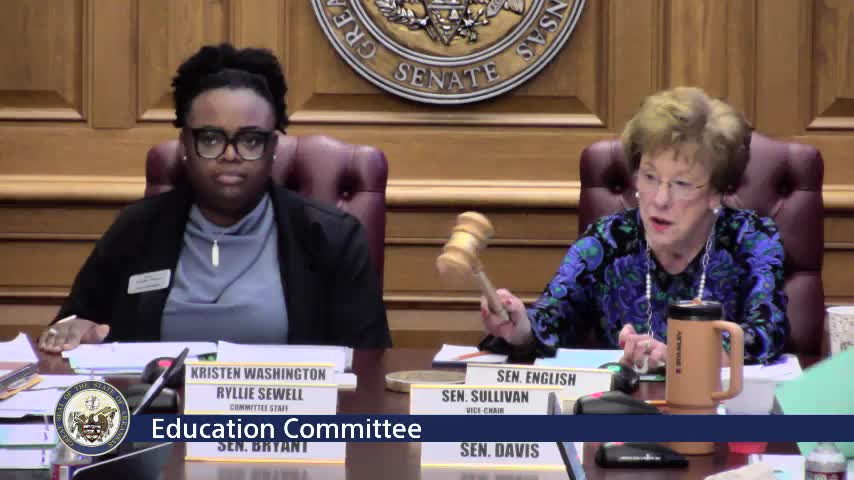
Senate Education Committee backs bill for state to absorb teacher paid maternity leave costs
Summary
The Senate Education Committee voted to give House Bill 1017 a do-pass recommendation after sponsors said the state can absorb the cost of expanding paid maternity leave for teachers, eliminating the prior 50/50 cost-share with local school districts.
Senator Brianne Davis, State Senate District 25, told the Senate Education Committee that House Bill 1017 would shift more of the cost for paid maternity leave for K–12 teachers from local districts to the state, with the stated goal of increasing uptake and helping retain experienced teachers.
The bill responds to low participation under the LEARNS program, Davis said, and would have the state cover a greater share of paid leave so districts would be less likely to opt out. "We want teachers to stay in the classroom, especially teachers who've been teaching a while, but they also wanna grow their family and spend time with their new babies, and we think that that's really important," Davis said.
The measure would expand leave available under the existing LEARNS framework and raise the state funding exposure for the program. Davis and Department of Education officials discussed budget figures with the committee: Davis said the total program is "around $3,400,000" and that the legislature had previously allocated around $3,000,000. Greg Rogers of the Department of Education told the committee that "our analysis, dollars 3,300,000.0 was done on worst case scenario. This year, we've only paid out, like, 168, dollars 1 hundred and 70 thousand total for paternity leave," and said the department believes existing appropriations will cover near-term costs.
Committee members asked about specific policy details and fiscal risks. Senators pressed whether adding foster placement as a qualifying event would meaningfully increase utilization and whether the change would remove incentives for districts to partner on cost sharing. The committee heard that participation in the program has varied across districts: Davis said roughly 22 districts opted in the first year the program was available and 27 in a following year, and that some districts set shorter local leave periods or declined to opt in because of concerns about substitute teacher costs and implementation logistics.
Department staff explained the mechanics: when a district opts in and an eligible employee requests paid leave, the district typically incurs the additional cost of a substitute teacher; teacher salary lines are generally budgeted and the marginal expense is the substitute. Greg Rogers said the department can return to the fiscal session with updated utilization data and request additional appropriation if needed.
After questions and discussion, the committee voted to give House Bill 1017 a do-pass recommendation. There was no roll-call tally recorded in the transcript; committee leadership called for "ayes" and the motion carried.
The committee closed the item without scheduling additional amendments; staff said they would collect utilization data, including foster-placement counts, and provide it to the fiscal session if actual costs approach the department's worst-case estimates.