Get Full Government Meeting Transcripts, Videos, & Alerts Forever!
Get email alerts on the Pharmacy Benefit Managers topic
No spam. Unsubscribe anytime.
Senate committee advances bill to bar PBMs from owning both benefit manager and pharmacy
Summary
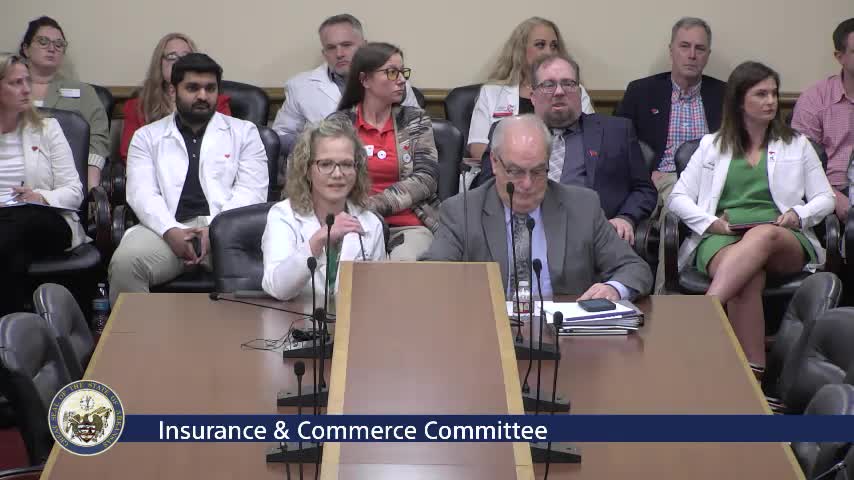
After hours of testimony from pharmacists, patient advocates and industry representatives, the Senate Insurance & Commerce Committee voted to advance House Bill 11‑50, which would prohibit pharmacy benefit managers from simultaneously operating as PBMs and retail or mail-order pharmacies in Arkansas.
The Senate Insurance & Commerce Committee voted to advance House Bill 11‑50 on a voice vote after more than two hours of public testimony for and against the measure. The bill, introduced in the House and presented to the committee by Sen. Kim Hammer, would prohibit pharmacy benefit managers, or PBMs, from both administering pharmacy benefits and owning or operating pharmacies that fill those prescriptions.
The measure’s sponsors and many pharmacists said the law is intended to stop what they described as “steering” of patients and large markups for specialty drugs when PBMs send prescriptions to pharmacies they own. "This bill is about restoring choice, improving access, ensuring affordability, and trusting the local care that so many Arkansans depend on," said Sen. Kim Hammer, the bill sponsor, during closing remarks to the committee.
Why it matters: Supporters said PBM-owned pharmacies are taking high-cost specialty fills away from local pharmacies and marking up prices, increasing costs for patients and payers. They pointed to a Federal Trade Commission study and other national reporting that, in the supporters’ characterization, shows most high-cost specialty spending routed to a small number of vertically integrated chains. "Reining in these monopolies could dramatically lower cost not only for patients, but also for providers or employers and health care plans across Arkansas," said Britney Sanders, president of the Arkansas Pharmacists Association, during her testimony. Patient advocates described cases in which long‑term, temperature‑sensitive medications arrived by mail exposed to heat, and relatives said the loss of local pharmacy relationships had harmed continuity of care.
Opponents, including the Arkansas State Chamber of Commerce and representatives from national pharmacy chains and pass‑through PBMs, argued the bill would reduce consumer choice and cost jobs. "This bill is a punitive measure to remove competition from the market," said Randy Zook of the Arkansas State Chamber. CVS employees and pharmacy staff told the committee the legislation could put them out of work. "If this bill passes, I will lose my job," said Ashley Ellis, a CVS district leader.
Committee questioning focused on enforcement, the scope of the ban and how federal plans such as TRICARE and VA programs would be treated. Proponents said federal programs and military pharmacies typically fall outside state licensure, and that the bill would not affect services on military bases; opponents warned of unintended access problems for veterans and long‑term‑care residents.
The committee heard multiple types of testimony about specialty drugs and dispensing models. Pharmacists and specialty pharmacy representatives described clinical reasons some pharmacies provide additional services (such as infusion support, lab coordination, or 24/7 on‑call clinical support), and several witnesses said those services can be provided by Arkansas‑based pharmacies. Opponents warned that some specialty drugs are available only through limited or exclusive distribution arrangements and that restricting PBM ownership could disrupt access for thousands of patients.
The committee advanced the bill after sponsor remarks and a voice vote. The sponsor and many witnesses asked for continued work on amendments to protect community mental health center pharmacies, long‑term‑care pharmacies and veterans; the record shows some members raised procedural and constitutional concerns, including references to Article II, Section 19 of the Arkansas Constitution (on monopolies).
Ending note: The bill passed committee and will proceed in the legislative process. Supporters framed the measure as a state‑level fix to practices they consider national in scope; opponents warned of job losses and disruptions to care that, they said, could disproportionately affect vulnerable patients such as long‑term‑care residents and veterans.