Get Full Government Meeting Transcripts, Videos, & Alerts Forever!
Get email alerts on the Sports Betting topic
No spam. Unsubscribe anytime.
Stitt opposes tribal-driven sports-betting bills, reiterates earlier free-market licensing plan
Summary
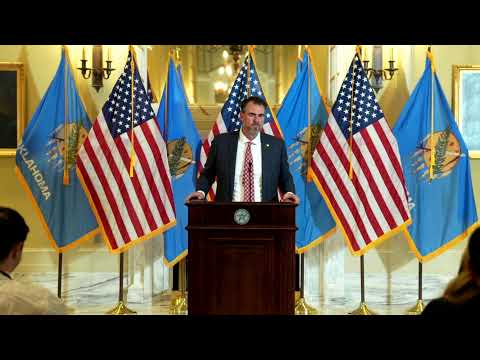
At a press briefing, Gov. Kevin Stitt said he will not sign sports‑betting bills that he said were written to benefit tribal interests alone and described a prior proposal he favors that would allow unlimited commercial licenses with a $500,000 initial fee and a higher state take on mobile betting.
Governor Kevin Stitt said he opposes sports-betting legislation that, he said, was being driven by tribal interests and would exclude other businesses and taxpayers from the market. Stitt characterized his preferred approach as a free‑market plan that would allow broad commercial access with a defined licensing fee and state oversight.
Stitt said his own proposal — which he said was developed about three to four years earlier and reviewed other states’ approaches — called for a $500,000 initial license fee and “unlimited commercial licenses” so operators such as FanDuel or DraftKings could enter the market if they paid the fee. He said his plan envisioned a roughly 20% payment to the state on mobile/statewide operations, with tribes receiving exclusive rights for brick‑and‑mortar casino locations and a lower state payment of about 10% for those in‑casino operations.
“That is a free market solution,” Stitt said. He criticized bills he described as “tribal push bills” and said they would “only benefit the tribes and not the citizens of Oklahoma.” He added, “There’s no possible way that I’m gonna let one industry come into this building, give someone a sheet of paper and say run this bill. I think that’s the height of corruption.”
Stitt said he was open in principle to sports betting but insisted any law he would sign must be consistent with what other states have done and not create a subsidized or exclusive arrangement for a single industry. He said he favors a licensing regime that could be audited by the state and stressed that the taxpayers the governor represents had not been included in negotiations that produced the tribal-backed bills.
Stitt did not provide an updated draft of his licensing language, and he did not state whether he would veto pending bills or negotiate amendments. He said earlier proposals had set the initial fee and tax levels as described but did not provide a precise statutory reference at the briefing.
Details not specified at the briefing include whether existing tribal compacts or federal law considerations would affect any new licensing regime, and how revenue would be allocated if multiple classes of licensees were created.