Get Full Government Meeting Transcripts, Videos, & Alerts Forever!
Get email alerts on the Education Youth Programs topic
No spam. Unsubscribe anytime.
Arnold Ventures pledges $10 million match to back Oklahoma youth programs; governor links gift to tutoring, school-choice priorities
Summary
Governor Kevin Stitt announced that John and Laura Arnold, through Arnold Ventures, committed $10,000,000 in matching funds “over the next few years” to support evidence‑based programs for Oklahoma youth.
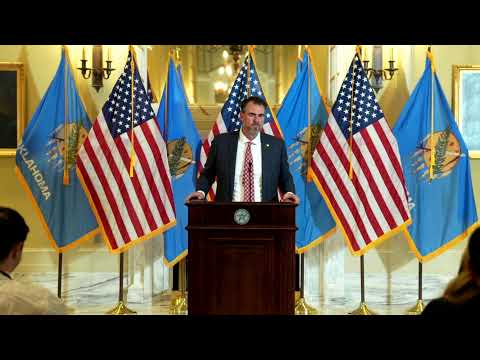
Governor Kevin Stitt announced that John and Laura Arnold, through Arnold Ventures, committed $10,000,000 in matching funds “over the next few years” to support evidence-based programs for Oklahoma youth, the governor said at a press briefing in Oklahoma City. The governor said the funds will be used to match state and local dollars for proven interventions and encouraged local nonprofits to apply through the Office of Faith Based Initiatives.
Stitt said the initial slate of programs likely to receive support includes Wendy’s Wonderful Kids, a foster-family and adoption program, and Saga Tutoring, which he noted is not yet operating in Oklahoma. “John is such a great business person, he’s looking at data and he wants to use his dollars to match with state funds and programs that we’re working on in the state of Oklahoma,” Stitt said.
The announcement came as the governor reiterated his broader education agenda, including support for parental tax credits and tutoring initiatives. He described existing school-choice tax credits as a separate funding stream for families and cited a $250,000,000 tax-credit program he said already helps “tons of families” in Oklahoma. Stitt said he wants “money to follow the student” and said he supports removing a cap on parental tax credits, arguing it helps working families access schools outside failing districts.
On federal school funding, Stitt said he has discussed possible changes to Elementary and Secondary Education Act (ESSA) funding and block-grant flexibility with legislative leaders. He expressed conditional support for greater state flexibility but said any shift would require state-level parameters and oversight. “If those federal requirements go away, we do need to think through those things,” he said, adding that the state auditor would continue to audit federal funds under existing rules.
Stitt also addressed the State Board of Education, noting his administration’s recent appointees had begun attending meetings. He said he has not given specific operational instructions to the appointees but asked that board members be “fair-minded, smart Oklahomans” focused on outcomes for students and getting dollars “on target.”
The governor urged nonprofits and program operators in Oklahoma to contact Bridal Bobak at the Office of Faith Based Initiatives to be considered for matching funds, and said the state would track outcomes to try to attract additional private investment.
Details on how the $10,000,000 will be allocated, precise timelines for awards, and selection criteria were not specified at the briefing. Stitt said the commitment is intended to be matched with existing state and local spending and that the state will seek demonstrable results before scaling programs.
Looking ahead, Stitt tied the philanthropic match to his stated priority of improving reading and math outcomes and expanding options such as charter and private-school opportunities. He said the Arnold gift and proposed tutoring partnerships are part of a broader effort to raise Oklahoma’s educational performance.
Sources and next steps: Stitt identified Arnold Ventures and the Office of Faith Based Initiatives as points of contact; specifics on grant agreements, reporting requirements, and timelines were not provided at the briefing.