Get Full Government Meeting Transcripts, Videos, & Alerts Forever!
Leesburg planners press for tighter floodplain limits, clarify open-space and use-category rules in zoning rewrite
Summary
The Leesburg Planning Commission continued its in-depth review of the proposed zoning ordinance rewrite at a work session, focusing on special-purpose and overlay districts, permitted uses in the floodplain, community-amenity and open-space standards, and a new use-category approach.
The Leesburg Planning Commission continued its in-depth review of the proposed zoning ordinance rewrite at a work session, focusing on special-purpose and overlay districts, permitted uses in the floodplain, community-amenity and open-space standards, and a new “use category” approach intended to give the zoning administrator more flexibility as markets evolve.
Staff opened the meeting with an overview of the rewrite process and timeline. "Tonight is our second work session on the draft zoning ordinance rewrite," said Watkins, a town staff member leading the presentation, and noted that the project is in the planning commission review period and a 60-day public comment window is open on the draft text.
Why it matters: The rewrite reorganizes zoning districts, adds a new open-space/amenity framework, creates a structured system for limited and special-exception uses, and introduces a use-category approach that would let officials evaluate unlisted or evolving land uses against a set of characteristics rather than only fixed use names. Commissioners said those changes could speed approvals for routine proposals but pressed staff for tighter protections where public safety and water quality are at stake.
Floodplain uses and mapping dominated discussion. Commissioners and staff reviewed maps showing major and minor floodplain layers and a Creek Valley riparian buffer. Watkins and other staff explained the town’s intent to balance property use with watershed protection and federal/state guidance. "This is the hundred-year flood plain," staff said when showing the map, and added that the draft treats the major floodplain as an area where mostly passive, non‑structural uses would be permitted unless otherwise regulated.
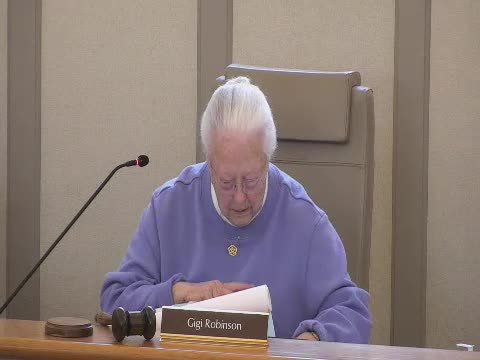
Several commissioners objected to the list of permitted recreational and horticultural uses in the major floodplain. "I don't want nurseries and stuff like that in there," said Chair Robinson, expressing concern that some permitted…
Already have an account? Log in
Subscribe to keep reading
Unlock the rest of this article — and every article on Citizen Portal.
- Unlimited articles
- AI-powered breakdowns of topics, speakers, decisions, and budgets
- Instant alerts when your location has a new meeting
- Follow topics and more locations
- 1,000 AI Insights / month, plus AI Chat