Get Full Government Meeting Transcripts, Videos, & Alerts Forever!
Get email alerts on the Roads topic
No spam. Unsubscribe anytime.
Elbert County reviews requests to accept Spring Valley Ranch subdivision roads; Augusta Loop accepted in 2024
Summary
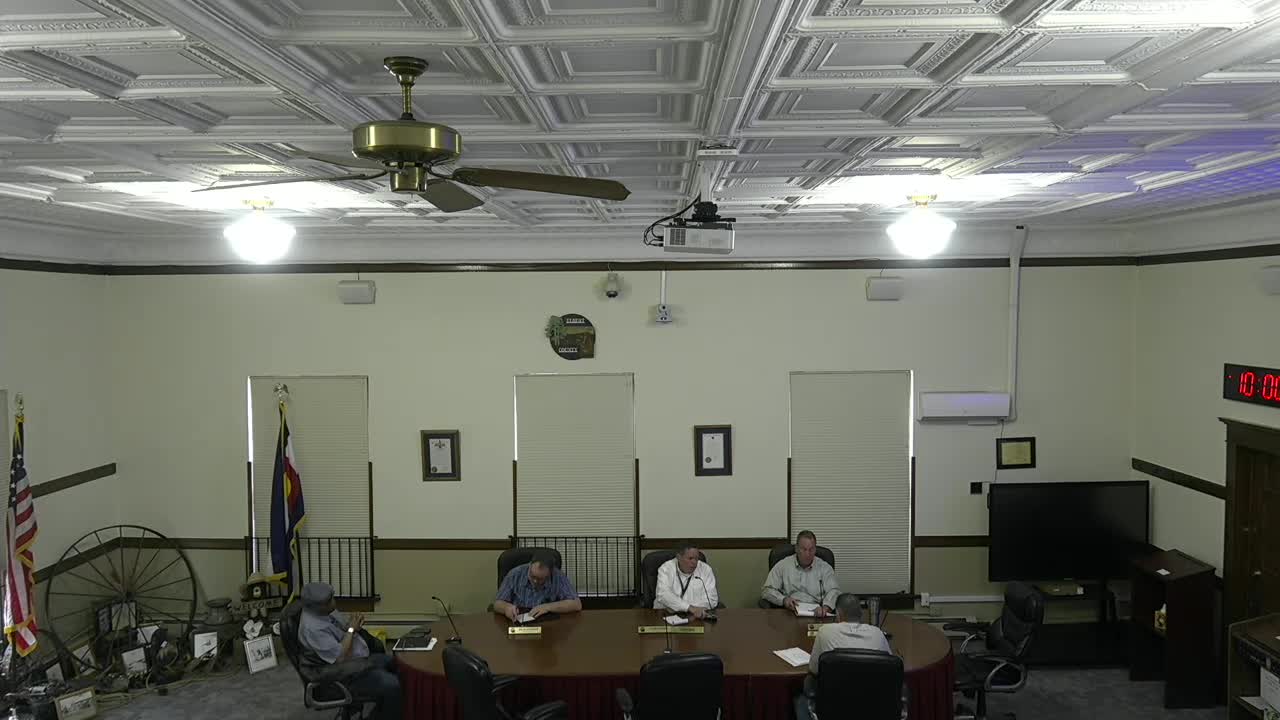
Elbert County commissioners and staff met in a work session on April 8 to review a developer request to have additional internal roads in Spring Valley Ranch filings 1'03 formally accepted by the county.
Elbert County commissioners and staff met in a work session on April 8 to review a developer request to have additional internal roads in Spring Valley Ranch filings 1–3 formally accepted by the county. Public Works Director Monty Hankins said Augusta Loop is the only road within those filings that completed the county's formal acceptance process, and that the county's updated road standards now limit future acceptance largely to major collector roads or roads that continue existing county roads.
The discussion matters because accepting subdivision roads transfers ongoing maintenance costs to county Road and Bridge funds. Hankins told the board the county's average annual maintenance cost for an interior subdivision mile is about $4,000, while main roads average about $6,500 per mile. He also said a developer-paid metro district currently handles curb, gutter and concrete work and that the developer has a signed agreement covering snow plowing and sign maintenance for Spring Valley filings 1 through 10, leaving the county responsible mainly for asphalt surface maintenance.
Hankins said the filings in question were built around February 2004 and that the county never completed the formal acceptance process for most of the roads. "The developer did some punchlist repair per [county engineer] inspection, and they did perform all the necessary repairs," Hankins said, adding that the county followed the formal process only for Augusta Loop. He added that a warranty period is part of the acceptance process: "the warranty period is two years," after which a developer may request final acceptance.
A staff member providing procedural context told the board that the onus for requesting acceptance rests with the developer and that the county typically requires a formal submission to Public Works followed by a board action after a punchlist and warranty period are complete. That staff member also said the county updated its road standards during the multi-year interaction with the developer and has grown more restrictive about taking on interior subdivision roads: "the interior roads that we're looking at accepting moving forward are going to be roads that are essentially major collectors or ... a continuation of roads that are already county roads."
Commissioners pressed for clarity on consistency across Spring Valley filings. Commissioner comments noted friction arising because Augusta Loop was accepted in 2024, while other internal loop roads connecting collectors were not presented through the formal acceptance process. One commissioner said the prior practice had been more informal and that gaps in follow-through left the parties in the current position.
Hankins emphasized the county's desire to be a good steward of equipment and staff time and said that accepting more interior roads increases long-term maintenance burdens. "It's difficult for us throughout the years to put funds towards interior subdivision roads, when we need to bring our main roads up to speed," he said.
Board legal staff told commissioners that the 2024 decision to accept Augusta Loop stands and that any reconsideration "cannot be reconsidered at this meeting"; if the board wants to revisit acceptance for other roads, it should be scheduled for a formal Board of County Commissioners meeting where a decision can be made. There was no formal vote or motion during the April 8 work session.
For residents, the practical arrangements are: the metro district will continue to handle snow plowing, sign maintenance and curb/gutter concrete work in Spring Valley; the county will be responsible only for asphalt surface maintenance on any roads it accepts. The developer's written agreement to perform snow plowing and sign maintenance for filings 1'0 is in place, and Hankins said that arrangement is not typical for subdivisions but has reduced the county's maintenance footprint in Spring Valley.
Next steps: if the developer or board seeks formal acceptance of additional Spring Valley roads, the required documents and inspection results must be submitted to Public Works, any warranty-period requirements satisfied, and the item scheduled for formal BOCC consideration. No formal acceptance of additional roads occurred at the April 8 work session.