Get Full Government Meeting Transcripts, Videos, & Alerts Forever!
Get email alerts on the Children's Advocacy Center Funding topic
No spam. Unsubscribe anytime.
Committee hears bill to lift $300,000 cap so children’s advocacy centers can access leftover grants
Summary
A senate committee held a public hearing April 17 on House Bill 3195A, which would remove a $300,000 per-center cap on one-time grant money set by 2024 legislation and push the Department of Justice deadline to Sept. 30, 2025, so unobligated funds — about $120,000 — can be reallocated to eligible centers.
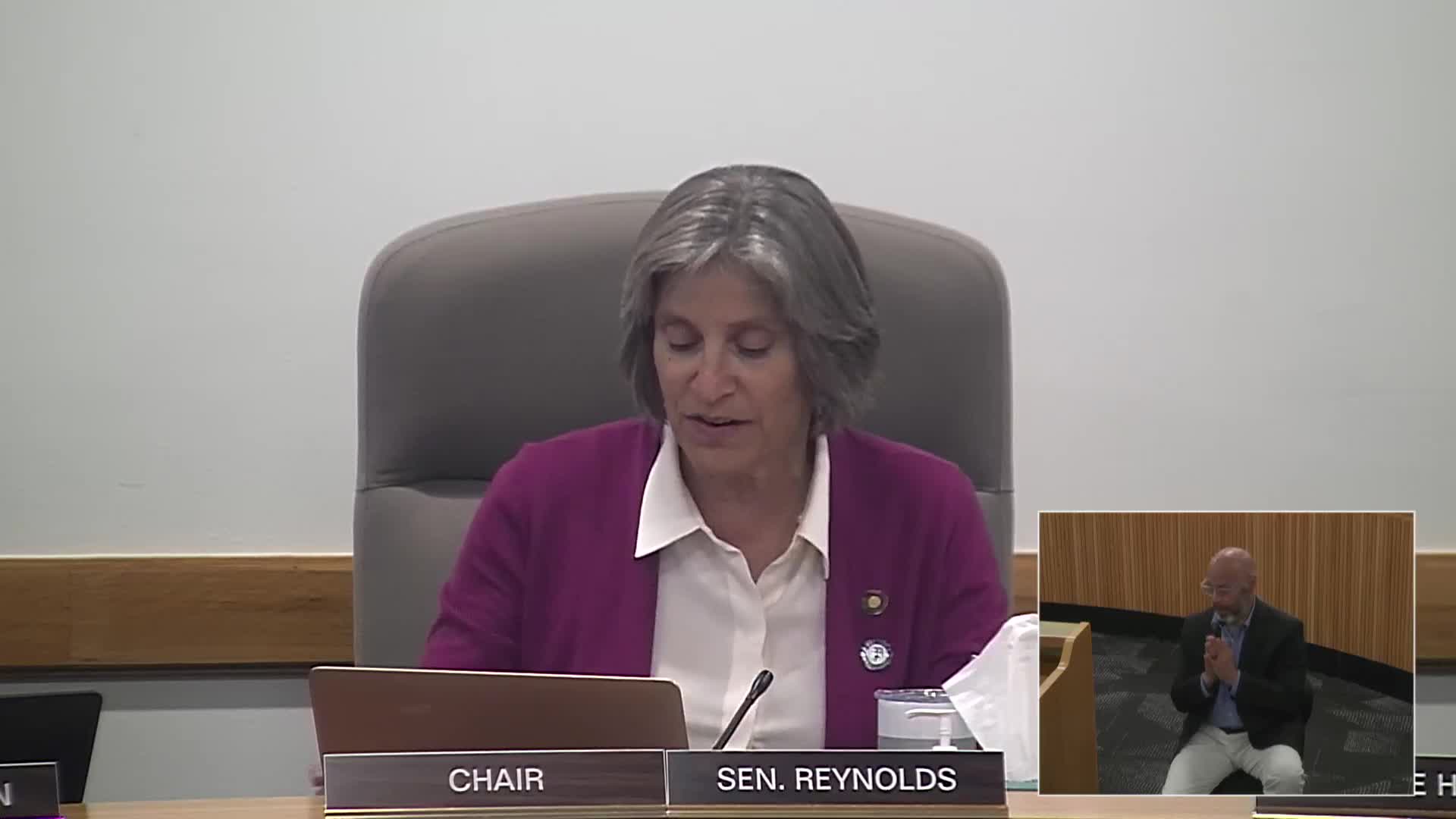
Chair Reynolds opened a public hearing April 17 before the Senate Committee on Early Childhood and Behavioral Health on House Bill 3195A, a measure to remove a $300,000 per‑center cap on one‑time grant funding for Oregon children's advocacy centers and to extend the Oregon Department of Justice’s (ODOJ) deadline to distribute the grants from June 30, 2025, to Sept. 30, 2025.
Shelley Smith, executive director of Oregon Child Abuse Solutions, told the committee the bill “seeks to ensure that we do not leave any money on the table that has already been allocated in past legislatures to Oregon’s Children's Advocacy Centers.” Smith said the state Legislature in 2024 approved a one‑time, noncompetitive $7,000,000 allocation in Senate Bill 1579; that funding was split into two parts, the second requiring National Children's Alliance accreditation (or a plan to seek it) by June 30, 2025, and each center faced a $300,000 total cap.
Smith said some centers — particularly in smaller and rural communities — were unable to meet the accreditation‑related criteria or to obligate their full award, leaving roughly $120,000 unobligated. She asked the committee to lift the $300,000 cap so eligible centers could apply for remaining funds and to extend the DOJ distribution deadline to allow equitable dispersal.
Committee members asked for organizational detail about why some centers could not access the funds. Smith said some rural centers have very small annual budgets and that certain accreditation requirements depend on external partners, for example law enforcement attending forensic interviews at a specified rate; in those communities meeting the accreditation criteria has been difficult.
On process, Smith said ODOJ will use the same eligibility criteria applied in the 2024 law and will notify eligible centers so they may submit applications; distribution will be handled with attention to equitability rather than strictly first‑come, first‑served.
No formal committee action or vote was taken at the hearing.
Ending: The committee closed the public hearing on House Bill 3195A after testimony and member questions. The bill was presented from the House with a reported floor vote of 46‑1, per testimony.