Get Full Government Meeting Transcripts, Videos, & Alerts Forever!
Get email alerts on the Dmv Tax Collection topic
No spam. Unsubscribe anytime.
Faith groups, legal aid and residents urge committee to reject DMV license suspensions for unpaid state tax debt
Summary
Witnesses opposed a provision in House Bill 7,264 that would authorize the DMV to withhold or suspend driver's licenses and registrations for people who owe state taxes, saying suspensions would disproportionately harm low-income communities and limit people's ability to work and repay debts.
Several witnesses told the Finance, Revenue and Bonding Committee they oppose a provision in House Bill 7,264 that would allow the Department of Motor Vehicles to withhold issuance or renewal of driver's licenses and registrations for individuals who owe state taxes, penalties or interest.
Rodney Moore, one of the chairs of the criminal legal reform team for CONNECT (Congregations Organized for a New Connecticut), testified in opposition and described the policy as a poverty trap. Moore cited a Harvard Law School report and state data, saying Connecticut had 389,000 driver's licenses suspended in 2022 and that at least 30% of suspensions for failure to appear were concentrated in 10 ZIP codes, "which are all poor urban communities of color." Moore said the annual earnings loss from a suspended license was estimated at about $12,700 per person and warned that suspensions could prevent people from working and therefore make it harder to repay debts.
Viola Haldane, a Hartford resident, told the committee the DMV's mission is to promote public safety and service, not serve as a tax-collection agent; she said using license suspensions as an enforcement tool would "disproportionately impact those with financial limited needs" and urged the committee to pursue alternative, supportive policies such as manageable repayment plans and financial-assistance programs.
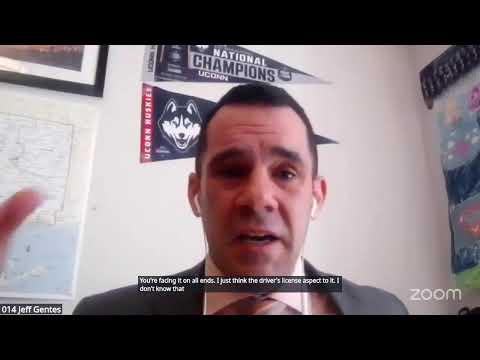
Jeff Jentes, a lawyer who represents homeowners facing foreclosure and other clients in financial distress, said turning tax collection over to private debt collectors (included in other sections of HB 7,264) could create consumer-protection gaps because private collectors can step into enforcement powers normally limited to the government. He also said suspending licenses is "a punitive measure" that does not reliably collect revenue and instead punishes working-class people and small-business owners who have fallen behind.
Committee members asked witnesses about alternative steps: targeted payment plans, exemptions for people who have entered good-faith payment arrangements, or limiting suspensions to non-driving-related benefits such as Real ID eligibility rather than standard driving privileges. Witnesses generally supported payment plans and alternatives that preserve people’s ability to travel to work. Several witnesses also suggested using employers for wage deductions, modeled after child-support garnishments, as a way to collect without suspending licenses.
Ending: Testimony opposed use of license suspensions for tax collection and recommended alternatives to avoid compounding poverty and job loss. No committee vote was recorded at the hearing.