Get Full Government Meeting Transcripts, Videos, & Alerts Forever!
Get email alerts on the Economic Development topic
No spam. Unsubscribe anytime.
DECD endorses Grayfields program, seeks recapitalization of manufacturing tools and continued small-business support
Summary
Economic Development Commissioner Daniel O'Keefe told the subcommittee the governor's bond bill would recapitalize manufacturing programs, continue the Small Business Boost program, and create a Grayfields Revitalization Program to repurpose underused retail and office space.
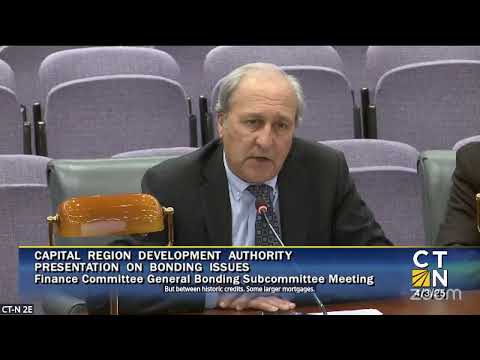
Connecticut Department of Economic and Community Development Commissioner Daniel O'Keefe told the Finance, Revenue and Bonding subcommittee that the governor's proposed capital plan would fund programs aimed at converting underused commercial properties, recapitalizing tools for manufacturers, and supporting small businesses across the state.
Grayfields Revitalization Program
O'Keefe described a newly proposed Grayfields Revitalization Program that would provide grants or loans to repurpose previously developed retail and office space that is no longer economically viable. The commissioner framed the proposal as complementary to Brownfields efforts (which focus on contaminated industrial sites) and said the aim is to remove blight and return underused commercial real estate to productive community use.
Manufacturing and small business programs
DECD asked the subcommittee to support recapitalizing the Manufacturing Assistance Act (MAA) and highlighted the Manufacturing Innovation Fund (MIF) and Connecticut Center for Advanced Technology (CCAT) operations. Paul Lavoie, the state's chief manufacturing officer, told members that demand across MIF programs remains strong and that the governor's recommended allocations should meet current needs.
On small businesses, Sheila Hammel described the Small Business Boost program (the successor to Small Business Express), saying the program has made 575 loans totaling about $73 million with an average loan size near $127,000; the program includes technical-assistance matching and a roster of community partners who provide business-support services.
Community Investment Fund and cultural projects
O'Keefe and his deputies described Community Investment Fund 2030 (CIF) as a major ongoing initiative that pairs state grants with municipal and private leverage. DECD staff said an important CIF emphasis is on underserved populations and that planning grants (for example, administered by Connecticut Humanities) are intended to build a pipeline of shovel-ready cultural and community projects for future capital rounds.
Quotations
"Grayfields Revitalization Program, which would provide grants or loans to facilitate the repurposing of previously developed commercial retail and office space that is no longer economically viable," O'Keefe said in his opening remarks. Paul Lavoie said the governor's recommended manufacturing allocations "are adequate to meet the needs of the manufacturing sector as they stand today." Sheila Hammel said Small Business Boost had made 575 loans and that about $50 million remains to be scheduled to bond commission.
Follow-ups requested
Members asked for more information about CIF leverage and the state's criteria for prioritizing cultural capital projects. DECD agreed to follow up with more detailed leverage numbers and examples of projects where CIF funding unlocked private match.
Ending
DECD emphasized a portfolio approach: restore blighted commercial properties, recapitalize manufacturing supports, and maintain accessible small-business lending and technical assistance to sustain job growth across Connecticut.